Commercial Mortgage-Backed Securities Reach the AAA Tranche as Pimco Absorbs Multi-Million Dollar Loss on Philadelphia Office Towers

The vulnerabilities inherent in the post-pandemic commercial real estate market have breached the safest tier of structured finance, as prominent institutional investors confront mounting write-downs. Investment management giant Pimco is facing losses exceeding $35 million tied to a commercial mortgage-backed security (CMBS) backed by Philadelphia’s Centre Square office towers. The transaction underscores a broader, systemic stress running through the commercial mortgage ecosystem as higher-for-longer borrowing costs intersect with a wave of debt maturities.

The transaction highlights the risks embedded in single-asset, single-borrower (SASB) structures. Once heralded for their predictability and conservative underwriting, these financial instruments are now bearing the brunt of structural shifts in how office space is utilized across major metropolitan areas.
Chronology of a Distressed Asset
The financial trajectory of the Centre Square complex offers a textbook case of pandemic-era office depreciation and subsequent refinancing failure. In 2019, prior to the global health crisis, the twin-tower Philadelphia complex was appraised at a robust $471 million. At the time the underlying loan was bundled into a bond weeks before the onset COVID-19 lockdowns, the property enjoyed a healthy 93% lease rate.
However, structural shifts in office attendance fundamentally altered the property’s earning capacity. By the end of June, occupancy at the complex had plummeted to a meager 28%. When the mortgage matured in 2022, the borrower was unable to secure refinancing in a rapidly tightening monetary environment characterized by rising interest rates. The inability to service or refinance the debt triggered a default, steering the property toward foreclosure and a court-supervised liquidation process.
Last month, a judicial authority approved the sale of the entire Centre Square complex for a mere $70 million. This drastic 85% reduction from its 2019 appraised valuation sent shockwaves through the capital stack, resulting in unprecedented impairments that reached the highest-rated debt tranches.

Unprecedented Breaches in Senior Tranches
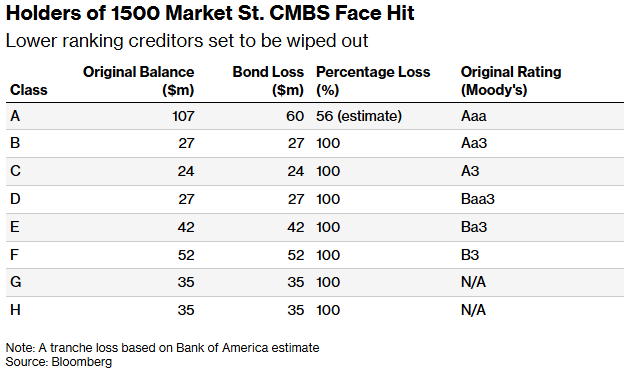
The 85% valuation drop inflicted severe losses not just on equity and mezzanine debt holders, but also on the senior-most tier of the capital stack—a layer historically insulated from default risk. Market strategists project that the once AAA-rated slice of the CMBS will recover only about 44 cents on the dollar. Meanwhile, investors holding the seven junior tranches beneath the senior debt face total losses of 100%.
While industry analysts emphasize that a single distressed asset does not define the entire commercial real estate sector—pointing to a localized rebound in office leasing driven by artificial intelligence demand in technology hubs like New York and San Francisco—the Centre Square transaction is part of a growing trend. This event marks only the third time since the 2009 global financial crisis that a AAA-rated CMBS tranche has suffered a principal loss. According to market data from Bloomberg, more than 30 top-rated SASB slices are currently trading below 85 cents on the dollar, signaling pervasive distress across single-property mortgage pools.
Implications for Structured Finance and Ratings
The fallout from the Centre Square write-down has reignited debate regarding the methodology of credit rating agencies. Financial analysts note that a high credit rating on a single-building deal reflects the structural seniority of the claim rather than the fundamental diversification of the asset. Unlike traditional conduit CMBS, which pool hundreds of mortgages across diverse geographic regions and property types, SASB deals expose investors entirely to the idiosyncratic operational performance of one building and one borrower.
As the broader commercial real estate market confronts a massive wall of debt maturities over the coming quarters, market participants expect losses to continue creeping upward through the capital structures of vulnerable properties. The convergence of elevated capitalization rates, reduced office demand, and prolonged high interest rates poses a sustained challenge for institutional portfolios heavily weighted toward commercial mortgages.
Macroeconomic Backdrop and Market Dynamics
Against the backdrop of tightening credit conditions in commercial real estate, broader financial markets have navigated a complex web of economic data, monetary policy adjustments, and shifting technical configurations.
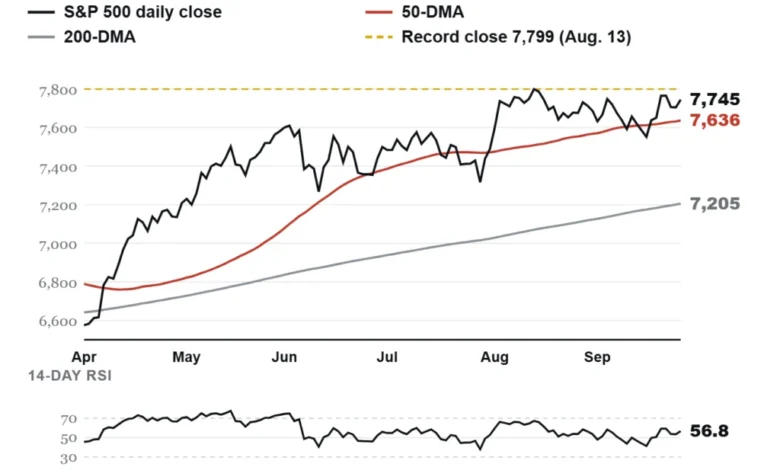
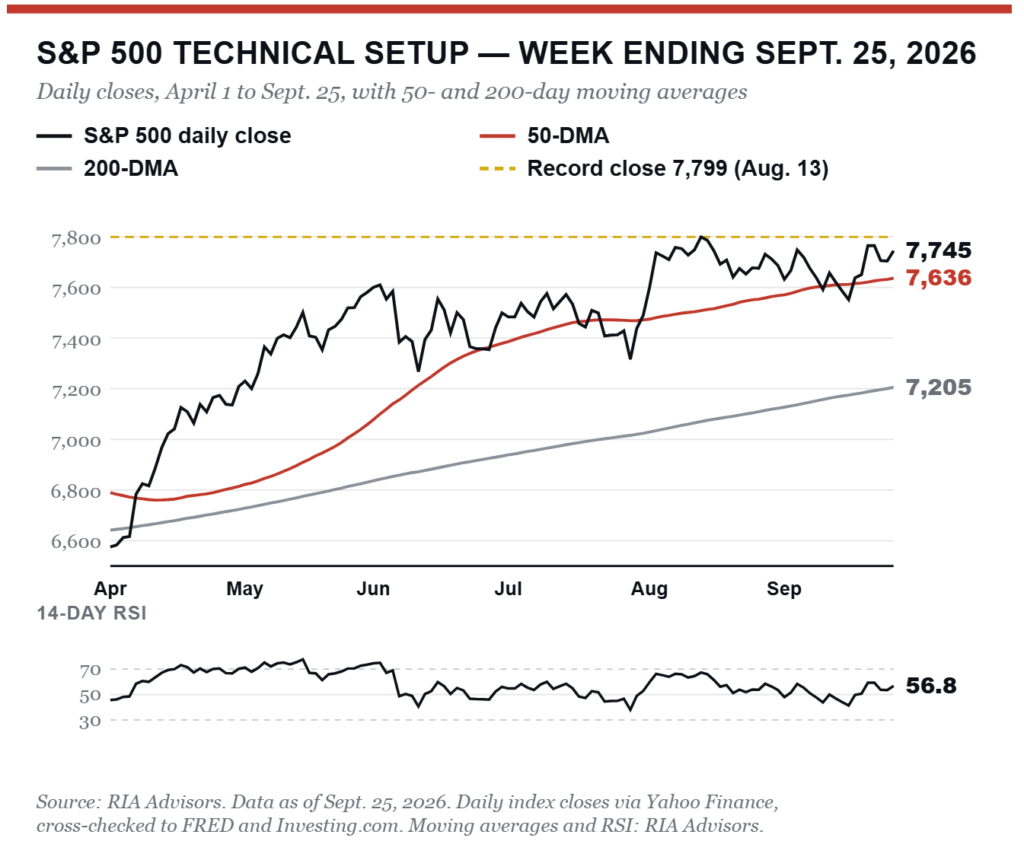
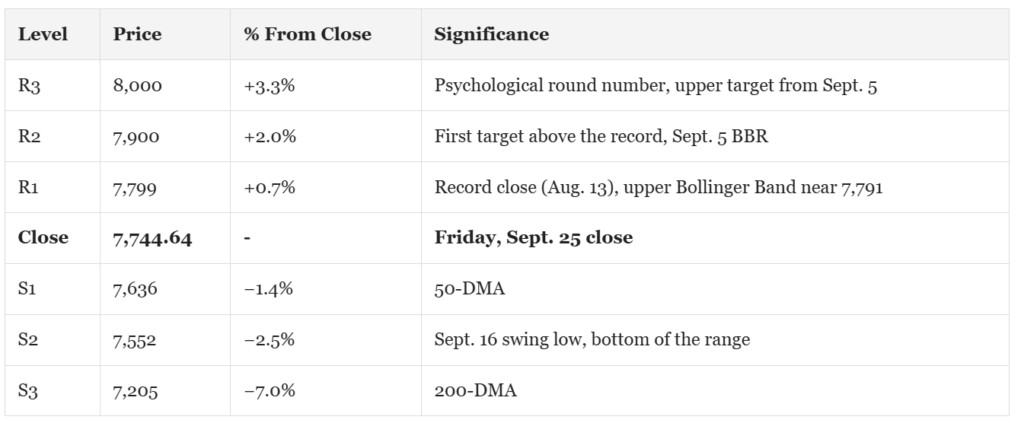
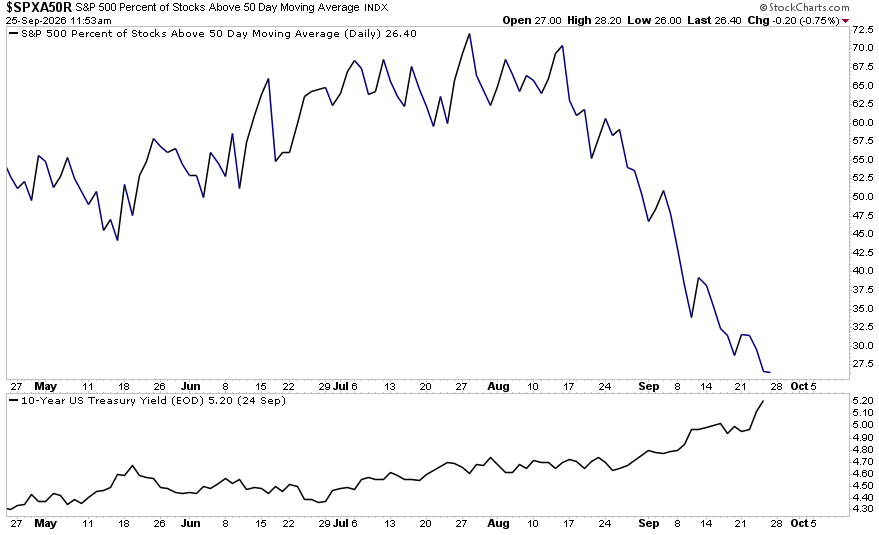
The S&P 500 recently closed at 7,744.64, registering a weekly gain of 1.2% and resting comfortably above its 50-day and 200-day moving averages. Despite solid technical momentum—highlighted by a recent MACD buy signal and a 14-day Relative Strength Index (RSI) hovering in neutral territory near 56.8—market breadth has notably narrowed. Participation has concentrated heavily within large-cap technology equities, while equal-weight indices, small-cap stocks, and rate-sensitive sectors such as utilities and real estate experienced pullbacks.
This narrow market leadership coincides with a historic climb in sovereign yields. The benchmark 10-year Treasury yield recently touched 5.20%, reaching multi-decade highs not seen in nearly twenty years. The persistent elevation of long-term borrowing costs continues to act as a primary transmission mechanism for monetary tightening, creating friction across both equity valuations and debt-dependent industries.
Upcoming Economic Catalysts and Federal Reserve Policy
Financial markets are bracing for a busy economic calendar that could dictate the trajectory of monetary policy ahead of the Federal Open Market Committee (FOMC) meeting scheduled for late October. Following the central bank’s decision to raise the federal funds rate by a quarter point to a target range of 3.75% to 4.00%—its first rate hike since 2023—interest rate futures indicate roughly 70% odds of an additional increase at the upcoming meeting.

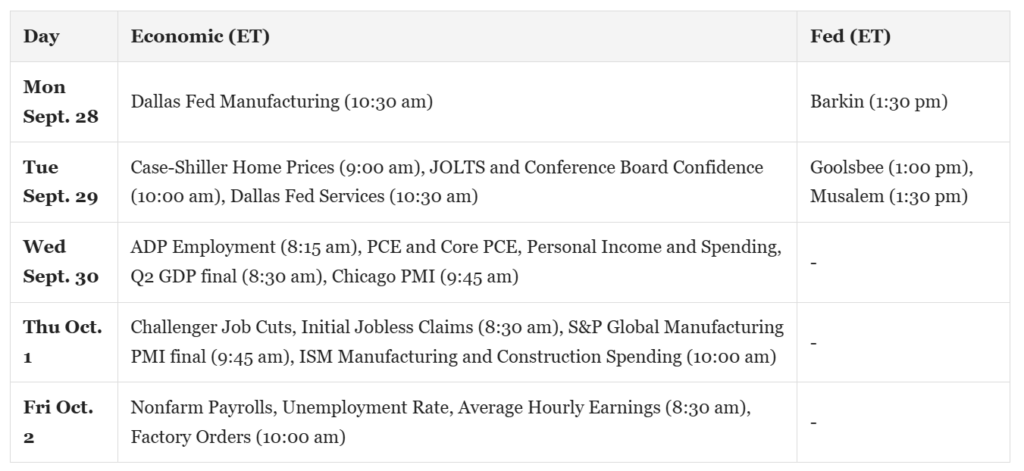
The upcoming release of the Personal Consumption Expenditures (PCE) price index, the Federal Reserve’s preferred inflation gauge, will provide critical insight into price stability. With core PCE holding stubbornly at 3.3% year-over-year through the summer months, a continuation of sticky inflation readings would reinforce the case for further monetary tightening.
Simultaneously, the impending September employment report will test the resilience of the labor market. Following a robust August print that added 162,000 jobs against modest consensus expectations while holding the unemployment rate steady at 4.1%, any further signs of labor market strength would remove economic slowing as a rationale for a pause by central bank officials. Additional readings on employment, including private-sector payroll estimates and weekly initial jobless claims, will further clarify the economic setup.
Consumer Sector Divergence and Credit Stress
Beneath the headline macroeconomic indicators, household financial health exhibits a notable divergence. While aggregate economic metrics suggest ongoing resilience, underlying data points reveal mounting stress among lower- and middle-income consumers.
The personal saving rate fell to 3.0% of disposable income, with total personal savings dropping to $712 billion according to the Bureau of Economic Analysis. This figure stands in sharp contrast to pre-pandemic norms, where households routinely saved between 7% and 8% of disposable income, and remains near the lowest levels recorded in two decades. Analysts point to this depletion of liquid buffers as evidence of a bifurcated consumer base: higher-income households continue to spend comfortably, while lower-income segments absorb the cumulative impacts of inflation and elevated borrowing costs by leaning increasingly on revolving credit facilities.