Assessing the United States Semiquincentennial and the Global Legacy of its Founding Principles and Imperial History

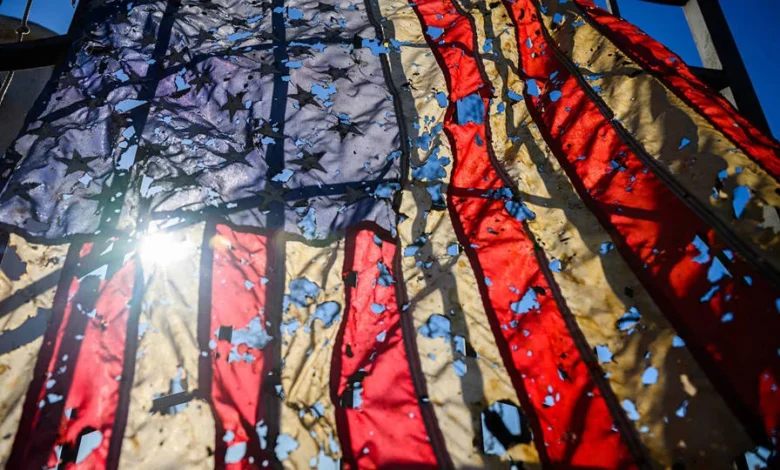
As the United States approaches its 250th anniversary in 2026, the milestone offers a profound opportunity for a comprehensive evaluation of the nation’s historical trajectory, its global influence, and the persistent gap between its democratic ideals and its practical realities. This semiquincentennial year is not merely a celebration of a quarter-millennium of independence; it serves as a critical juncture for both domestic reflection and international scrutiny. For observers in the Global South, the commemoration is viewed through a lens of skepticism, shaped by a history of American exceptionalism that has often collided with the sovereign interests of developing nations. While the United States has undeniably been a primary architect of the modern international system, its legacy remains a complex tapestry of revolutionary progress and systemic inequality.
The foundational principles of the United States, established in 1776, were rooted in Enlightenment values of liberty, equality, and self-governance. These ideals provided the philosophical framework for democratic movements worldwide. However, the historical record indicates that these principles were initially applied within a restrictive framework that excluded large swaths of the population, including enslaved Africans and Indigenous peoples. This internal contradiction—promoting freedom while maintaining a system of chattel slavery—is a central pillar of the "racist legacy" that critics argue continues to inform American policy and social structures. As the nation marks 250 years, the demand for an "honest appraisal" of this history has become a central theme in the discourse surrounding the anniversary.
The Architecture of Global Governance and Post-War Primacy
The ascent of the United States to the status of a global superpower was catalyzed by its industrial expansion in the late 19th century and cemented by the outcomes of the two World Wars. By 1945, the United States emerged as the preeminent economic and military power, a position it used to construct a new global governance system. This system was designed to prevent a recurrence of the catastrophic conflicts of the early 20th century and to foster a stable environment for international trade and diplomacy.
The creation of the United Nations (UN) in 1945, with its headquarters in New York City, signaled a shift toward multilateralism, though the structure of the Security Council ensured that American influence remained central. Simultaneously, the Bretton Woods Conference of 1944 led to the establishment of the International Monetary Fund (IMF) and the World Bank. These institutions were tasked with managing the global economy and providing financial assistance for reconstruction and development. Furthermore, the General Agreement on Tariffs and Trade (GATT), which later evolved into the World Trade Organization (WTO) in 1995, laid the groundwork for the liberalized trade order that defined the late 20th century.
From the perspective of many historians, this "rules-based international order" was instrumental in advancing decolonization across Africa and Asia. The U.S. stance against traditional European imperialism—exemplified by its pressure on Britain and France during the 1956 Suez Crisis—encouraged the dismantling of colonial empires. However, this support for self-determination was often secondary to Cold War strategic interests. The U.S. frequently supported autocratic regimes or intervened in the internal affairs of sovereign nations if it perceived a threat from communist expansion, leading to the "imperialist" label that still colors its reputation in the Global South.
A Chronology of the American Century and Beyond
To understand the current state of the U.S. global standing, it is essential to examine the key milestones that have shaped its 250-year history:
- 1776: The Declaration of Independence is signed, establishing a republic based on popular sovereignty.
- 1823: The Monroe Doctrine is announced, asserting U.S. influence over the Western Hemisphere and marking an early step toward regional hegemony.
- 1861–1865: The American Civil War ends slavery but leaves a legacy of racial division and the subsequent rise of Jim Crow laws.
- 1898: The Spanish-American War marks the emergence of the U.S. as a colonial power with the acquisition of territories such as the Philippines, Puerto Rico, and Guam.
- 1944–1945: The Bretton Woods Conference and the founding of the UN establish the U.S. as the leader of the post-war international order.
- 1947: The Marshall Plan begins, providing massive economic aid to Western Europe and consolidating the Western bloc.
- 1964–1965: The Civil Rights Act and Voting Rights Act are passed, representing a major legislative effort to align the nation with its founding ideals of equality.
- 1991: The collapse of the Soviet Union leaves the U.S. as the world’s sole superpower, a period often referred to as the "unipolar moment."
- 2001–2021: The "War on Terror" and the invasions of Iraq and Afghanistan lead to widespread criticism of U.S. interventionism and its impact on global stability.
- 2026: The Semiquincentennial serves as a period of national reflection amid a shifting multipolar world order.
Supporting Data: Economic and Geopolitical Metrics
The evolution of U.S. power can be quantified through its economic output and military presence. In 1945, the United States accounted for approximately 50% of the world’s total manufacturing output and held nearly 70% of the world’s gold reserves. This economic dominance allowed the U.S. dollar to become the world’s primary reserve currency, a status it maintains today, though its share of global GDP has shifted.
According to data from the World Bank and the IMF:
- In 1960, the U.S. share of global GDP (nominal) was approximately 40%.
- By 2023, that share had decreased to roughly 24%, reflecting the rise of emerging economies, particularly China and India.
- Despite this relative decline in economic share, the U.S. military budget remains the largest in the world, exceeding $800 billion annually, which is more than the next ten countries combined.
In terms of soft power, the U.S. continues to lead in higher education and technological innovation. However, international polling suggests a decline in the "American brand." A 2023 Pew Research Center survey across 24 countries found that while the U.S. is still viewed generally favorably, there are significant concerns regarding its perceived interference in the affairs of other countries. In several Global South nations, including South Africa, Indonesia, and Brazil, skepticism regarding U.S. motives remains high, often citing historical interventions and the perceived double standards in the application of international law.
Official Responses and Global Perspectives
The preparations for the 250th anniversary have prompted various responses from political leaders and civil society. The U.S. Semiquincentennial Commission, established by Congress, has focused on a "America250" theme, emphasizing unity and the "unfinished work" of the American experiment.
However, international commentators and scholars from the Global South have called for a more nuanced approach. Adekeye Adebajo, a prominent academic and columnist, argues that a "clear-eyed assessment" is necessary to understand why cynicism persists. He notes that while the U.S. assisted in decolonization, its economic policies through the IMF and World Bank have often been criticized for imposing "neoliberal" conditions that many developing nations believe hindered their growth and sovereignty.
Diplomatic representatives from the African Union and various Latin American blocs have frequently pointed to the discrepancy between U.S. rhetoric on human rights and its historical support for dictatorships during the Cold War. In recent years, the U.S. response to global crises, such as the COVID-19 pandemic and climate change, has also been a point of contention, with critics in the Global South arguing that "vaccine nationalism" and delayed climate commitments reflect an "America First" mentality that undermines global solidarity.
Analysis of Implications: The Path to 2026 and Beyond
The semiquincentennial arrives at a time when the "post-1945 global governance system" is under significant strain. The rise of the BRICS nations (Brazil, Russia, India, China, and South Africa) and their recent expansion signify a push toward a multipolar world where U.S. hegemony is no longer a given. For the United States, the challenge of the next several years will be to reconcile its historical legacy with the requirements of a modern, interconnected, and increasingly assertive global community.
The "honest appraisal" suggested by critics involves acknowledging that the U.S. has often used the institutions it created to further its own strategic interests. The future of American leadership may depend on its ability to reform these institutions to be more inclusive of Global South voices. If the U.S. fails to address the "racist and imperialist" aspects of its past and present, it risks further alienation from the very nations that will define the global economy and security landscape in the 21st century.
Furthermore, the domestic health of American democracy is intrinsically linked to its international credibility. The internal polarization and the ongoing struggle to address systemic racial inequality are viewed by the rest of the world as barometers of the nation’s ability to live up to its 1776 promises. As the 2026 anniversary approaches, the United States finds itself at a crossroads: it can either lean into a sanitized version of its history or engage in the difficult work of self-correction.
Ultimately, the 250th anniversary is more than a date on a calendar; it is a test of the durability of the American idea. Whether the U.S. can transition from a dominant hegemon to a collaborative partner in a multipolar world will be the defining narrative of the coming decades. The "due" given to America for its industrial and institutional achievements must be balanced with an accountability for the costs of its rise, ensuring that the next 250 years are marked by a more genuine adherence to the principles of universal liberty and justice.