Citizens Bank Pivots to Advisory-Focused Branches, Shifting Away from Supermarket Locations in Strategic Realignment

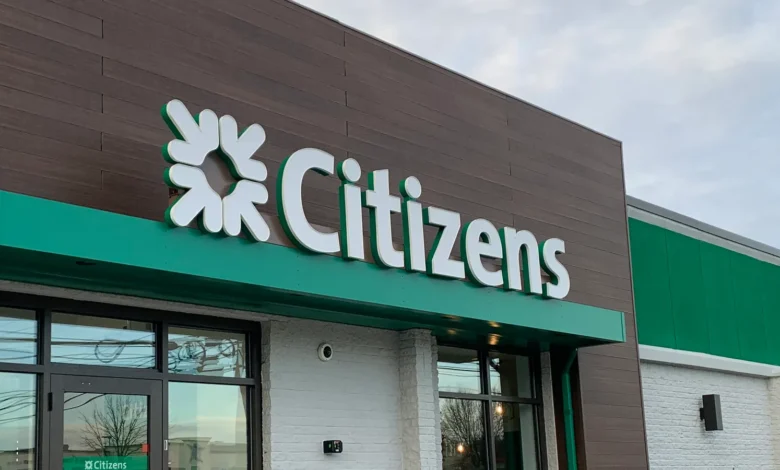
Citizens Financial Group, Inc. announced a significant overhaul of its physical branch network, revealing plans to close between 100 and 120 existing supermarket-based locations. Concurrently, the regional banking giant will launch 50 to 60 new, stand-alone branches in proximate areas, emphasizing a refined service model centered on advice, private banking, wealth management, and dedicated support for small businesses. This strategic pivot was detailed in the bank’s second-quarter earnings presentation released on Thursday, underscoring a deliberate move to optimize its physical footprint for evolving customer needs and enhance profitability within its established operating regions.
The transformation represents a proactive response to changing consumer banking habits, which have seen a marked increase in digital transactions and a corresponding decline in routine branch visits for simple tasks. Instead of transactional hubs, Citizens envisions its new branches as consultative centers where clients can engage with bankers for more complex financial planning and advisory services. This "hub-and-spoke" model, with digital channels serving as the primary spoke for daily transactions and physical branches as specialized hubs for deeper engagement, is becoming a prevailing trend across the banking industry.
Strategic Rationale and Executive Insights
Bruce Van Saun, Chairman and CEO of Citizens, articulated the strategic benefits of this investment during a conference call, stating, "This type of careful investment in physical locations and in people, if executed well, should create a nice lift in the deposit trajectory without taking on the risk and significant capital expenditure of opening a whole bunch of de novos outside of the footprint." His comments highlight a disciplined approach to growth, focusing on deepening relationships within existing markets rather than broad geographical expansion, a strategy that diverges from some peers who have pursued acquisitions to extend their reach.
This sentiment has been consistently echoed by other top Citizens executives. Matt Boss, head of Citizens’ consumer bank, reinforced this perspective in an interview in May, asserting, "The 14 states we operate in today offer more than enough opportunity when it comes to the consumer bank." This internal focus suggests a belief that ample growth potential remains within their current operational footprint, particularly by targeting specific, high-value customer segments. The bank currently operates in states across New England, the Mid-Atlantic, and the Midwest, including key markets such as Massachusetts, Rhode Island, Pennsylvania, New York, Ohio, and Michigan. These regions collectively represent a substantial market for both consumer and small business banking, justifying a strategy of intensified penetration rather than outward expansion.
The new branch design significantly departs from the traditional, larger branch format. While older Citizens branches could span close to 7,000 square feet, the new or renovated locations are projected to encompass a more compact 2,000 to 3,000 square feet. This reduction in physical footprint is directly tied to the shift in operational focus, with less emphasis on teller lines and transactional areas, and more on comfortable, private spaces conducive to in-depth banker-client conversations. This efficient use of space not only reduces operational overheads but also fosters a more intimate and personalized banking experience.
Nuno Dos Santos, Citizens’ head of branch distribution, had already spotlighted the bank’s "aggressive" position on reinvesting in a transformation of its existing locations as early as April 2025 (likely referring to plans discussed in April of the current year, 2024, or a forward-looking strategy outlined for 2025). This proactive stance underlines a commitment to evolving the branch network well in advance of the announced closures and openings, ensuring a seamless transition and minimal disruption to customer service.
Targeting the Mass-Affluent Segment and Beyond
A core component of Citizens’ revamped strategy is a heightened focus on the mass-affluent customer segment and above. Brendan Coughlin, President of Citizens, articulated this vision in a March discussion, particularly in New England, noting, "we’re going to do a lot of surgery around some of our legacy markets." This "surgery" entails gearing the bank toward customers with higher financial needs, making branches "more impressive, [on] the right corner, [with] the right staffing." The aim is to create an environment that attracts and caters to individuals seeking sophisticated financial advice, investment opportunities, and personalized banking relationships, moving beyond basic deposit and withdrawal services.
The mass-affluent segment, typically defined as households with investable assets between $100,000 and $1 million, represents a lucrative market for banks. These customers often require a broader array of services, including wealth management, private banking, lending solutions, and financial planning, making them more profitable and sticky clients. By optimizing branches for these interactions, Citizens aims to capture a larger share of this high-value demographic, thereby boosting its deposit trajectory and revenue per customer. This strategic shift also aligns with broader demographic trends, as a significant portion of wealth is held by older generations who may still value in-person consultations for complex financial decisions, even as they embrace digital channels for routine banking.
Citizens is not an outlier in pursuing this strategy. Several other prominent financial institutions have embarked on similar pivots. Truist, for instance, has also focused on enhancing its branch network to serve the mass-affluent segment, alongside investments in digital capabilities. Similarly, Regions Bank has committed to upskilling its small business bankers and relationship managers to better serve mass-affluent and small business clients, recognizing the value of expert human interaction for these segments. These parallel moves underscore an industry-wide recognition of the need to differentiate physical branches through specialized services and advisory capabilities in an increasingly digital world.
The End of In-Store Banking: An Industry Trend
The decision to close supermarket-based branches also reflects a broader industry trend away from these often transactional-heavy, less advisory-focused locations. The convenience of in-store branches, while appealing in the past, has diminished with the widespread adoption of mobile and online banking. Furthermore, the environment of a grocery store is often not conducive to the private, in-depth financial conversations that Citizens now seeks to prioritize.
Examples abound across the banking sector. When Huntington Bank acquired TCF Financial in 2021, it subsequently closed nearly 100 Michigan-based branches that were located inside Meijer grocery stores. This move streamlined Huntington’s footprint and eliminated redundant locations following the merger. Similarly, People’s United Bank closed 140 branches situated inside various Stop & Shop grocery stores just prior to its acquisition by M&T Bank. More recently, U.S. Bank and PNC have also undertaken similar actions, reevaluating the efficacy of their grocery store branch networks in light of evolving customer preferences and operational efficiencies.
The decline of the in-store branch model signifies a fundamental reassessment of what a physical bank branch should be. Banks are increasingly recognizing that while ubiquitous access was once a competitive advantage, quality of interaction and specialized service are now paramount. The operational costs associated with maintaining these smaller, often less-profitable in-store locations, coupled with declining foot traffic for simple transactions, make their closure a financially prudent decision. These closures free up capital and resources that can be redirected to more strategically aligned stand-alone branches, which can be designed from the ground up to support the new advisory-centric model.
Financial Performance and Future Outlook
Despite the significant investment and restructuring involved in this branch transformation, Citizens projects that these efforts will not impede its ambitious financial goals. The bank aims to achieve a return on tangible common equity (ROTCE) of 16% to 18% by the end of 2027. This target reflects confidence that the strategic realignment will ultimately drive greater efficiency, attract higher-value customers, and improve overall profitability.
In its second-quarter earnings statement, also released on Thursday, Citizens reported a ROTCE of 13.9%, a notable increase from 12.2% three months prior. This upward trajectory in profitability metrics suggests that the bank is already on a path toward its long-term goals, and the branch retooling is expected to accelerate this progress. The financial results further underscored the bank’s robust performance, with profit jumping 35% year-over-year in the second quarter, reaching $587 million. Revenue also saw a significant increase, rising 12% year-over-year to $2.3 billion. These strong financial indicators provide a solid foundation for the extensive investment required for the branch transformation, demonstrating that the bank is executing its strategy from a position of strength.
The financial implications of this strategic shift are multi-faceted. On one hand, there will be upfront costs associated with closing existing branches, including lease terminations, severance packages for some employees, and de-branding expenses. On the other hand, the new, smaller stand-alone branches are expected to have lower operational costs per square foot, and the focus on higher-value customer segments is anticipated to drive increased revenue per customer. Furthermore, by consolidating operations into fewer, more impactful locations, Citizens can optimize staffing levels and deploy its human capital more effectively, focusing on relationship management and advisory roles rather than purely transactional ones. The long-term benefits are expected to outweigh the short-term costs, contributing to sustainable growth and enhanced shareholder value.
Implications for Customers and Employees
For customers, this transformation means a potentially different banking experience. While the immediate loss of a supermarket branch might be an inconvenience for some, the new stand-alone locations promise a more focused and private environment for financial discussions. The emphasis on advice and specialized services suggests an enhanced quality of interaction for those seeking more than just basic banking. Customers who primarily use digital channels for routine transactions will likely see little impact, as the bank continues to invest in and enhance its online and mobile platforms. The geographic proximity of the new branches to the closed ones aims to mitigate disruption for existing clientele.
For employees, this shift will necessitate retraining and a reorientation of roles. Traditional teller positions may decrease, while the demand for financial advisors, wealth managers, and small business specialists will likely increase. This presents an opportunity for career development and upskilling within the organization, aligning employee capabilities with the bank’s strategic direction. Citizens’ commitment to "careful investment in physical locations and in people" suggests a focus on retaining and developing its workforce to meet the demands of the new service model. However, some roles may be impacted by the net reduction in physical locations, though the bank has not provided specific details on potential job changes beyond the general emphasis on repositioning staff for advisory roles.
Broader Industry Context and Future Outlook
Citizens Bank’s strategic pivot is indicative of a broader transformation sweeping through the retail banking sector. As digital banking matures and customer expectations evolve, the role of the physical branch is being redefined. Banks are grappling with how to maintain a relevant physical presence that complements their digital offerings, provides differentiated value, and remains economically viable. The trend is clearly moving away from transaction-heavy, commoditized branch services towards specialized, advisory-led models that cater to complex financial needs and foster deeper customer relationships.
This shift also highlights the ongoing competition among regional banks. While some, like Huntington and Fifth Third, have pursued inorganic growth through acquisitions to expand their footprints into new states, Citizens is opting for organic growth and deeper market penetration within its existing 14-state territory. Both strategies aim for increased market share and profitability, but they represent different philosophies on how to achieve it in a dynamic financial landscape. Citizens’ approach minimizes the integration risks associated with large-scale mergers and allows for a more focused investment in its current infrastructure and customer base.
Ultimately, Citizens Bank’s aggressive retooling of its branch network is a calculated move to future-proof its retail operations. By shedding outdated models and investing in an advisory-centric approach, the bank aims to solidify its position as a trusted financial partner for mass-affluent clients and small businesses, ensuring sustainable growth and enhanced shareholder value in an increasingly competitive and digitally-driven banking environment. The coming years will demonstrate how effectively this strategic realignment translates into sustained market leadership and customer loyalty within its chosen markets.