Kinetic Equilibrium and the Feedback Loop Between Global Oil Prices Geopolitical Stability and Equity Market Volatility

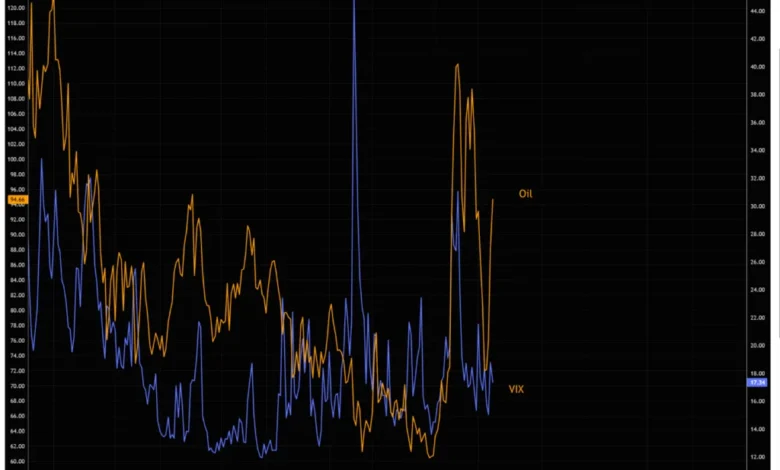
The traditional understanding of the relationship between geopolitical conflict and commodity markets suggests that military escalations drive energy prices higher as supply chains are threatened. However, a provocative new thesis from Felix Vezina-Poirier of BCA Research suggests that in the current conflict involving Iran and the United States, the causal arrow may point in the opposite direction. Utilizing the physics concept of "kinetic equilibrium"—a state where forces are balanced and motion remains steady—Vezina-Poirier argues that oil prices are not merely a byproduct of the conflict but are, in fact, the primary mechanism steering the level of military and diplomatic aggression.
Under this framework, when oil prices reside at the lower end of their historical or seasonal range, both Tehran and Washington find themselves with the political and economic latitude to engage in escalatory rhetoric and localized military actions. Conversely, as prices approach a critical threshold—recently identified near the $90-per-barrel mark—the resulting economic pressure forces a shift toward de-escalation and constructive communication. This theory is currently facing a rigorous real-world test as crude oil prices have surged roughly 20% over the past month, reaching six-week highs.
The Theory of Kinetic Equilibrium in Geopolitics
In physics, kinetic equilibrium describes a system where all acting forces are balanced, allowing an object to move at a constant velocity without acceleration or deceleration. Applying this to the Middle East, BCA Research posits that the "forces" are the domestic political needs of the involved nations versus their strategic military objectives.
The Iranian negotiating team is currently under significant internal pressure to secure sanctions relief and stabilize its domestic economy. Simultaneously, the United States administration is facing the looming reality of upcoming elections, where high energy prices historically correlate with lower approval ratings and voter dissatisfaction. This creates a ceiling for conflict. According to Vezina-Poirier, "as prices approach the upper end, escalation gives way to de-escalation." This suggests that the global economy acts as a self-regulating governor on the intensity of the Iran-US standoff. If oil remains expensive, the political cost of further military engagement becomes prohibitive for both parties.
Chronology of Recent Escalations and Market Responses
The testing of this theory comes on the heels of a volatile period in the Middle East. Over the last thirty days, the regional security situation has deteriorated through several key phases:

- Late Quarter Strikes: The U.S. military carried out a series of precision strikes against facilities used by Iran-backed militias in response to drone attacks on American personnel.
- Iranian Missile Deployment: Iran responded by launching missile attacks into neighboring territories, citing the need to neutralize "spy centers" and terrorist threats, an action that heightened regional anxieties.
- The $90 Threshold: As these events unfolded, crude oil prices climbed steadily from the low $70s to nearly $90 per barrel.
- The Current Stasis: As of late July, the market is watching to see if the "kinetic equilibrium" will hold. If the theory is correct, the next several weeks should see a pivot away from kinetic military action toward renewed back-channel diplomacy or moderated rhetoric.
Supporting data highlights the sensitivity of this balance. A durable decline in oil prices would likely flow through to the Consumer Price Index (CPI), potentially removing the need for further interest rate hikes by the Federal Reserve and even reopening the debate for rate cuts. However, if military actions continue to escalate despite high prices, it would signal a failure of the kinetic equilibrium, likely resulting in a sharp spike in market volatility.
The Volatility Paradox: VIX and Market Correlation
While the geopolitical landscape appears fraught with risk, the Chicago Board Options Exchange (CBOE) Volatility Index, commonly known as the VIX, tells a different story. Despite significant price swings in major technology stocks and the ongoing tension in the Middle East, the VIX remains in the high teens, near the low end of its 12-month range.

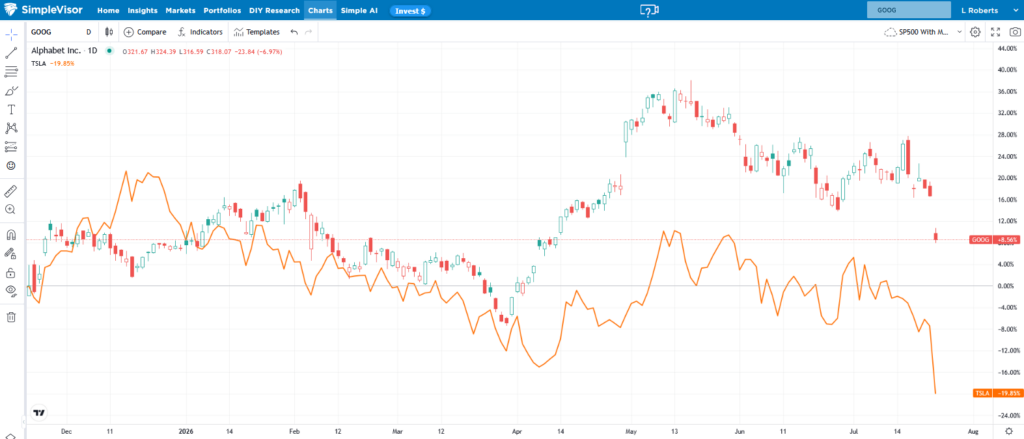
This "fear gauge" has remained remarkably suppressed even as individual components of the S&P 500 have experienced "violent" single-day moves. For instance, Alphabet (GOOGL) recently saw a 5% drop and Tesla (TSLA) fell by 7% following their respective earnings reports, yet the VIX barely moved. Market analysts from Goldman Sachs’ volatility desk point to a mechanical explanation: the one-month S&P 500 implied correlation is currently at its lowest level in twenty years.
In a low-correlation environment, individual stocks "zig and zag" independently. When one sector falls while another rises, the net effect on the index is neutralized, keeping index-level volatility cheap. However, this creates a deceptive sense of security. Historical data suggests that when correlation is this low, the "cushion" can disappear rapidly if a systemic shock—such as a major geopolitical escalation—causes all assets to begin moving in the same downward direction simultaneously.

Tech Earnings: Capex Concerns Over Revenue Growth
The recent earnings reports from Alphabet and Tesla further complicate the market outlook, revealing a shift in investor sentiment regarding Artificial Intelligence (AI) and future growth. While both companies exceeded revenue expectations, their stock prices suffered as investors looked deeper into their balance sheets.
Alphabet Inc.
Alphabet reported a surge in Google Cloud revenue, which grew 82% to nearly $25 billion, with operating margins expanding significantly. However, the company’s free cash flow swung to a negative $5.9 billion, a stark contrast to the nearly $25 billion recorded a year ago. This was largely driven by a $15 billion increase in capital expenditure (capex) guidance for 2026. CFO Anat Ashkenazi noted that the spending is necessary to meet growing demand for AI infrastructure, but the market’s reaction suggests that investors are becoming weary of the "spend now, profit later" model.

Tesla Inc.
Tesla’s report followed a similar pattern. While automotive revenue grew by 23%, operating expenses outpaced this growth, leading to the company’s first negative free cash flow in over two years. CEO Elon Musk defended the aggressive spending on "Optimus" robots, robotaxis, and semiconductor production, characterizing it as the fastest industrial scale-up in American history since World War II. Nevertheless, the stock declined by over 10% as investors prioritized immediate cash flow stability over long-term speculative projects.
The consistent message across these "Magnificent Seven" names is that the market is no longer willing to give a "blank check" for AI-related expenditures. This heightened sensitivity to corporate spending adds another layer of fragility to a market already navigating geopolitical uncertainty.
Strategic Implications and Risk Management
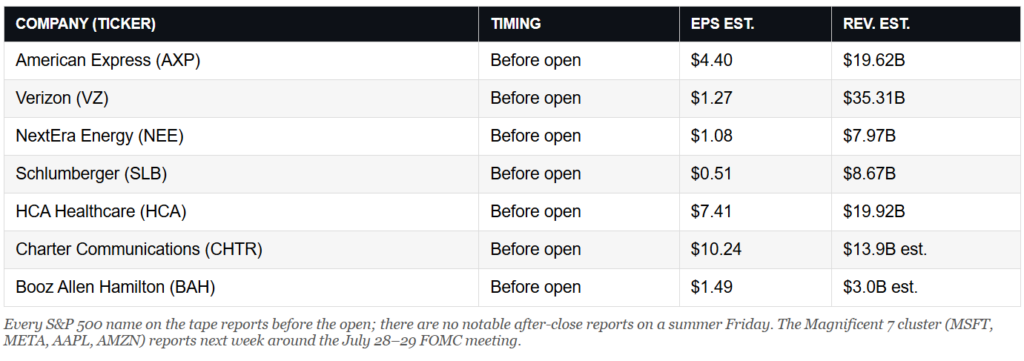
As the market enters the August-to-October window, it is moving into a period that is historically the highest-volatility stretch of the calendar year. Analysis from Nomura and Man Group indicates that asset managers’ VIX futures positioning is currently near record lows. Historically, such extreme positioning has preceded significant gains in volatility, suggesting that the market is currently under-hedged.
Howard Marks, co-founder of Oaktree Capital Management, famously observed that risk is highest precisely when it feels lowest. With the VIX at suppressed levels and protection priced cheaply, institutional managers are warning against "selling volatility" to chase yield. Instead, the current environment favors maintaining hedges and keeping "dry powder" (cash reserves) to capitalize on potential seasonal weakness.

The convergence of $90 oil, low market correlation, and massive AI infrastructure spending has created a unique "asymmetry" in the financial markets. If the kinetic equilibrium theory holds, a diplomatic de-escalation in the Middle East could lead to lower oil prices, a cooling CPI, and a "soft landing" for the economy. However, if the equilibrium fails, the market may be forced to price in both a geopolitical crisis and a domestic volatility spike simultaneously.
Conclusion
The coming weeks represent a critical juncture for both global diplomats and Wall Street traders. The "kinetic equilibrium" suggests that the very high price of oil may be the most effective peace-keeping tool currently in play, as neither the U.S. nor Iran can afford the economic fallout of a full-scale energy shock. At the same time, the equity market’s complacency, as evidenced by the VIX, may be nearing its expiration date as seasonal headwinds and tech sector re-evaluations take hold. For investors, the takeaway is clear: when the "umbrella" of market protection is cheap and the forecast is cloudy, it is prudent to secure coverage before the storm arrives.