OpenAI Codex Security Flaws Allow Remote Code Execution and Sandbox Escapes

Security researchers have identified two critical vulnerabilities within OpenAI’s Codex, the company’s specialized AI coding agent, which effectively bypassed the platform’s security sandbox architecture. These flaws, identified as "Heapjack" and "Overpatch," permitted unauthorized code execution on host machines, potentially granting attackers the ability to run commands with the full privileges of the user. The discovery highlights the persistent challenges in securing AI-powered development tools, which are increasingly granted broad permissions to interact with local file systems and system processes to improve developer productivity.
The vulnerabilities were brought to light by Oren Yomtov of Accomplish AI, who disclosed the findings to OpenAI on August 12. Following the report, OpenAI initiated a rapid remediation cycle, deploying patches across the Codex ecosystem within eight days. While the swift resolution prevented widespread exploitation, the nature of the vulnerabilities—which allowed for the execution of arbitrary commands without user prompts or screen alerts—serves as a cautionary case study for the integration of Large Language Models (LLMs) into local development environments.
The Mechanics of Heapjack: Memory Heap Vulnerability
The more severe of the two flaws, dubbed Heapjack, focused on the node_repl component of the Codex Desktop application. By default, Codex installs this component into the global configuration file at ~/.codex/config.toml. Because this configuration is shared, both the desktop application and the command-line interface (CLI) users were susceptible to the exploit without the ability to opt-out.
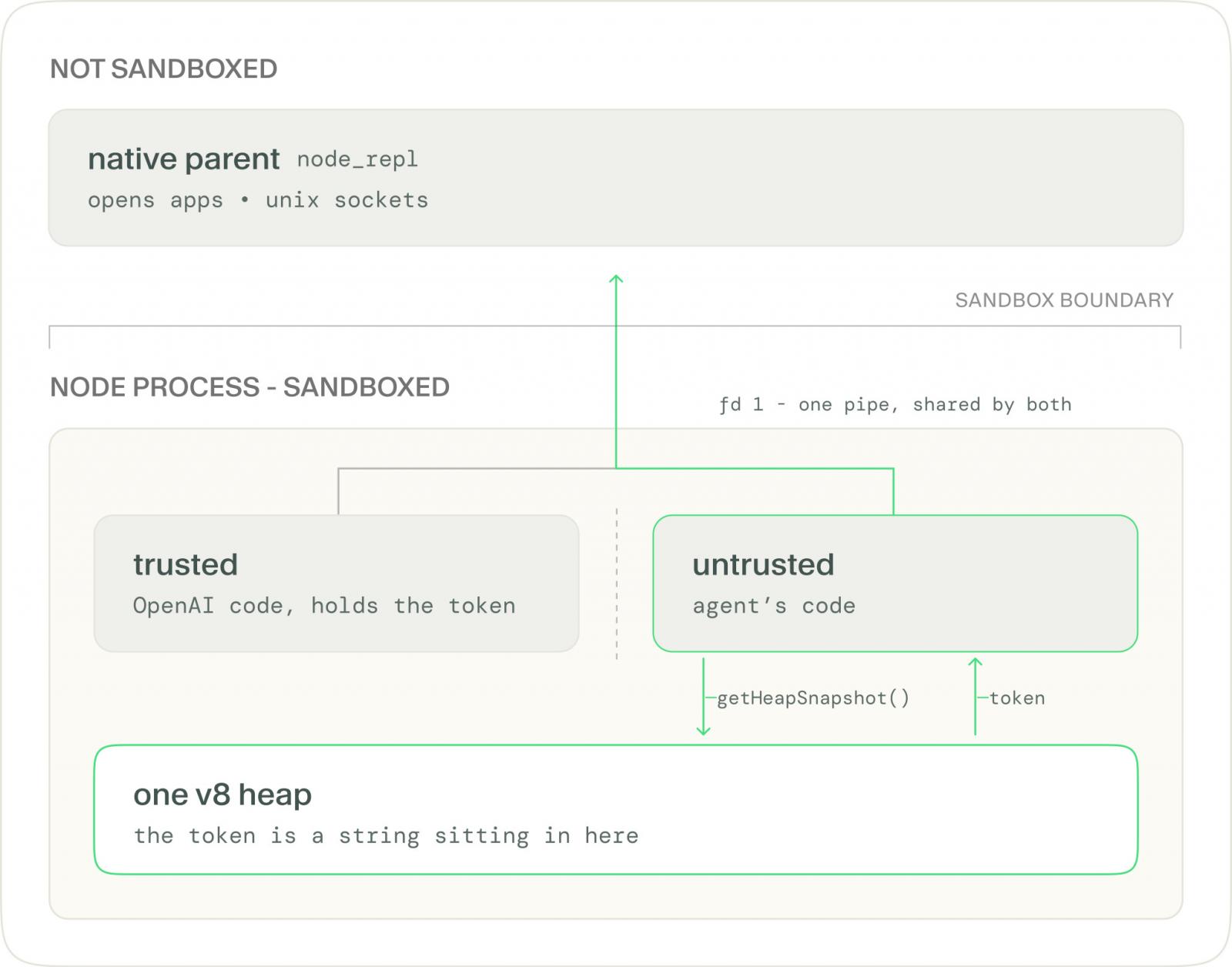
At the heart of the Heapjack attack is a fundamental issue with memory management within the Node.js process used by Codex. The application architecture utilized a single Node.js process to house two distinct execution contexts: one "trusted," containing core OpenAI logic, and one "untrusted," where the AI agent processed user-provided code. To maintain security, the trusted context used a randomly generated token to validate its requests to the parent process.
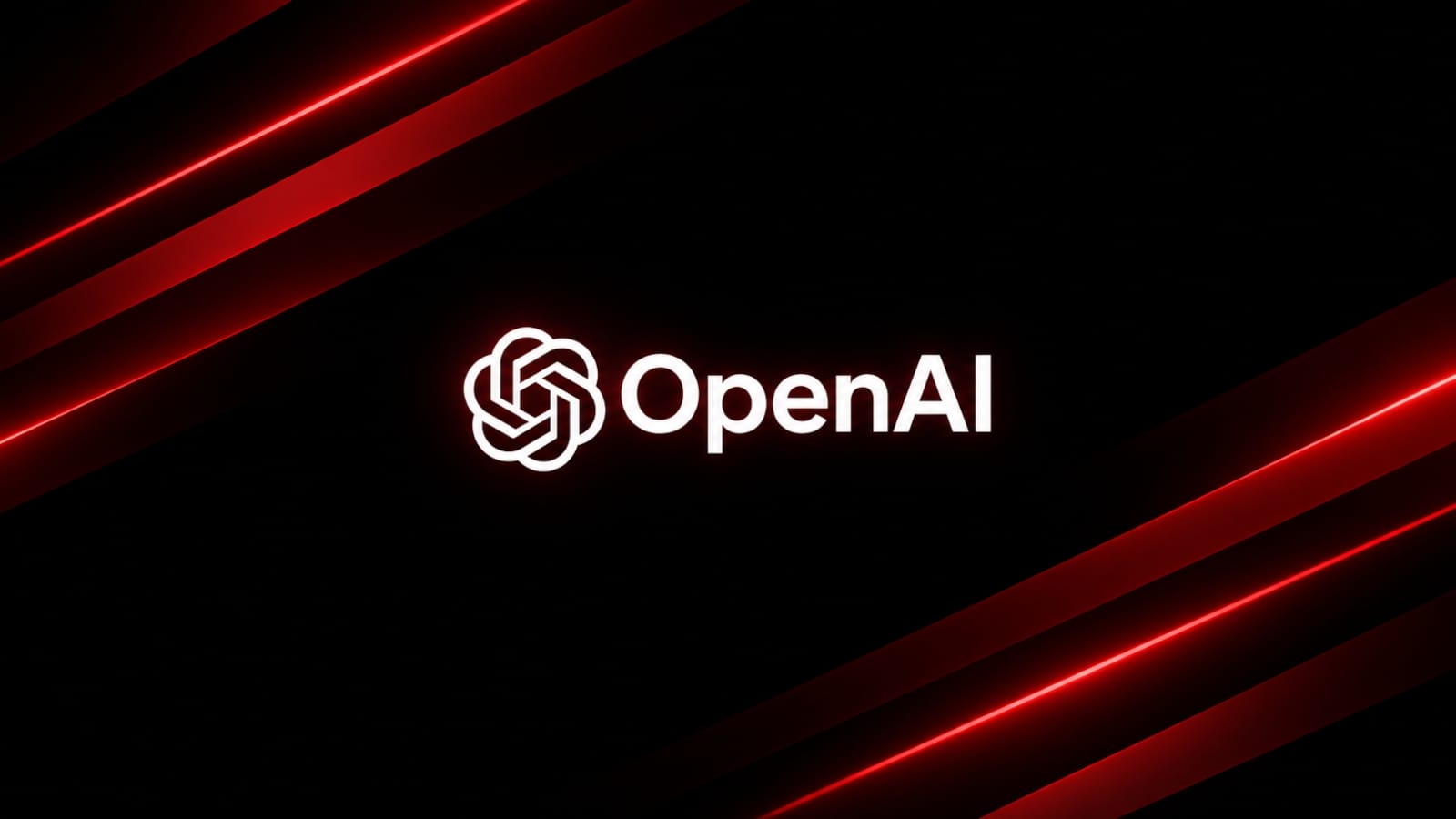
However, researchers discovered that because both contexts occupied the same memory heap, the supposedly secure token was accessible to the untrusted context. By utilizing v8.getHeapSnapshot(), an attacker could capture a memory dump and iterate through strings to identify the UUID-like token. Once the token was acquired, the attacker could issue unauthorized commands to the parent process, effectively tricking it into executing instructions outside the sandbox. This included the ability to open files, interact with Unix sockets, or manipulate system configurations. Crucially, the attack could be triggered simply by having a user open a malicious repository and asking the agent a question about the code, making it a "zero-click" threat to the developer.
Overpatch: Manipulating Permission Boundaries
The second vulnerability, Overpatch, targeted the Codex CLI’s file management logic. In "workspace-write" mode, Codex is theoretically constrained to operations within the project directory. The system relies on an apply_patch tool to facilitate code modifications, but the researchers found that this tool’s permission enforcement was inherently flawed.
The vulnerability existed because the apply_patch utility calculated its own file system permissions based on input paths provided by the agent. By crafting a patch that included a seemingly benign directive to modify a directory such as /tmp, the attacker could inadvertently or maliciously widen the agent’s scope to the root of the file system. In a successful exploit scenario, a malicious patch could be used to write to sensitive files, such as the user’s .zshrc shell configuration file. Once modified, the injected code would execute automatically the next time the developer opened a terminal, granting the attacker persistent, unsandboxed access to the machine.
Timeline of Discovery and Resolution
The discovery of these vulnerabilities follows a broader trend of security scrutiny surrounding AI coding assistants. The timeline of the Codex incident is as follows:
- August 12, 2026: Oren Yomtov of Accomplish AI officially discloses the existence of the Heapjack and Overpatch vulnerabilities to OpenAI.
- August 13–19, 2026: OpenAI security engineers conduct internal verification and develop patches for both the desktop and CLI versions of Codex.
- August 20, 2026: OpenAI releases updated versions of the software. Heapjack is addressed in Codex Desktop build 26.818.21641, and Overpatch is mitigated in Codex CLI version 0.149.0.
- Late August 2026: Public disclosure follows the confirmation that the updates have been successfully deployed to the user base.
Implications for AI-Driven Development
The "Heapjack" and "Overpatch" vulnerabilities underscore a recurring design flaw in contemporary AI tooling: the placement of enforcement mechanisms inside the environment being restricted. When the code responsible for maintaining security boundaries exists within the same process or memory space as the untrusted code it is meant to police, the boundary becomes a "room divider" rather than a true firewall.
This is not an isolated incident. In July 2026, Pillar Security researchers identified similar sandbox-escape vectors across a suite of popular developer tools, including Cursor, Gemini CLI, and Google’s Antigravity project. The commonality in these attacks is the abuse of "trusted" helper tools that execute actions outside the sandbox based on instructions from an "untrusted" AI agent.
For enterprise and individual developers, these findings carry significant weight. As organizations increasingly rely on autonomous coding agents to refactor code, debug systems, and manage infrastructure-as-code, the attack surface expands exponentially. If an agent can be compromised through a malicious repository, an attacker could potentially gain access to sensitive environment variables, API keys, and internal source code—all while the user remains unaware that the sandbox has been breached.
Industry Response and Future Mitigation
In response to the growing threat landscape, cybersecurity experts are advocating for a "Zero Trust" approach to AI agent architecture. This involves:
- Strict Memory Isolation: Moving away from shared-process architectures where trusted and untrusted code coexist in the same memory heap.
- Externalized Enforcement: Ensuring that permission checks are handled by a separate, hardened process that the AI agent cannot influence or modify.
- Principle of Least Privilege: Limiting the native capabilities of AI tools so that even if a sandbox is bypassed, the damage potential remains contained.
- Hardware-Level Sandboxing: Utilizing containerization (such as gVisor or hardened Docker environments) to isolate agents at the kernel level rather than relying on application-level logic.
OpenAI’s rapid response to the Accomplish AI report suggests that the company is prioritizing security in its developer-facing products. However, the persistent nature of these "class-of-bug" vulnerabilities indicates that the industry is still in the nascent stages of learning how to safely sandbox large, complex language models that require system-level interaction to perform their core functions.
As AI agents move from experimental status to essential components of the software development life cycle, the burden of security will shift from the model developers to the architects of the agent platforms. For now, the primary defense remains rigorous version management; users are strongly encouraged to ensure their development tools are running the latest patched versions and to exercise caution when interacting with untrusted code repositories, even when using AI-assisted analysis tools. The events surrounding the Codex vulnerabilities serve as a stark reminder that in the race to automate development, security cannot be treated as an afterthought or an internal logic check.
Related posts: