The Art of Sandbagging: How Lowering Expectations Can Drive Financial Success and Personal Well-Being


The strategic containment of performance metrics, commonly referred to as "sandbagging," has increasingly emerged as a vital methodology across financial planning, corporate governance, and personal lifestyle management. While modern professional cultures frequently emphasize relentless ambition and the continuous maximization of output, a growing body of behavioral and economic evidence suggests that deliberately managing down expectations yields superior long-term outcomes. By decoupling personal self-worth from immediate external validation, individuals and institutions can mitigate volatility, protect finite resources, and position themselves for sustainable success.
Foundations of Expectation Management
The concept of sandbagging—historically rooted in competitive gaming and athletic wagering—involves the intentional obscuring of true capability or potential. In practical economics, this translates to the establishment of conservative baselines that can be reliably surpassed, rather than the projection of aggressive targets prone to market or operational disruption.
Behavioral economists note that human decision-making is heavily influenced by cognitive biases, chief among them the endowment effect and ego preservation. Individuals routinely overestimate their long-term performance capacity, leading to structural overcommitment. When applied across professional environments, investment portfolios, and interpersonal dynamics, this psychological inflation frequently results in diminished returns, burnout, and heightened vulnerability to unexpected market shocks.
Corporate Earnings and Financial Guidance
Within the equities market, the practice of sandbagging is institutionalized at the executive level. Publicly traded corporations routinely issue quarterly earnings guidance designed to be comfortably beatable. Historical analyses of corporate disclosures indicate that companies adhering to conservative forecasts consistently experience more stable valuation multiples than those projecting aggressive growth that they subsequently fail to capture.
Financial analysts point out that capital markets do not intrinsically reward absolute performance; rather, they price assets based on performance relative to consensus expectations. A firm projecting modest revenue growth of eight percent that ultimately delivers eleven percent will typically experience a more favorable equity adjustment than a competitor projecting twenty percent growth that delivers eighteen percent. Consequently, corporate leadership teams utilize conservative guidance as a systematic buffer against macroeconomic volatility.
Application in Wealth Accumulation and Retirement Planning
The principle of strategic under-projection is equally vital in individual financial planning, particularly regarding retirement modeling and asset allocation. Financial advisors frequently contrast the optimistic retirement model—which assumes perpetual historical equity returns of ten percent, uninterrupted employment, and zero health anomalies—with the conservative, or sandbagged, approach.
Conservative financial modeling typically incorporates:
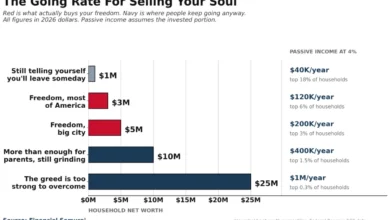
- Adjusted real equity returns aligned with the historical four percent safe withdrawal rate.
- Anticipated legislative adjustments or partial reductions to public entitlements such as Social Security.
- Stress-tested models that account for significant sequence-of-returns risk during the initial years of retirement.
Financial planners emphasize that the asymmetry of error heavily favors the conservative planner. An individual who over-prepares for financial shortfalls experiences a surplus at the end of their lifecycle, whereas an individual who models overly optimistic scenarios faces catastrophic resource depletion during advanced age.
Professional Dynamics and Workplace Productivity
In the contemporary corporate landscape, meritocratic ideals often conflict with political realities. Employees who consistently perform at maximum capacity without establishing boundaries frequently encounter the phenomenon of operational overload. Management structures tend to assign supplemental responsibilities to reliable personnel, resulting in extended work hours without commensurate compensation adjustments.
Workplace sociologists note that strategic expectation management—exemplified by broader labor trends such as controlled productivity baselines—allows knowledge workers to safeguard their time and mitigate professional burnout. By consistently delivering high-quality results while avoiding the establishment of unsustainable productivity ceilings, employees can protect their professional standing while reducing the risk of systemic marginalization or peer resentment.
Real Estate Valuation and Capital Markets
The dynamics of expectation management are prominently displayed in transactional markets, particularly real estate. Residential property markets in high-cost metropolitan areas frequently utilize strategic under-pricing as a mechanism to stimulate competitive bidding environments.
Listing agents intentionally price properties ten to twenty percent below comparative market analysis valuations to attract heightened buyer interest. This deliberate deflation of initial expectations leverages psychological triggers among prospective purchasers, frequently resulting in final transaction prices that exceed true market value. Conversely, properties priced at or above market expectations often experience extended market duration, ultimately commanding lower final sales figures due to perceived stagnation.
Similarly, in institutional capital markets, corporate entities preparing for initial public offerings (IPOs) must navigate valuation thresholds carefully. Underwriters balance the imperative of maximizing capital raised against the critical necessity of post-listing equity stability. Setting an initial valuation below peak private market estimates leaves sufficient upside for public retail investors, preventing the post-listing valuation contractions that erode employee morale and shareholder confidence.
Interpersonal Relationships and Social Capital
Beyond financial and corporate applications, the discipline of sandbagging holds significant utility in interpersonal relationships and social capital preservation. Individuals possessing advanced expertise in specialized domains—such as long-term portfolio management or corporate law—frequently face intellectual extraction from social networks if their competencies are broadly advertised.
By maintaining modest profiles regarding personal achievements and financial net worth, individuals can protect their personal time and preserve authentic social interactions. This deliberate understatement of capability fosters more balanced interpersonal dynamics, preventing the reliance of peers on uncompensated professional labor.
Conclusion
The systematic integration of sandbagging into financial, professional, and personal strategies offers a robust defense against the vagaries of modern economic life. By prioritizing realistic, conservative baselines over maximalist projections, individuals and corporations insulate themselves from systemic volatility. Ultimately, the deliberate management of expectations—anchored by humility and disciplined resource allocation—remains one of the most effective instruments for securing long-term stability and sustained financial health.