Prop Firm Challenge Study Reveals How Strategy-Firm Matching Drives Massive Discrepancies in Trader Profitability

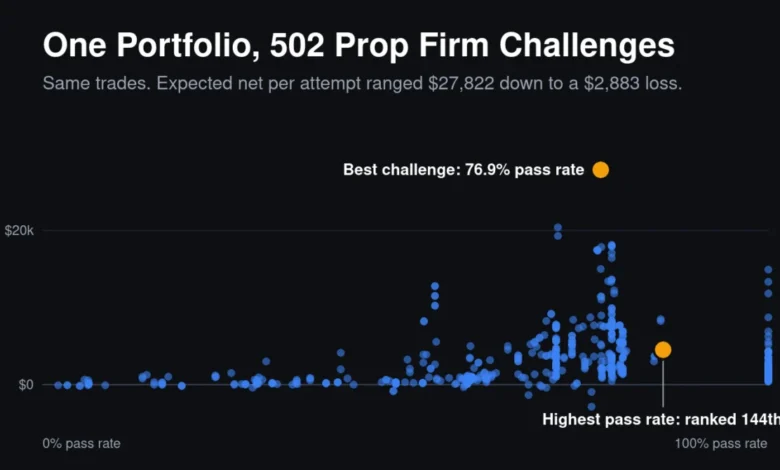
When quantitative researcher and Build Alpha founder David Bergstrom ran a single, highly stable futures trading portfolio through a massive simulation of 502 proprietary trading firm challenges across 22 different companies, the results exposed a startling reality of the retail trading industry. Despite the trading strategy, underlying assets, and execution timing remaining completely identical throughout every iteration, the financial value of those exact same trades varied wildly from a staggering net profit of $27,822 to a net loss of $2,883 per attempt.
This dramatic performance spread of more than $30,000 illustrates that in the modern prop firm landscape, choosing where to deploy a strategy matters just as much as the strategy itself. While retail traders often focus heavily on surface-level metrics such as evaluation entry fees, initial account sizes, or headline-grabbing pass rates, this extensive empirical study demonstrates that nuanced rules—including daily loss limits, trailing drawdown mechanics, payout paths, and fee structures—are the true determinants of long-term profitability.
Background and Methodology of the Simulation
The prop firm industry has experienced explosive growth over the last several years, offering retail traders access to substantial capital allocations in exchange for passing strict multi-stage evaluation processes and paying upfront or recurring subscription fees. However, until now, most available comparisons between firms have relied on static side-by-side tables detailing rules and pricing rather than dynamic behavioral testing under actual market conditions.
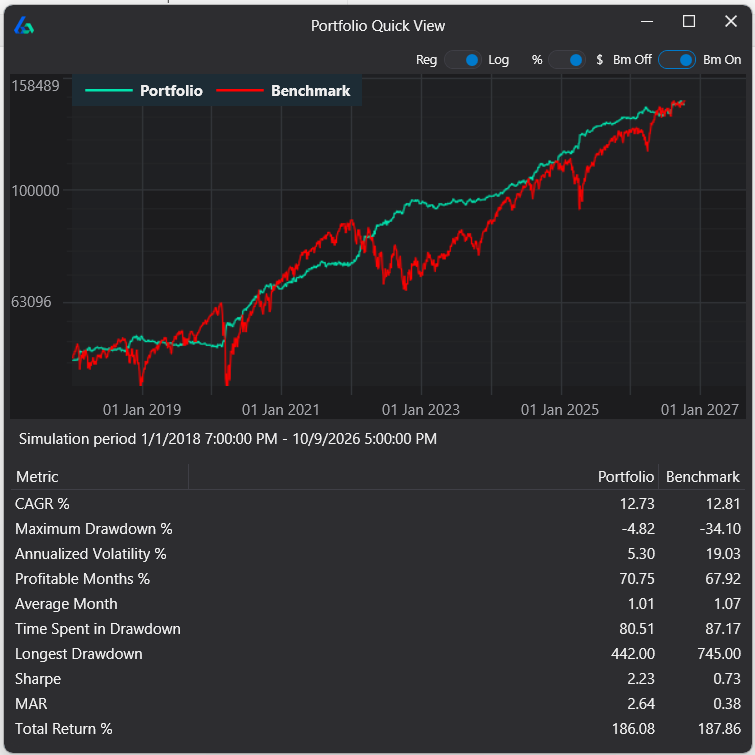
To bridge this analytical gap, Bergstrom utilized a rigorous quantitative approach. He took a single intraday futures trading portfolio boasting a compound annual return of 12.7%, a remarkably low maximum drawdown of 4.8%, and a Sharpe ratio of 2.23 over an extensive testing window spanning from January 2018 to October 2026. For benchmarking purposes, a traditional buy-and-hold strategy over the exact same timeframe yielded a comparable 12.8% annual return but inflicted a punishing 34.1% maximum drawdown on capital.
This robust, steady-yielding futures portfolio was then systematically simulated across 502 distinct prop firm programs. Out of these evaluated pathways, 431 required successfully navigating strict evaluation rules to achieve funded status, while the remaining 71 represented instant-funding accounts where the pass rate stood at 100% by default.
Unpacking the Discrepancies: Key Empirical Findings
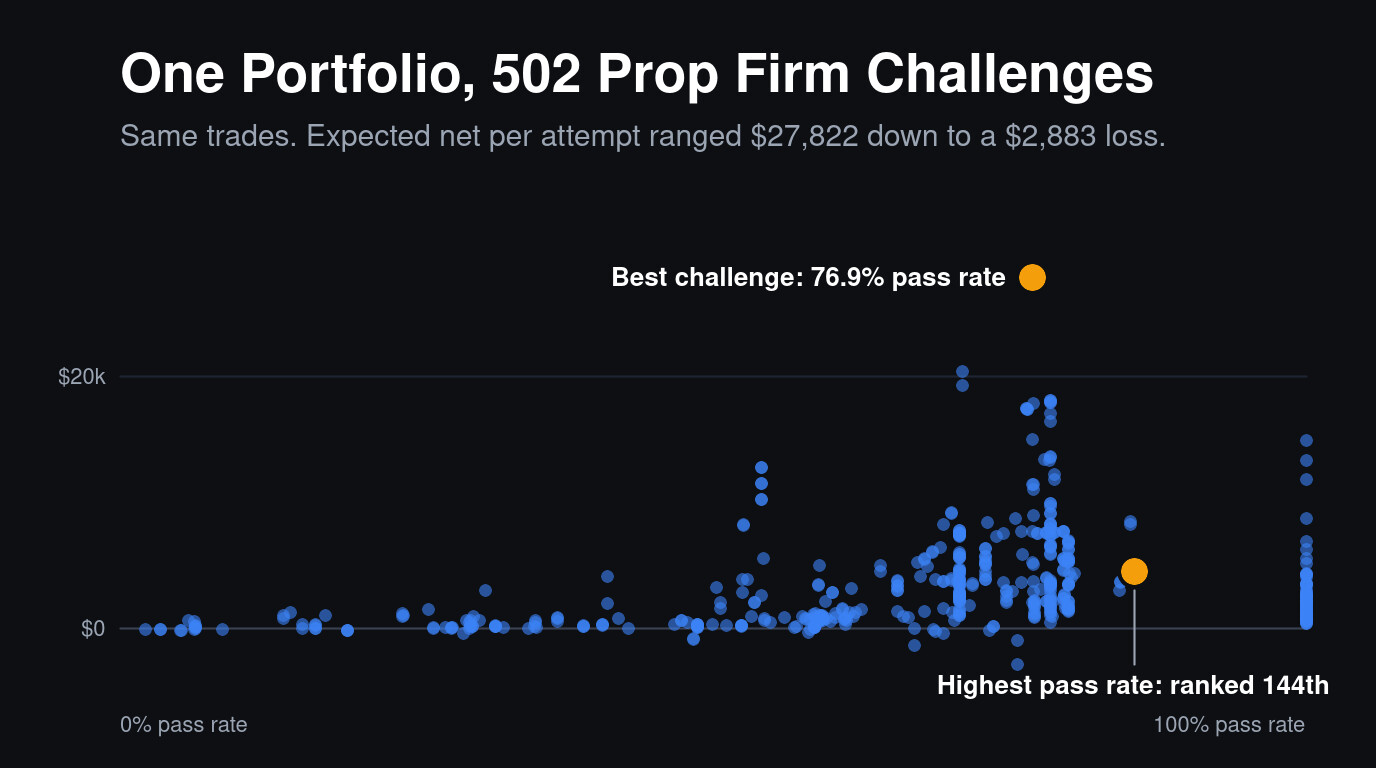
The study’s primary revelation is the sheer magnitude of variance in expected net return per attempt. While the absolute best-performing challenge netted $27,822, the median challenge across the entire dataset returned a much more modest $2,349 after accounting for all fees. Meanwhile, the bottom quarter of tested options finished below $746, and nearly 30 specific challenges resulted in net negative outcomes, losing money for the trader despite the underlying portfolio maintaining a positive trajectory.
Most notably, high pass rates did not correlate with superior financial returns. The single best-performing challenge achieved a respectable pass rate of 76.9%, but 134 other evaluations boasted higher pass probabilities yet yielded significantly smaller payouts. For instance, the evaluation with the highest overall pass rate—an impressive 85.5%—ranked only 144th out of 502, delivering $4,475 per attempt, or roughly one-sixth of the earnings generated by the top-ranked challenge. This demonstrates that passing an evaluation is merely the first hurdle; the subsequent rules governing the funded account ultimately dictate the trader’s financial outcome.
The Critical Impact of Payout Paths and Account Architecture
One of the study’s most actionable insights centers on structural flexibility and payout paths. Comparing two accounts featuring identical sizes, identical pricing, and identical pass rates revealed that the choice of payout mechanism at checkout could slash profitability in half. For a $300,000 account priced at $367.50 with a 76.9% pass rate, selecting a daily payout path yielded an expected net return of $27,822, whereas selecting a flexible payout path on the same program dropped the expected return to $14,971. A similar divergence appeared at the $150,000 tier, proving that micro-decisions made during initial account setup have massive financial implications that are rarely captured on standard pricing lists.
Furthermore, account sizing played a pivotal role in overall value. Smaller accounts proved to be remarkably inefficient investments. The median $25,000 challenge yielded an expected net return of just $616 per attempt, whereas the median $150,000 challenge returned $4,270. Interestingly, scaling up indefinitely did not yield linear benefits; accounts sized at $200,000 and $300,000 underperformed the $150,000 tier due to the restrictive nature of larger account drawdown parameters relative to the tested portfolio’s risk profile.
Fee structures also introduced significant friction. Challenges billed on a monthly subscription model carried a median cost-to-fund of $1,177—roughly four times higher than one-time fee challenges, which registered a median cost of $269. Because the median challenge required approximately 117 days to successfully pass, monthly fees accumulated rapidly. However, the study noted that monthly billing was not an absolute deterrent, as certain top-tier challenges justified their recurring costs through exceptionally lucrative payout terms.
Evaluating Firm-Level vs. Challenge-Level Variance
When analyzing performance across the 22 participating proprietary trading firms, the data indicated that the specific firm matters far less than the specific challenge selected within that firm. At 18 out of the 22 evaluated firms, the top-performing challenge was worth at least twice the firm’s median challenge.
For example, Tradeify housed both the absolute best-performing challenge in the study ($27,822 expected net) and significantly lower-performing options within its suite of programs. Consequently, traders who select a firm based solely on brand reputation and subsequently pick an arbitrary account size or pricing tier risk leaving substantial capital on the table.
Capital Efficiency and Prop ROI Implications
For quantitative developers and retail participants alike, the primary allure of proprietary trading firms is capital efficiency—the ability to leverage external capital without subjecting personal savings to catastrophic drawdowns. When traded independently using personal capital, the tested portfolio returned approximately 2.86 times the initial investment over the nearly nine-year testing period.
In stark contrast, the top-performing prop firm challenge delivered an extraordinary Prop ROI, defined as trader payouts divided by fees paid, returning an expected $76.70 for every $1 spent on fees. Across the board, 448 of the 478 priced challenges yielded a positive Prop ROI exceeding 1x, with 30 challenges offering a return multiple of 50x or greater.
However, industry experts caution that these elevated return multiples carry distinct structural risks. Unlike personal accounts where capital compounds safely under the trader’s direct control, prop firm payouts are strictly governed by complex drawdown limits, consistency metrics, and the ongoing operational solvency of the firm itself.
Broader Implications for Algorithmic and Systematic Traders
The implications of the Build Alpha study extend far beyond a simple ranking of prop firm products. By demonstrating that the exact same trading strategies can yield vastly contrasting outcomes based entirely on external rules, the findings underscore the necessity of quantitative scenario testing before committing capital to evaluations.
As the retail algorithmic trading community matures, moving away from generalized assumptions toward customized strategy-to-challenge matching is becoming an industry standard. Tools that allow traders to run their own custom portfolios against exhaustive databases of prop firm rules—such as Build Alpha’s Challenge Finder—represent a significant shift toward data-driven decision-making in retail finance. Ultimately, the study concludes that no universal "best firm" exists; rather, profitability is unlocked only when a specific trading strategy’s statistical signature harmonizes precisely with a prop firm’s structural parameters.