Reform Uk Receives Record £72 Million From Crypto Billionaires Delo And Harborne

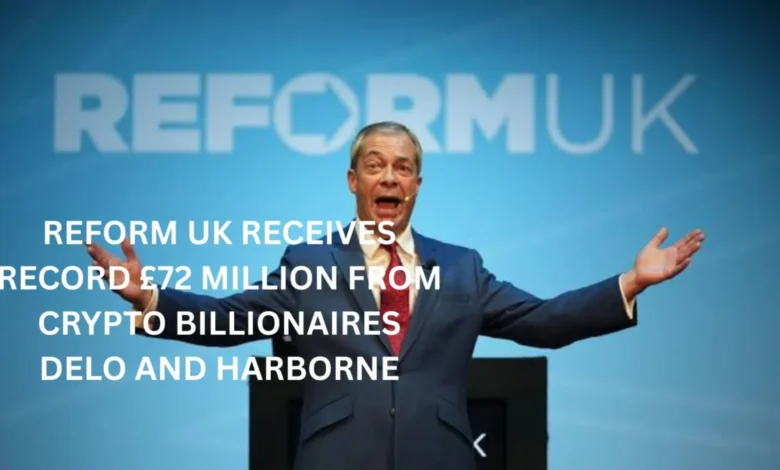
In an unprecedented development that has sent shockwaves through the corridors of Westminster, the Reform UK party has secured a combined £72 million ($97 million) in political funding from two prominent figures in the cryptocurrency sector. This massive injection of capital, facilitated by record-breaking donations from BitMEX co-founder Ben Delo and entrepreneur Christopher Harborne, represents the largest single infusion of private wealth into a British political entity in the nation’s history. The scale of this financial backing fundamentally alters the landscape of UK electioneering, providing Nigel Farage’s party with a war chest that challenges the traditional dominance of the Conservative and Labour parties.
The Mechanics of the Record-Breaking Donations
The financial surge was confirmed over a 48-hour period in September 2026. On Friday, Ben Delo, one of the co-founders of the crypto exchange BitMEX, went public with his donation of £36 million. The following day, Christopher Harborne, a long-term benefactor of the Reform movement, matched that figure exactly, bringing the total to £72 million.
For Harborne, this contribution is a significant escalation in his political involvement. Having previously donated £9 million to the party in August 2025, his latest move signals a high-conviction bet on the party’s long-term trajectory. According to statements published in the Daily Telegraph, the specific amount of £36 million was calculated by Delo to cover a period of 36 months—essentially £1 million per month—leading up to the anticipated 2029 general election. Delo justified the decision to provide the total sum as a lump-sum transfer rather than a recurring installment, citing a strategic desire to prevent potential institutional or regulatory interference that might block future transactions.
Chronology of Financial and Political Volatility
The influx of capital follows a tumultuous period for Nigel Farage and the Reform UK leadership. The timeline of recent events provides essential context for understanding the current political climate:
- August 2025: Christopher Harborne provides an initial £9 million donation to Reform UK, setting the stage for increased influence from the crypto-adjacent donor class.
- Early 2026: Increased scrutiny falls on Nigel Farage regarding his personal financial disclosures and his historical associations with figures in the digital asset sector, including Harborne and George Cottrell.
- July 2026: Amidst growing pressure regarding transparency and the investigation into his financial dealings, Farage resigns from his parliamentary seat, triggering a by-election.
- August 2026: Farage contests the by-election, securing a decisive victory with 63% of the vote against a field of candidates that included the internet-famous personality Count Binface.
- September 12-13, 2026: The announcement of the £72 million total donation, effectively insulating the party from short-term liquidity issues and providing a massive platform for the 2029 campaign cycle.
Motivations Behind the Crypto-Political Alliance
The motivations driving such substantial donations are centered on a shared narrative of disruption. Ben Delo, who received a pardon from President Donald Trump following a guilty plea regarding anti-money laundering violations in the United States, has been vocal about his ideological stance.
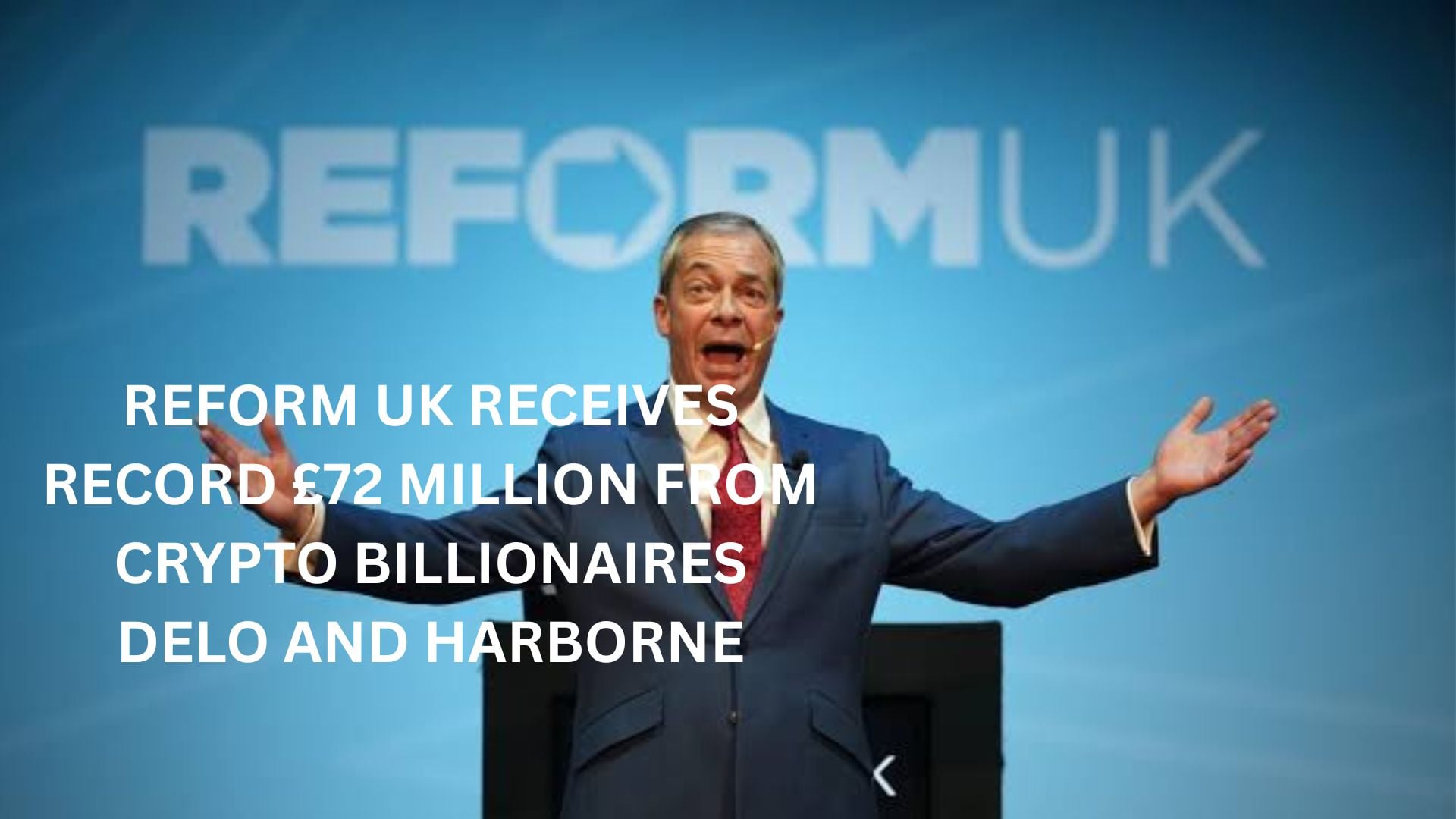
In a public statement, Delo criticized the existing political establishment, framing the current British political environment as a "cartel" that restricts genuine competition. By injecting record-breaking funds into Reform UK, Delo aims to level the playing field, arguing that the party needs to transition from a campaign-funding mindset to a "government-in-waiting" mindset. This rhetoric aligns with the broader crypto-libertarian ethos, which often emphasizes decentralization, transparency, and a skepticism of traditional institutional gatekeepers.
Regulatory and Political Implications
The scale of this funding has triggered immediate alarm within the House of Commons. Opposition members have raised questions regarding the influence of the digital asset industry over domestic policy. The concern is twofold: first, whether the donors are seeking specific policy concessions that would favor the crypto sector, and second, whether the influx of foreign or private-sector money is circumventing the traditional spirit of British campaign finance regulations.
While Farage has consistently maintained that all donations comply with the Electoral Commission’s guidelines, the sheer magnitude of this contribution puts pressure on the UK government to revisit existing legislation regarding political funding caps. In the UK, while there is no cap on the amount an individual can donate, the transparency requirements are strict. Critics argue that even if the donations are legal, the "professionalization" of political funding through billionaire donors creates a democratic deficit, where the voices of smaller donors and grassroots movements are drowned out by high-net-worth individuals.
The Role of Crypto in Modern Campaigning
The intersection of cryptocurrency wealth and populist politics is not unique to the UK. Globally, we have seen a trend where individuals from the tech and digital asset sectors seek to influence political outcomes that align with their interests—specifically regarding taxation, financial regulation, and the integration of blockchain technology into the economy.
For Reform UK, the funding is a double-edged sword. While it provides the resources to build a national infrastructure, hire top-tier staff, and launch aggressive media campaigns, it also paints a target on the party’s back. Farage has welcomed the funds, framing them as a necessary equalizer against the institutional advantages held by the major political parties. However, as the 2029 election approaches, the party will likely face sustained inquiries regarding the specific expectations of its donors.
Comparative Analysis of Political Funding
To understand the scale of £72 million, one must look at recent election expenditure. During the last UK general election cycles, the primary parties spent tens of millions of pounds across the entire campaign period. A single donation of this size, provided years in advance, allows Reform UK to engage in long-term strategic planning that rivals the capacity of established parliamentary parties.

If this model proves successful, it may incentivize other wealthy donors to pivot toward smaller, ideologically focused parties. This could lead to a permanent shift in the British political economy, where the barrier to entry for third parties is lowered by the availability of "venture capital-style" funding, but at the cost of increased public skepticism regarding the influence of private interests.
Looking Ahead: The Road to 2029
The immediate aftermath of this announcement will likely involve intensive scrutiny from the media and regulatory bodies. The Electoral Commission is expected to conduct a routine review of the donations to ensure all protocols were followed, particularly concerning the source of the funds and the identity of the beneficial owners.
For Nigel Farage, the challenge will be to balance the influx of this "crypto-capital" with the party’s populist platform. If the party is perceived as being "bought" by external interests, it may alienate the working-class base that helped him secure his recent parliamentary victory. Conversely, if he can successfully leverage these resources to provide tangible policy alternatives, he may cement Reform UK as a permanent, influential fixture in British politics.
Ultimately, the £72 million donation is more than a financial transaction; it is a signal that the traditional gatekeepers of British politics are facing a new kind of competition. Whether this will lead to a more vibrant, competitive democracy or one increasingly susceptible to the influence of global wealth remains to be seen. As the 2029 election cycle begins to take shape, the role of digital wealth in shaping the future of the United Kingdom will undoubtedly remain a focal point of national debate.