The launch follows a series of incremental updates throughout the first half of the year, signaling OpenAI’s shift toward more granular, task-specific intelligence. Industry analysts suggest that GPT-5.6 represents the company’s most aggressive attempt to date to capture the professional software engineering and enterprise automation markets, areas where Anthropic has traditionally held a narrow lead in planning and implementation tasks.
The Planetary Architecture: Sol, Terra, and Luna
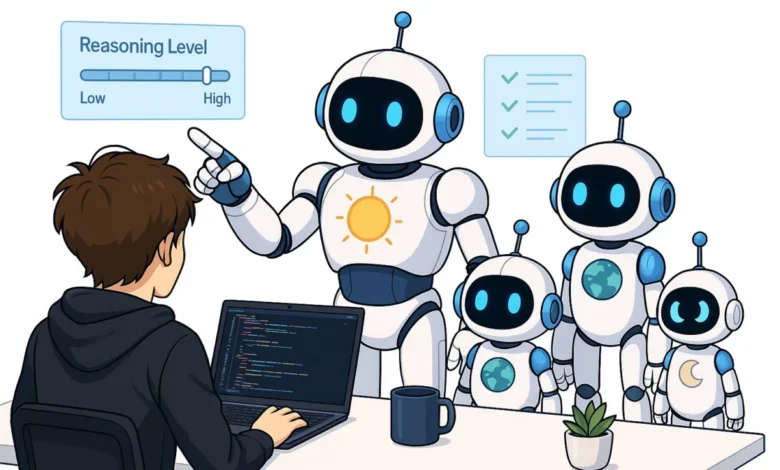
Central to the GPT-5.6 rollout is a new nomenclature for model sizes, departing from the "mini" or "small/large" designations of the past. OpenAI has adopted a "Planetary Architecture" to categorize the models based on their scale and computational power:
- Sol (The Sun): This is the flagship frontier model, designed for maximum performance. It is intended for the most complex reasoning tasks, including architectural planning, deep-logic code reviews, and multi-step scientific simulations.
- Terra (The Earth): A mid-tier model optimized for a balance between speed and capability. Early benchmarks suggest that when paired with higher reasoning efforts, Terra can perform on par with Sol in specific domains while maintaining a lower latency profile.
- Luna (The Moon): The most compact and efficient model in the lineup, designed for high-speed interactions, edge computing, and tasks where low-latency responses are prioritized over deep logical deduction.
This tiered approach allows developers to allocate resources more efficiently, utilizing the massive power of Sol for foundational planning while delegating repetitive implementation or testing tasks to Terra or Luna.
Reasoning Effort and the Compute-Quality Trade-off
A defining feature of GPT-5.6 is the introduction of selectable reasoning levels. This mechanism allows the model to "think" for extended periods before generating an output, a process known as inference-time compute. The levels range from "Low" to "Ultra," with the latter providing the highest quality responses at the cost of significant time and usage credits.
Technical evaluations of the reasoning modes indicate a clear correlation between "Extra High" or "Ultra" thinking and the model’s ability to navigate complex repositories. However, these modes come with a distinct set of operational constraints. In high-reasoning modes, the model is noticeably slower, and the consumption of usage limits is accelerated. This has led to a strategic shift in how power users interact with the model, often employing a hybrid approach: using high-reasoning modes for the initial "Plan" phase of a project and switching to "Medium" or "Low" reasoning for the actual "Implementation" or "Execution" phase.
Comparative Performance in Software Engineering
In the realm of software development, GPT-5.6 has demonstrated measurable improvements over its predecessor, GPT-5.5, particularly in the precision and recall of code reviews. Precision—the accuracy of reported bugs—and recall—the ability to identify all existing vulnerabilities—have both seen incremental gains.
When compared to Anthropic’s Opus 4.8, GPT-5.6 is reported to be superior in the diagnostic phase of engineering. It excels at identifying edge cases and architectural flaws that human reviewers might overlook. However, early adoption data suggests that for the actual implementation of code based on a set plan, many engineers still prefer a multi-model workflow. A common high-efficiency setup involves using Anthropic’s Fable 5 for initial planning, Opus 4.8 for the heavy lifting of code generation, and GPT-5.6 as the final "gatekeeper" for code review.
GPT-5.6 also introduces enhanced "Computer Use" and browser navigation capabilities. The model demonstrates high fidelity in interacting with web-based interfaces, which is critical for end-to-end testing and automated browser actions. When operating at a "Medium" reasoning level, the model navigates browser environments with a speed and accuracy that surpasses previous generations, making it a viable tool for autonomous quality assurance.

Resource Management and the Token Economy
OpenAI has adjusted its subscription models and usage limits to accommodate the high computational demands of GPT-5.6. A notable change is the removal of the traditional five-hour usage window in favor of a weekly limit system, providing users with more flexibility in how they distribute their high-intensity tasks.
To address the rapid depletion of tokens during "Ultra" reasoning sessions, OpenAI has introduced "Banked Resets." Unlike the automatic resets that occur at the end of a billing cycle, a Banked Reset is a manual trigger that a subscriber can use to immediately restore their usage limits to zero. This feature is particularly valuable for professional teams facing tight deadlines or high-volume project requirements. However, users are cautioned that triggering a Banked Reset also resets the chronological timer for the next scheduled limit refresh, requiring careful strategic planning of resource consumption.
Integration via Model Context Protocol (MCP)
GPT-5.6 has been designed with deep interoperability in mind. It fully supports the Model Context Protocol (MCP), allowing it to integrate seamlessly with a user’s existing digital ecosystem. This includes direct access to Gmail, Google Calendar, Slack, and specialized tools like Playwright.
The effectiveness of GPT-5.6 is heavily dependent on the breadth of this integration. Analysts have noted that when the model is granted full access to a developer’s environment via MCP, its ability to provide context-aware solutions increases exponentially. For instance, it can cross-reference a bug report in Slack with a code commit in a repository and a scheduled deployment in a calendar to provide a comprehensive resolution plan.
Timeline of OpenAI’s Frontier Model Evolution
The release of GPT-5.6 is the latest milestone in a timeline characterized by rapid iteration:
- Late 2024: Release of GPT-o1, introducing the concept of "reasoning" through chain-of-thought processing.
- Mid 2025: Launch of GPT-5.0, the first true next-generation multimodal model.
- Early 2026: GPT-5.5 enters the market, focusing on refinement and professional coding benchmarks.
- July 2026: GPT-5.6 is released, introducing the Sol/Terra/Luna architecture and granular reasoning controls.
This trajectory indicates a move away from the "one-size-fits-all" model toward a more modular and adjustable AI experience, where "intelligence" is treated as a dial that can be turned up or down based on the specific needs of the task.
Broader Implications and Future Outlook
The introduction of GPT-5.6 has profound implications for the future of the workforce, particularly in the tech sector. As AI models become increasingly proficient at code review and planning, the role of the human engineer is shifting from "writer" to "editor" and "architect." The high accuracy of GPT-5.6 in reviewing code suggests a future where human intervention in the standard code-review cycle may become optional for all but the most critical infrastructure.
Furthermore, the competitive pressure on Anthropic and other AI labs is expected to intensify. The "reasoning war" is no longer just about which model is smarter, but which model is most efficient in its use of compute and most flexible in its integration with human workflows.
As OpenAI continues to provide "Banked Resets" and refine its tiered reasoning system, the industry is watching closely to see if the Planetary Architecture becomes the new standard for model delivery. For now, GPT-5.6 stands as a testament to the maturation of the AI industry—a model that is not just a chatbot, but a sophisticated, multi-layered tool designed for the rigors of professional engineering and complex problem-solving. Users are encouraged to experiment with the different sizes and reasoning efforts to find the specific configuration that aligns with their operational goals, as the era of "AI-first" engineering continues to evolve.
Related posts: