The End of Hegemony and the Rise of the Paper Tigers: A New Era of Global Power Dynamics

The landscape of international relations has reached a definitive turning point, marking the end of an era where a handful of "Great Powers" dictated the course of human history. For decades, the global order was predicated on the assumption that massive military expenditures and high Gross Domestic Product (GDP) automatically translated into geopolitical control. However, by mid-2026, this paradigm has been thoroughly dismantled. The traditional titans of the 20th century, specifically the United States and the Russian Federation, find themselves grappling with a reality where their perceived strength has been exposed as a facade—a "paper tiger" phenomenon that the ancient historian Thucydides might have viewed as the ultimate irony of imperial overreach.
The current global state of affairs is characterized by what political scientists are calling "The Great Realignment." In this new world, smaller, supposedly weaker nations have demonstrated an unprecedented ability to stall, frustrate, and even humiliate their larger counterparts. Ukraine’s continued resistance against Russian incursions and Iran’s ability to navigate and counter American pressure have served as the primary catalysts for this shift. The result is a world where the "golden heads" of the old powers remain visible in the form of nuclear arsenals and historical prestige, but their "feet of clay"—the underlying economic, social, and logistical vulnerabilities—have been laid bare for all to see.
The Disintegration of the Russian Federation
The most dramatic manifestation of this shift is the steady disintegration of the Russian state. What was once billed as the world’s "second-greatest military" has been bogged down in a war of attrition that has drained its treasury, decimated its youth, and fractured its internal political cohesion. By 2026, the Russian economy has become a hollowed-out shell, reliant almost entirely on shadow exports and increasingly unfavorable trade terms with regional neighbors.
The failure of Russian military doctrine in Ukraine was not merely a tactical error but a systemic collapse. Analysts point to the "Thucydidean irony" mentioned by Harold James: Russia, driven by outdated calculations of 19th-century land-power dominance, failed to account for the democratization of high-tech warfare. Small, agile units equipped with decentralized intelligence and precision munitions proved more effective than massive, centralized armored divisions. As the central government in Moscow struggles to maintain control over its vast territories, separatist sentiments in the Far East and the Caucasus have intensified, leading to a state that is increasingly unrecognizable from the superpower that emerged from the Cold War.
The Erosion of American International Standing
Parallel to the Russian decline is the diminishment of the United States’ role as the "indispensable nation." The presidency of Donald Trump and the subsequent political volatility in Washington have significantly altered the trajectory of American foreign policy. The "America First" doctrine, while aimed at domestic revitalization, resulted in a perceived withdrawal from the global stage, creating a vacuum that was filled not by a single successor, but by a chaotic multipolarity.
The exposure of the United States as a "paper tiger" in specific regional contexts—most notably in its dealings with Iran—has signaled to the world that American military might is no longer a guaranteed deterrent. Iran’s ability to maintain its regional influence and advance its nuclear capabilities despite years of "maximum pressure" campaigns has demonstrated the limits of economic sanctions and conventional military posturing. Domestic polarization within the U.S. has further weakened its hand, as allies in Europe and Asia can no longer rely on the continuity of American commitments from one election cycle to the next.
A Chronology of the Great Realignment (2022–2026)
To understand the current state of global politics, it is necessary to examine the timeline of events that led to the discrediting of the big powers:
- February 2022: Russia launches its full-scale invasion of Ukraine, expecting a swift victory. Instead, it encounters a modernized, motivated defense and a unified Western economic response.
- November 2024: A contentious U.S. presidential election leads to a period of intense domestic instability, further signaling to international partners that the U.S. is preoccupied with internal strife.
- Summer 2025: The "Great Russian Attrition" begins. Major industrial hubs in Russia report a 40% decline in output due to the lack of specialized parts and a mass exodus of the professional class.
- January 2026: A series of regional security pacts are signed in Southeast Asia and the Middle East that notably exclude both the U.S. and Russia, marking the formalization of a "Post-Superpower" era.
- July 2026: Leading economists and political scientists at Princeton and other global institutions declare the traditional "Great Power" model obsolete, citing the rise of "asymmetric influence."
Supporting Data: The Cost of Overreach
The decline of the old powers is reflected in the data. While the U.S. continues to spend over $800 billion annually on defense, the return on this investment in terms of geopolitical stability has plummeted. In contrast, smaller nations have utilized a fraction of that spending to achieve disproportionate results.
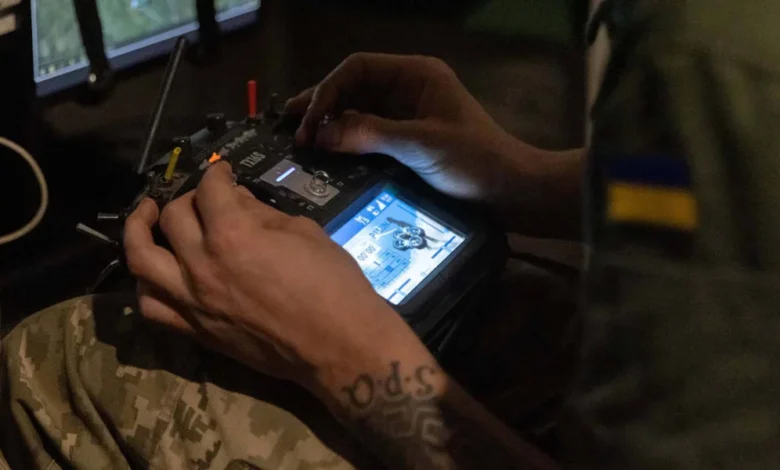
- Military Effectiveness Gap: In 2025, data indicated that low-cost drone technology and cyber-warfare capabilities—accessible to nations with 1/100th of the U.S. defense budget—could effectively neutralize multi-billion dollar carrier strike groups or armored divisions.
- Economic Fragmentation: The share of global trade conducted in U.S. dollars fell to a record low by the first quarter of 2026, as "middle powers" like Brazil, India, and Indonesia began settling trades in local currencies to insulate themselves from U.S. sanctions.
- Russian Demographics: Russia’s working-age population is projected to shrink by an additional 3 million by the end of 2026, a direct result of war casualties and the "brain drain" of over 1.5 million skilled workers since 2022.
Official Responses and Global Perspectives
The reaction to this shift varies by region. In Brussels, European leaders have accelerated the "Strategic Autonomy" initiative, seeking to build a continental defense framework that does not rely on the vagaries of American politics. European Commission officials have stated that "the era of the security umbrella is over; we must now build our own roof."
In Beijing, the perspective is one of cautious opportunism. While China has benefited from the weakening of its rivals, it also views the "disintegration" of Russia with alarm, fearing the instability of a nuclear-armed neighbor in collapse. Chinese state media has frequently commented on the "unraveling of the Western hegemony," while simultaneously tightening its own internal controls to avoid the "feet of clay" trap.
Meanwhile, the "Global South" has largely welcomed the dilution of great power influence. Leaders in Africa and Latin America have increasingly refused to take sides in the remnants of East-West rivalries, opting instead for a "multi-aligned" approach that prioritizes local development over the ideological demands of Washington or Moscow.
Analysis of Implications: The Death of the Old Guard
The implications of this new reality are profound. First, the concept of a "Superpower" may be a relic of the industrial age. In the information age, power is decentralized. The ability of a nation like Ukraine to defend its sovereignty against a nuclear-armed neighbor has proven that willpower, technological adaptation, and localized intelligence are more valuable than raw caloric or industrial output.
Second, the discrediting of the big powers has led to a "crisis of legitimacy" in international institutions. The UN Security Council, dominated by the very powers whose "feet of clay" have been exposed, is increasingly seen as an anachronism. There is a growing movement to reform global governance to reflect the actual distribution of influence in 2026, rather than the victors of 1945.
Finally, the irony highlighted by Harold James serves as a warning for the future. The "foolish military interventions" of the past decade were driven by a refusal to accept that the world had changed. The big powers continued to play a game of 20th-century chess while the rest of the world moved to a multi-dimensional, digital arena. As Russia continues its internal fracturing and the United States seeks to redefine its purpose, the world must prepare for a period of heightened volatility. The "paper tigers" are still dangerous—not because of their strength, but because of the desperation that comes with the loss of status.
In conclusion, the events leading up to July 2026 have confirmed that the old big powers are no longer the sole arbiters of global destiny. The exposure of their vulnerabilities has opened the door for a more complex, fragmented, and perhaps more democratic international system. However, the transition from a world of giants to a world of many players remains fraught with risk, as the old guard struggles to reconcile its golden past with its fragile present.