The Wealth of Silence and the Architecture of Impunity How Global Oligarchy and Offshore Systems Shield the Ultra-Rich from Accountability

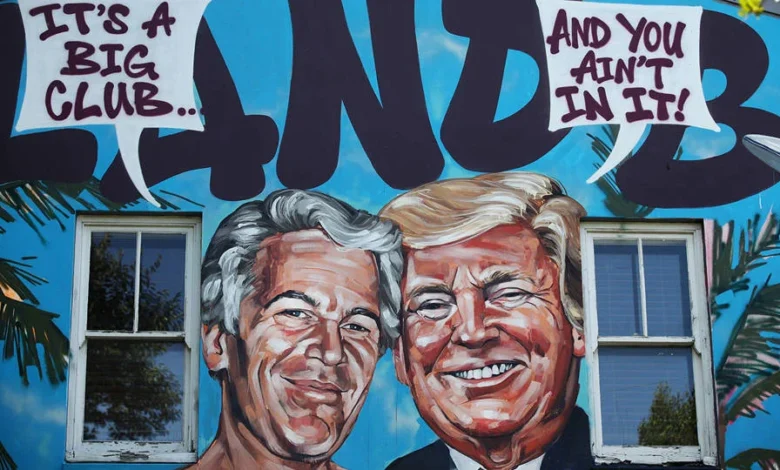
The unprecedented concentration of global wealth has fundamentally reshaped the landscape of international justice, creating a bifurcated legal reality where the ultra-wealthy operate within a sphere of near-total impunity. For decades, the mechanisms of this shadow world remained largely invisible to the public, obscured by complex financial instruments and the discrete services of a specialized class of wealth managers. However, the recurring scandals involving figures such as Jeffrey Epstein have pulled back the curtain on these networks, revealing how extreme economic inequality facilitates the erosion of moral and legal norms. The impunity enjoyed by Epstein and his associates was not an anomaly but rather the logical outcome of a global offshore financial system designed to decouple wealth from the social and legal obligations that govern the rest of civil society.
The Mechanism of Modern Oligarchy
At the heart of this systemic inequality lies the offshore financial world—a sprawling network of jurisdictions, trusts, and shell companies that allow the world’s most affluent individuals to bypass national regulations. This system does more than just facilitate tax avoidance; it provides a sanctuary for behavior that would otherwise be subject to intense state scrutiny. Sociologists and economists have long argued that when wealth reaches a certain threshold, it ceases to be merely a tool for consumption and becomes a tool for political and legal leverage.
In the case of Jeffrey Epstein, the offshore system provided the logistical and financial infrastructure necessary to maintain a decades-long criminal enterprise. By utilizing jurisdictions with high levels of secrecy, such as the U.S. Virgin Islands and various Caribbean tax havens, Epstein was able to move vast sums of money and manage properties with minimal oversight. This financial opacity is the bedrock of what Brooke Harrington and other scholars describe as the "architecture of impunity." When assets are hidden, the individuals who own them become effectively untraceable to standard law enforcement mechanisms, allowing them to cultivate influence through private philanthropy and political donations that further insulate them from accountability.
A Chronology of Exposure: From Secrecy to Public Scrutiny
The past decade has been marked by a series of massive data leaks that have brought the "Sasquatch" of elite networks into the light. These events have provided the empirical evidence needed to understand how the global oligarchy maintains its status.
- 2016: The Panama Papers. The release of 11.5 million documents from the law firm Mossack Fonseca revealed how heads of state, billionaires, and celebrities used offshore entities to hide assets. This was the first major blow to the veil of secrecy surrounding the global elite.
- 2017: The Paradise Papers. This leak focused on the offshore activities of multinational corporations and high-net-worth individuals, highlighting the role of prestigious law firms in crafting complex tax-avoidance schemes.
- 2019: The Re-Arrest of Jeffrey Epstein. While Epstein’s 2008 non-prosecution agreement in Florida had long been a point of contention, his 2019 arrest by federal prosecutors in New York signaled a shift in the willingness of the state to challenge high-level protection networks.
- 2021: The Pandora Papers. The largest leak to date, involving nearly 12 million documents, exposed the offshore accounts of more than 300 public officials and 35 current and former world leaders, proving that the system of impunity is deeply entrenched within the highest levels of global governance.
These milestones have transformed the public’s understanding of wealth. No longer viewed as merely the result of individual success, extreme wealth is increasingly seen as a systemic byproduct of a legal framework that prioritizes capital mobility over human rights and national sovereignty.
Data and the Scale of Economic Inequality
The scale of wealth concentration is difficult to overstate. According to data from the Tax Justice Network and economist Gabriel Zucman, an estimated $8.7 trillion—roughly 10% of global GDP—is held in offshore tax havens. In the United States, the top 0.1% of households hold roughly the same amount of wealth as the bottom 90%.
This concentration has profound implications for political equality. A landmark 2014 study by Martin Gilens and Benjamin Page found that the preferences of the average American citizen have a "near-zero, statistically non-significant impact upon public policy," while the preferences of economic elites have a highly significant impact. This "political inequality" is what allows for the creation of non-prosecution agreements and "sweetheart deals" that protect wealthy defendants from the consequences of their actions. In the Epstein case, the 2008 deal—which allowed him to serve a minimal sentence in a private wing of a local jail with daily work release—stands as a stark example of how legal outcomes are often negotiated rather than adjudicated for those with sufficient resources.
The Role of Professional Intermediaries
The maintenance of this system requires more than just money; it requires a specialized workforce. Lawyers, accountants, and wealth managers act as the "enablers" of the global oligarchy. These professionals are trained to exploit the "gray zones" between different national legal systems. By creating multi-layered corporate structures where a trust in the Cook Islands owns a company in Delaware which in turn owns a yacht in the Mediterranean, wealth managers create a "jurisdictional fog" that is nearly impossible for even the most well-funded government agencies to penetrate.
These intermediaries often view their work as a neutral technical service, yet the cumulative effect of their labor is the creation of a parallel legal system. In this system, the concept of "sovereignty" is repurposed: instead of the state exercising power over its citizens, the wealthy individual exercises power over the state by choosing which laws they wish to follow and which jurisdictions they wish to inhabit.
Global Reactions and Regulatory Responses
In response to the growing public outcry over elite impunity, international bodies have begun to push for greater transparency. The Organization for Economic Co-operation and Development (OECD) has spearheaded the Common Reporting Standard (CRS), which facilitates the automatic exchange of financial account information between countries.
In the United States, the passage of the Corporate Transparency Act in 2021 marked a significant step toward ending the use of anonymous shell companies. The law requires many small and mid-sized businesses to report their "beneficial owners" to the Financial Crimes Enforcement Network (FinCEN). However, critics argue that the law contains numerous exemptions for the types of large-scale trusts and private equity vehicles most commonly used by the ultra-wealthy.
International reactions have also seen a surge in "wealth taxes" and "windfall taxes" discussions in various European parliaments. Proponents argue that the only way to curb the political influence of the oligarchy is to reduce the sheer volume of capital they control. Conversely, opponents suggest that such measures only drive wealth further into the shadows, reinforcing the cycle of secrecy.
Broader Implications for the Rule of Law
The persistence of elite impunity poses a fundamental threat to the stability of democratic institutions. When a significant portion of the population perceives that the law applies only to the poor and middle class, the social contract begins to dissolve. This erosion of trust manifests in the rise of populist movements and a general cynicism toward the judicial system.
The Epstein saga, and the broader networks it exposed, serve as a warning that the "Sasquatch" of hidden elite influence is no longer a myth but a documented reality of the 21st-century global economy. The challenge for modern governance is not merely to prosecute individual bad actors, but to dismantle the financial and legal infrastructure that makes their impunity possible.
As long as the offshore system remains intact, and as long as wealth managers can continue to manufacture "legal invisibility" for their clients, the moral norms that bind a society together will remain under threat. The transition from a world of hidden oligarchic networks to one of transparent, universal accountability requires a fundamental reevaluation of how global finance is regulated and how the concept of "private wealth" is balanced against the public interest.
Conclusion
The impunity of the global elite is a systemic issue that requires a systemic solution. The revelations of the past decade have provided a roadmap for understanding how wealth concentration leads to political and moral exemption. While legislative steps toward transparency are a beginning, the deep-seated structures of the offshore world continue to offer a refuge for those with the means to buy their way out of the social contract. The path forward involves not just the closing of tax loopholes, but a global commitment to the principle that no individual—regardless of their net worth or the complexity of their financial holdings—is above the law. Only by addressing the root causes of economic inequality and the architecture of secrecy that sustains it can the rule of law be restored to its rightful place as a universal standard.