Eli Lilly: A Pharmaceutical Titan’s Growth Trajectory, Market Dynamics, and Future Prospects

Eli Lilly, a globally recognized pharmaceutical powerhouse, stands as a testament to innovation and market dominance, boasting a current market capitalization nearing $1.1 trillion. The company’s extensive portfolio spans critical therapeutic areas including diabetes, obesity, oncology, immunology, and neuroscience. However, it is the monumental success of its blockbuster treatments, Mounjaro and Zepbound, for diabetes and weight management, that has propelled the company to the forefront of the industry, establishing them as its primary growth engines. These groundbreaking medications are complemented by a strong lineup of established products such as Verzenio for cancer, Jardiance for diabetes, Taltz for autoimmune diseases, and Kisunla, an emerging treatment for Alzheimer’s disease.
The company’s strategic vision is firmly fixed on the future, with a robust pipeline spearheaded by next-generation obesity drugs, notably retatrutide, and the expansion of its tirzepatide platform into additional metabolic and cardiovascular indications. This forward-looking approach also includes significant investments in developing novel treatments for Alzheimer’s disease, various cancers, and inflammatory disorders, signaling a commitment to addressing unmet medical needs across a broad spectrum of human health challenges.
A Trajectory of Sustained Revenue Growth and Evolving Profitability
Eli Lilly has demonstrated a remarkable and consistent upward trend in revenue, achieving growth for eight consecutive years, a performance analysts and the company expect to continue. While revenue figures have shown unwavering strength, profitability has exhibited a more dynamic pattern. The company has experienced periods of sharp profit gains, often followed by phases of flat or diminished earnings. This ebb and flow in profitability underscores the complex nature of pharmaceutical research and development, market dynamics, and the lifecycle of drug patents.
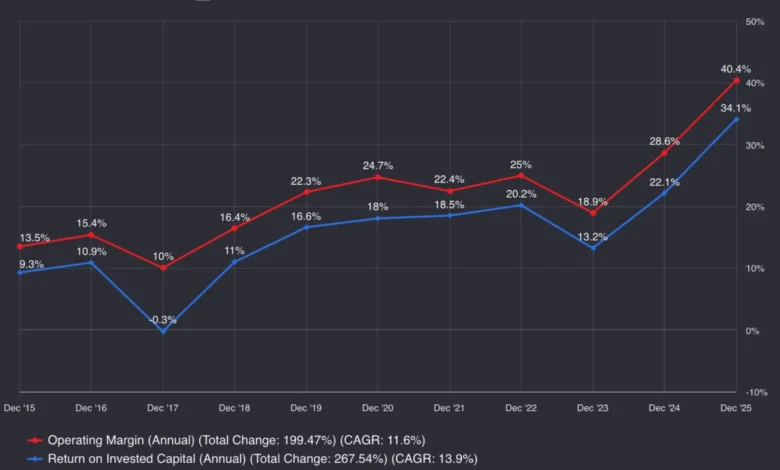
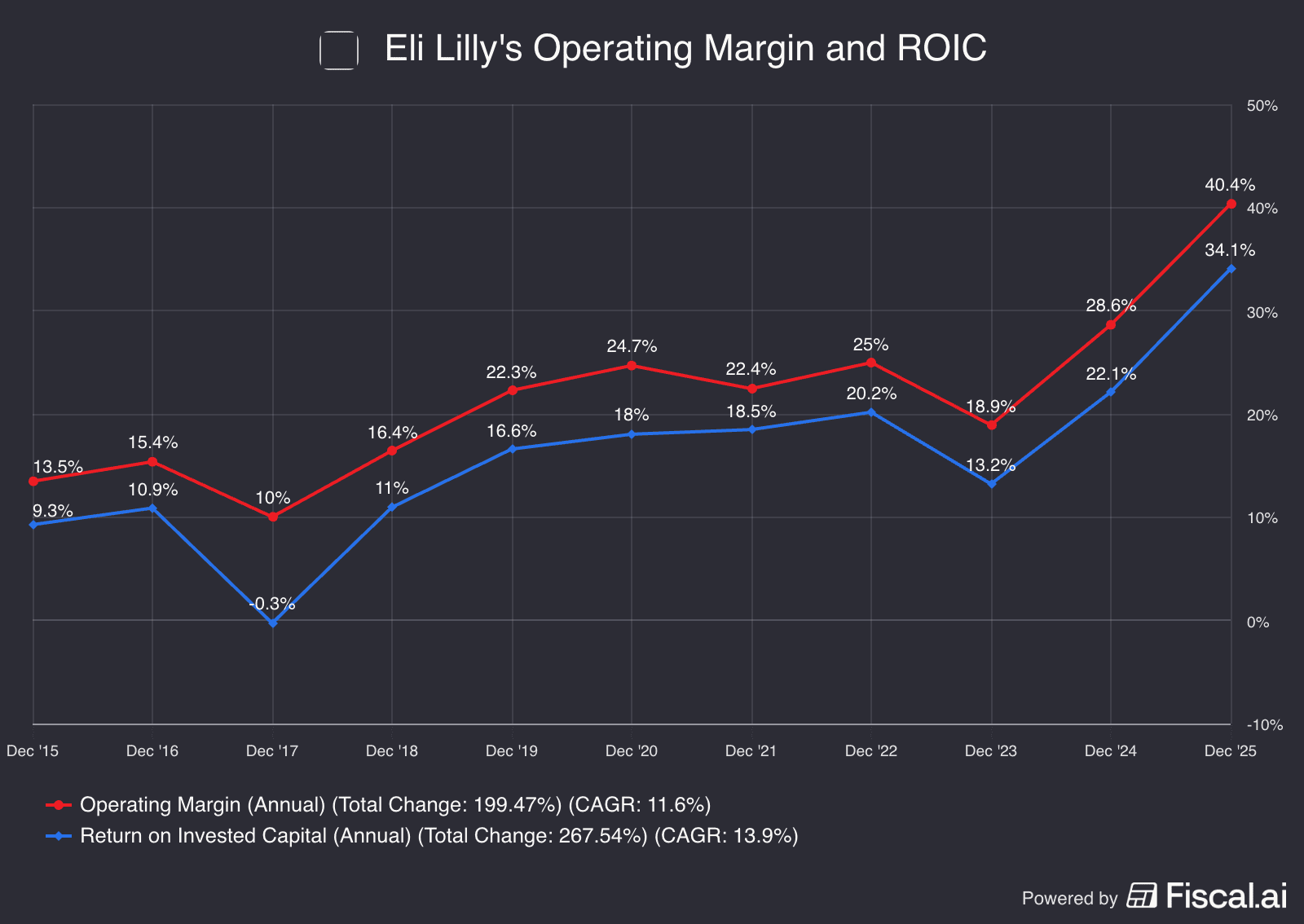
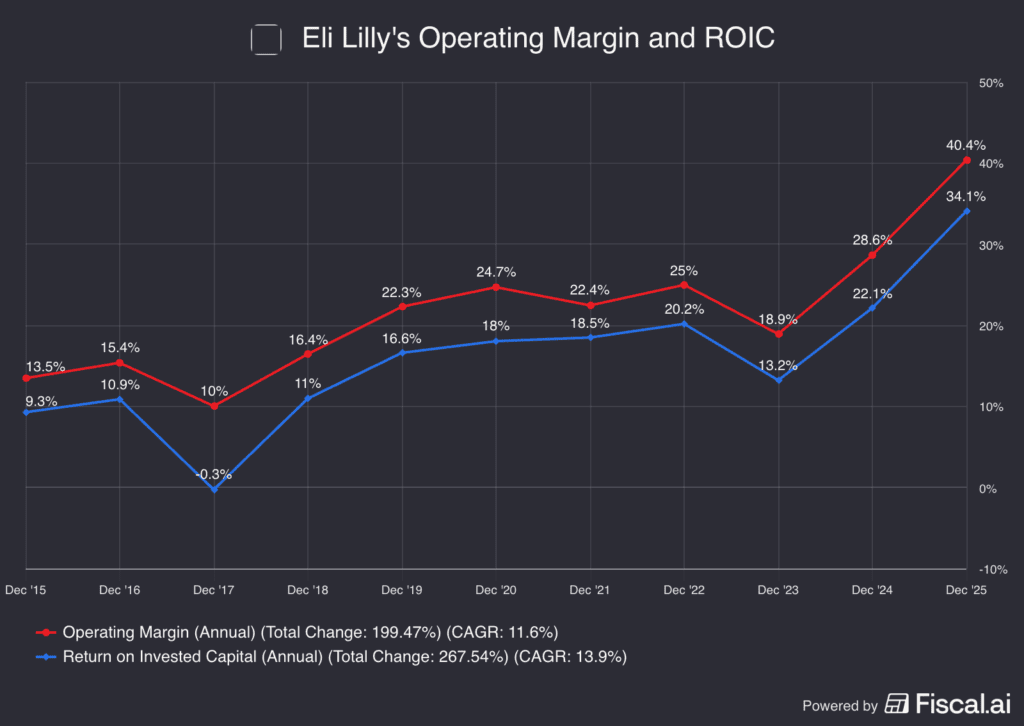
To provide a more granular understanding of the company’s financial health, an examination of its operating margins and Return on Invested Capital (ROIC) offers crucial insights. Over the past few years, Eli Lilly has witnessed a discernible strengthening of its margin profile, indicating enhanced operational efficiency and pricing power. Concurrently, the company has achieved improved returns on its investments, a positive indicator of its ability to effectively deploy capital to generate profits and shareholder value. This dual improvement in margins and ROIC paints a picture of a company not only growing its top line but also becoming more adept at converting those revenues into bottom-line results.
Future Growth Projections: Analyst Consensus and Market Expectations
The financial outlook for Eli Lilly remains exceptionally optimistic, as reflected in upward revisions of earnings estimates. Over the past three and six months, analyst consensus for earnings per share has seen upward adjustments of 4.3% and 7.1%, respectively. This consistent positive revision trend suggests that the market is increasingly factoring in the sustained growth observed in both revenue and earnings over recent years.
Bloomberg data further corroborates this positive sentiment, with analysts projecting a continued upward trajectory. While specific quantitative projections for every segment are not detailed in the provided information, the overall analyst consensus points towards sustained growth. The consensus price target for Eli Lilly stock (LLY) currently stands at approximately $1345, implying a potential upside of about 14% from current trading levels. This target suggests that a significant portion of the market views the company’s current valuation as potentially undervalued, considering its growth prospects and market position.
Valuation Dynamics: Navigating a Premium Market
Eli Lilly’s current valuation presents a compelling narrative within the broader pharmaceutical landscape. While its forward earnings multiple remains notably below the peaks attained during the zenith of GLP-1 enthusiasm, a period that saw significant surges in valuations for both Eli Lilly and its key competitor, Novo Nordisk, the company’s valuation is still in a state of flux. The stock has demonstrated resilience, finding support in the range of 23 to 25 times forward earnings over the past year. This range, which previously acted as a ceiling, has now become a foundational support level, highlighting increased investor confidence and sustained demand. The upper bounds of its valuation remain less defined, with shares experiencing a stall near 35 times forward earnings earlier in the year.
Crucially, Eli Lilly’s current market standing is underpinned by its enhanced financial metrics. The company now boasts stronger profit margins, higher ROIC, and consistent revenue and earnings growth. The recent attainment of record highs in its stock price, even as its valuation multiple approached its 2026 low, serves as a powerful illustration of the rapid expansion of its earnings – the "E" in the Price-to-Earnings (P/E) ratio. This dynamic suggests that investor focus is increasingly shifting towards the company’s fundamental earnings power as a primary driver of its stock performance, rather than solely relying on valuation multiples.
Navigating the Risks: Concentration and Market Access
Despite its formidable strengths, Eli Lilly faces several significant risks that warrant careful consideration. A primary concern is the company’s increasing reliance on its blockbuster drugs, Mounjaro and Zepbound. These medications are the linchpin of its current growth strategy, making the company’s financial performance susceptible to a range of external factors. Potential threats include intensified competition from rival treatments, unforeseen manufacturing constraints that could limit supply, emerging safety concerns that might impact patient adoption or regulatory standing, or demand that falls short of market expectations.
The competitive landscape in the obesity and diabetes markets is evolving rapidly. The introduction of novel obesity drugs by competitors, or the development of alternative therapeutic approaches, could exert pressure on Eli Lilly’s market share and pricing power. Furthermore, the broader adoption of weight-loss drugs remains a significant hurdle. Many insurance providers and employers continue to impose limitations on coverage for these medications, creating access challenges for a substantial segment of the patient population.
Beyond the specific market dynamics of its leading drugs, Eli Lilly is also exposed to the inherent risks characteristic of the pharmaceutical industry. These include the possibility of clinical trial failures for pipeline candidates, delays in regulatory approvals, ongoing patent disputes that could impact exclusivity periods, and persistent pricing pressures from healthcare systems and governments worldwide. Given the stock’s current premium valuation, even a minor setback or a perceived misstep in any of these areas could trigger a disproportionately significant negative reaction in its stock price.
The Bottom Line: A Balanced Perspective on a Growth Leader
Eli Lilly has firmly established itself as a leading force in the pharmaceutical sector, underpinned by a compelling growth narrative. This narrative is supported by a foundation of rapid revenue expansion, steadily improving profitability, and a comprehensive and promising pipeline of future treatments. The company’s ability to significantly grow its earnings has been instrumental in keeping its stock valuation within a more manageable range, even as its share price has recently ascended to new record highs.
From a bullish perspective, investors can point to Eli Lilly’s dominant market position in key therapeutic areas, its continuously strengthening financial fundamentals, and a substantial runway for future growth driven by its innovative pipeline and expanding indications for its existing blockbuster drugs. The company’s strategic focus on addressing significant unmet medical needs positions it favorably for sustained long-term success.
Conversely, bearish arguments often highlight the increasing competitive pressures within the obesity and diabetes markets. The high expectations currently priced into the stock, coupled with the inherent risks associated with relying heavily on a few key growth drivers, present potential vulnerabilities. Any disruption to the success of Mounjaro and Zepbound could have a pronounced impact on the company’s overall performance and market valuation. Therefore, a balanced approach, acknowledging both the significant opportunities and the potential challenges, is crucial for investors evaluating Eli Lilly’s future prospects.
Disclaimer: This article is for informational purposes only and does not constitute financial advice. Investing in the stock market involves risks, and past performance is not indicative of future results. The information provided is based on publicly available data and analysis as of the date of publication. Due to market volatility, some of the prices or scenarios discussed may have already been reached or played out. Investors are encouraged to conduct their own due diligence and consult with a qualified financial advisor before making any investment decisions.