Netflix Stock Faces Crucial Juncture as Valuation Dips and Growth Questions Emerge

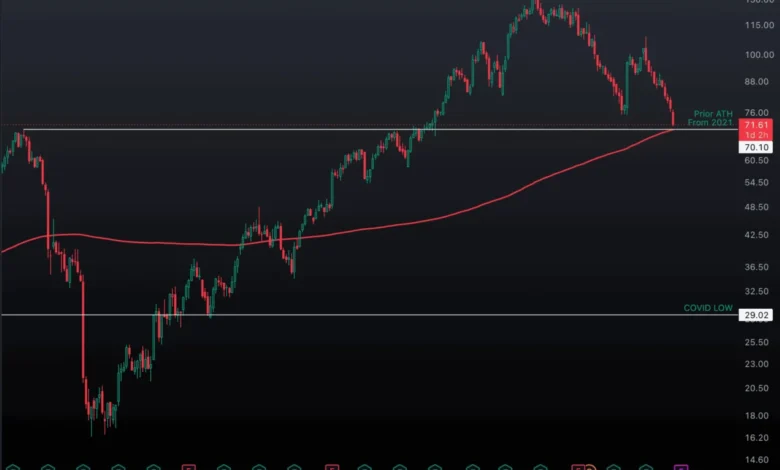
Netflix, the global streaming giant renowned for its expansive library of television series, films, documentaries, and mobile games spanning diverse genres and languages, is currently navigating a period of significant market scrutiny. The company’s stock, which experienced a meteoric rise from 2015 to 2021, achieving gains exceeding 1,100%, has since entered a more volatile phase. Following a substantial decline of over 50% in 2022, the stock had reached record highs in early 2024 and 2025. However, recent performance has seen a notable downturn, with shares now down over 20% year-to-date and nearly 50% from their peak. This pullback has ignited a debate among investors regarding the company’s future trajectory, with technical and fundamental analysts alike seeking clarity on potential support levels and underlying business health.
A Volatile Trajectory: From Exponential Growth to Market Correction
The period between 2015 and 2021 represented a golden age for Netflix investors. The company’s innovative streaming model, coupled with a relentless focus on original content production, captured a significant share of the global entertainment market. This period of sustained growth translated into a remarkable ascent for its stock, rewarding early adopters with substantial returns. However, the landscape of streaming entertainment has evolved dramatically. Increased competition from established media conglomerates launching their own platforms, coupled with shifting consumer habits and macroeconomic headwinds, began to exert pressure on Netflix’s once-unassailable position.
The year 2022 marked a significant inflection point. A confluence of factors, including subscriber growth deceleration, increased content spending to fend off rivals, and broader market concerns about inflation and interest rates, led to a sharp correction in Netflix’s stock price. The decline of over 50% served as a stark reminder that even dominant players are not immune to market downturns. While the company managed to rebound and reach new all-time highs in the subsequent years, this rally appears to have been met with renewed skepticism, as evidenced by the current decline.
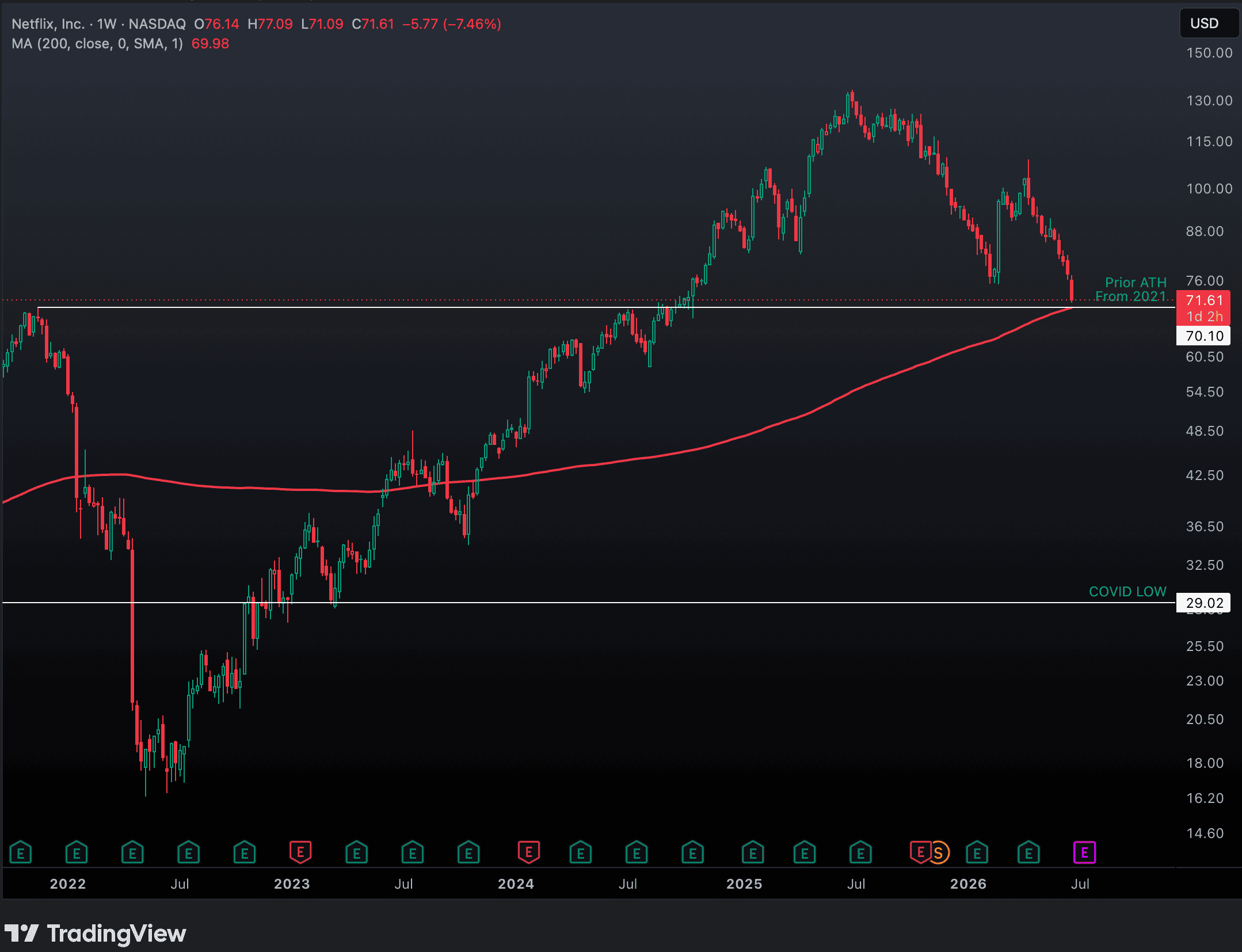
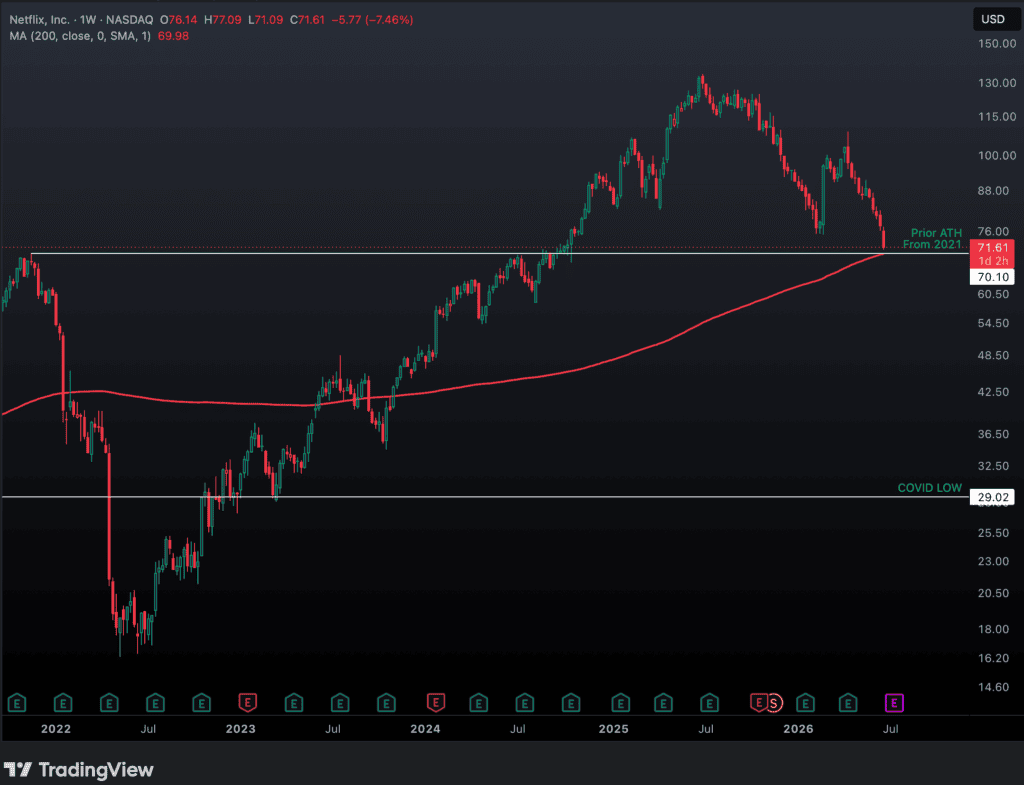
The accompanying chart, depicting the weekly performance of NFLX, illustrates this volatile journey. Technical analysts are closely watching key levels, such as the prior peak reached in 2021 and the rising 200-week moving average, which hovers near the $70 mark. These levels are being assessed as potential areas of support where buying interest might emerge. Conversely, fundamental investors are delving deeper into the company’s financial health and strategic initiatives to understand the underlying drivers of its current valuation.
Underlying Strength: Consistent Revenue and Profit Growth
Despite the recent stock market turbulence, Netflix’s core business fundamentals have demonstrated remarkable resilience. For more than ten consecutive years, the company has achieved consistent revenue growth, a testament to its ability to attract and retain subscribers. Furthermore, its operating income and earnings have shown a similar upward trend, with growth recorded in nine of the past ten years. The sole exception, 2022, coincides with the broader bear market that impacted many technology and growth-oriented companies.
The forward-looking outlook for Netflix’s financial performance also appears robust, according to analyst projections. Earnings estimates for fiscal year 2026 have seen upward revisions, increasing by over 11% in the past three months and by nearly 10% over the last six months. This consistent upward revision in earnings expectations suggests that analysts are becoming increasingly optimistic about Netflix’s ability to generate profits in the coming years. Bloomberg data indicates that analysts have set a consensus price target of approximately $115 for NFLX stock, implying a potential upside of around 60% from its current trading levels. This target reflects a belief among many analysts that the current stock price may not fully reflect the company’s future earning potential.
Valuation Metrics: A Multi-Year Low Amidst Growth
One of the most compelling arguments for a potential rebound in Netflix’s stock lies in its current valuation. The stock is now trading at approximately 21.5 times forward earnings, a multiple that represents its lowest valuation since 2022, when the broader market experienced a significant downturn. This marks a notable shift from periods when Netflix commanded much higher valuation multiples, reflecting investor confidence in its rapid expansion and market dominance.
The current valuation has created a divergence of opinion among market participants. Bears, or those who believe the stock price will decline further, may point to historical valuation lows where the forward price-to-earnings (P/E) ratio ranged between 16 to 18 times. They might argue that the stock needs to return to these levels to be considered truly attractive.
However, bulls, or proponents of a potential stock price increase, counter that the current valuation is already at a multi-year low, and crucially, it is supported by solid earnings growth. This stands in contrast to 2022, when earnings were under pressure, and the broader market was in a state of decline. The bulls contend that Netflix’s ability to maintain earnings growth while trading at a lower multiple presents an attractive risk-reward proposition. The accompanying chart on valuation further illustrates this trend, highlighting the recent compression in Netflix’s P/E ratio.
Navigating Competitive Headwinds and Strategic Shifts
Despite the positive financial outlook and attractive valuation, Netflix faces a number of significant risks that are influencing investor sentiment. The competitive landscape in the streaming industry has intensified considerably. Giants like Disney+, Amazon Prime Video, and even YouTube are vying for consumer attention and subscription dollars. This fierce competition necessitates continuous investment in content, which in turn drives up costs.
Furthermore, Netflix’s strategic initiatives to diversify its revenue streams, such as its ad-supported tier and mobile gaming ventures, are still in their nascent stages and need to scale effectively to contribute meaningfully to the bottom line. Price increases, a traditional method for boosting revenue, also carry the risk of increasing customer churn, particularly in a price-sensitive market. A decline in the quality or appeal of its content slate, or a reduced success rate in producing hit shows and movies, could also negatively impact subscriber engagement and profit margins.
A more recent concern that has cast a shadow over Netflix’s strategic narrative is its reported exploration of acquiring Warner Bros. While the company ultimately walked away from this potential deal, the episode has raised questions among investors about management’s long-term growth strategy. Historically, Netflix has been viewed as a company driven by disciplined organic growth. A large-scale media acquisition, however, could introduce significant complexities, including substantial debt, integration challenges, potential regulatory hurdles, and a possible pause in share buyback programs. The market’s reaction suggests that some investors are now questioning whether Netflix’s management perceives a need to acquire intellectual property (IP) from external sources to sustain its growth trajectory, a departure from its long-standing playbook.
The Bottom Line: A Critical Crossroads for Netflix
Netflix stands at a critical juncture. The company possesses a powerful consumer brand, a history of consistent revenue growth, and promising earnings projections for the foreseeable future. Coupled with its current stock valuation, which is at its lowest point since 2022, and its proximity to key technical support levels, the risk-reward profile may appear increasingly favorable to bullish investors. These investors might see the current price as an opportune entry point before the market fully recognizes the company’s underlying strength and growth potential.
However, the bear case remains potent and cannot be easily dismissed. Skeptics may prefer to wait for even more compelling valuation metrics before committing capital, especially if they believe the recent pursuit of Warner Bros. has fundamentally altered the perception of Netflix’s long-term strategic direction. The core question facing the market is whether Netflix is indeed approaching a long-term support zone that could trigger a sustained recovery, or if the sharp decline in its stock price is a signal that its celebrated growth story has fundamentally changed. The coming months will be crucial in determining which narrative prevails and shapes the future of this streaming behemoth.
Disclaimer: Please note that due to market volatility, some of the prices and scenarios discussed may have already been reached or played out. This article is for informational purposes only and does not constitute investment advice.