Eli Lilly: A Pharmaceutical Titan Navigating Growth, Valuation, and Future Frontiers

Eli Lilly and Company, a global pharmaceutical powerhouse with a market capitalization approaching $1.1 trillion, stands at the forefront of medical innovation, developing treatments across critical areas such as diabetes, obesity, cancer, immunology, and neuroscience. While its portfolio is robust, the company’s current growth trajectory is predominantly propelled by its blockbuster drugs, Mounjaro and Zepbound, which have revolutionized the management of diabetes and weight loss. These groundbreaking therapies, alongside established products like Verzenio (for cancer), Jardiance (for diabetes), Taltz (for immunology), and the Alzheimer’s treatment Kisunla, form the bedrock of Lilly’s impressive financial performance. Looking ahead, the company is strategically positioned with a promising pipeline, particularly focusing on next-generation obesity treatments, including the investigational drug retatrutide, and exploring expanded therapeutic applications for tirzepatide in metabolic and cardiovascular diseases. Furthermore, Lilly is actively pursuing novel treatments for Alzheimer’s disease, various cancers, and inflammatory disorders, underscoring its commitment to addressing unmet medical needs.
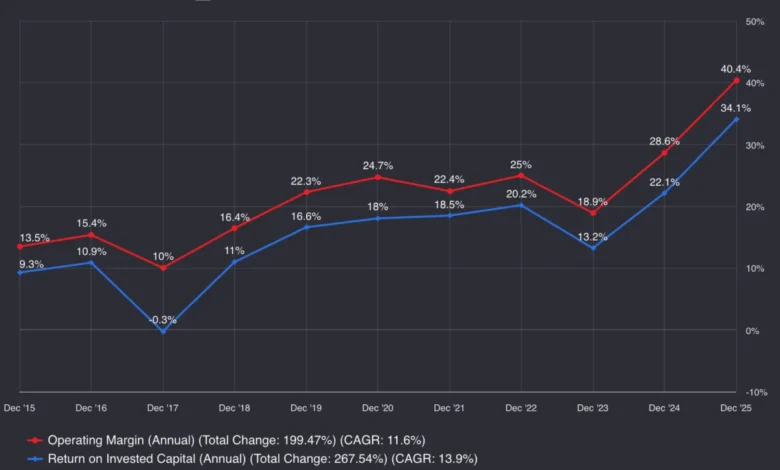
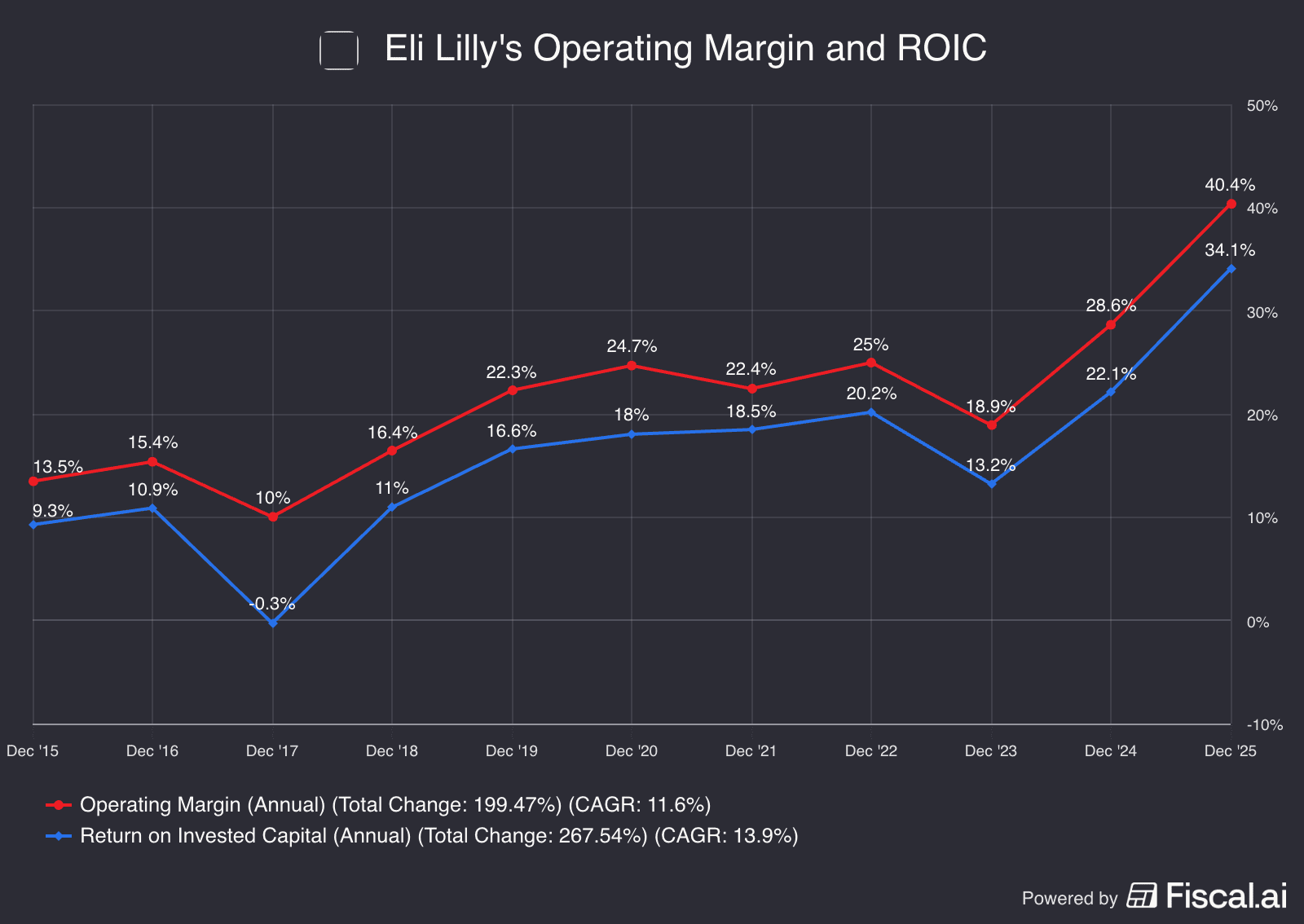
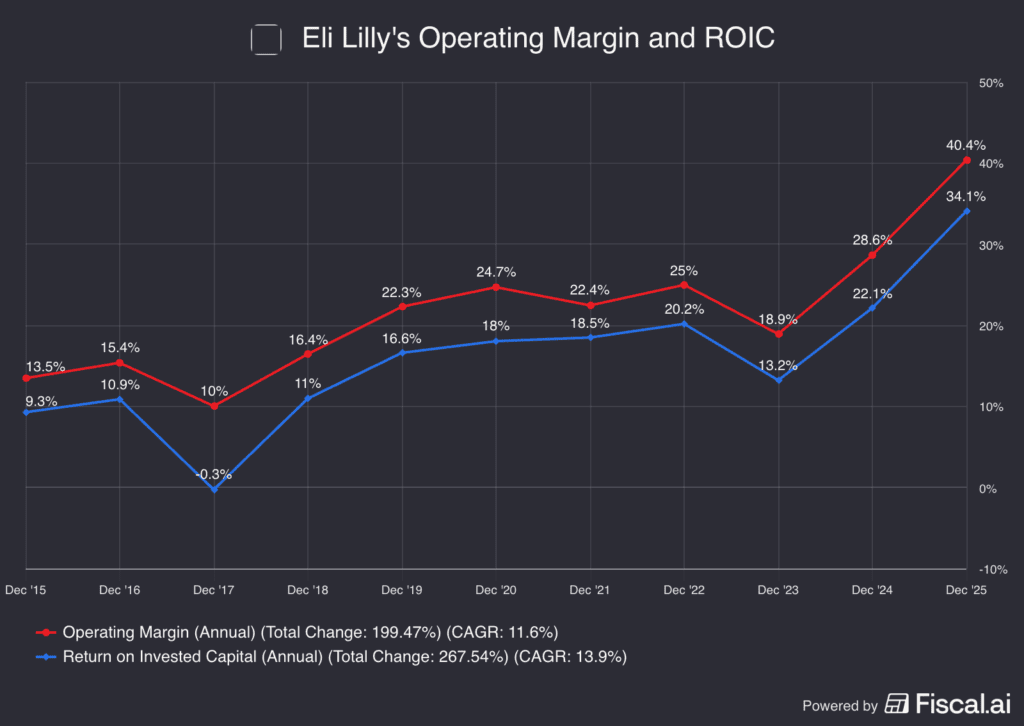
The company’s financial narrative over the past eight years has been one of consistent revenue expansion, a trend anticipated to continue. However, profitability has exhibited a more dynamic pattern, characterized by periods of significant gains interspersed with more moderate or stagnant years. An examination of operating margins and Return on Invested Capital (ROIC) reveals a strengthening margin profile and improved returns on investments in recent years, painting a picture of enhanced operational efficiency and capital deployment effectiveness. This financial resilience, coupled with a strong product pipeline, has fueled investor confidence and contributed to the company’s substantial market valuation.
Future Growth Trajectory and Analyst Projections
The optimism surrounding Eli Lilly’s future prospects is reflected in the upward revisions of earnings estimates. Over the past three and six months, analysts have increased their earnings per share (EPS) projections by 4.3% and 7.1%, respectively. This positive sentiment stems from the company’s consistent revenue and earnings growth in recent years, leading analysts to forecast continued upward momentum. According to data compiled by Bloomberg, projections indicate a sustained growth trajectory for the company. While specific numerical forecasts are subject to ongoing market dynamics and updated analyst reports, the consensus among financial experts points towards continued positive performance.
Analysts currently maintain a consensus price target of approximately $1345 for Eli Lilly’s stock, suggesting a potential upside of around 14% from its current trading price. This target reflects a belief in the company’s continued ability to innovate and capitalize on its strong market position, particularly in the burgeoning fields of obesity and diabetes treatment. The target price is a dynamic figure, influenced by a multitude of factors including clinical trial results, regulatory approvals, competitive landscape shifts, and broader economic conditions.
Valuation Dynamics: A Complex Picture
Eli Lilly’s current valuation presents a nuanced investment scenario. While its forward earnings multiple has receded from the peak levels witnessed during the intense investor enthusiasm surrounding GLP-1 agonists – a period that saw significant surges for both Lilly and its peer Novo Nordisk – the stock’s valuation continues to be a subject of active market assessment. In the past year, the stock has demonstrated a tendency to find support in the range of 23 to 25 times forward earnings, a zone that previously acted as a ceiling. Conversely, the upper limit of its valuation range remains less defined, with shares having previously stalled near 35 times forward earnings earlier in the year.
This fluctuation in valuation multiples, even as the stock has achieved record highs, underscores the power of earnings growth. Eli Lilly’s ability to expand its earnings—the "E" in the Price-to-Earnings (P/E) ratio—has outpaced the multiple’s expansion, thereby enabling the stock price to climb to new heights while the valuation multiple itself has remained within a more tempered range. This dynamic highlights how a company’s fundamental performance can significantly influence its stock’s trajectory, even in the face of evolving market sentiment and valuation metrics. The company’s strengthening margins and higher ROIC, coupled with robust revenue and earnings growth, provide a solid foundation for its current market standing.
Navigating the Risks: Challenges and Considerations
Despite its formidable strengths, Eli Lilly faces several significant risks that warrant careful consideration. A primary concern is the company’s increasing reliance on Mounjaro and Zepbound. These two drugs are the principal drivers of Lilly’s growth, making the company’s financial performance particularly susceptible to a range of potential disruptions. These include intensified competition from rival treatments, unforeseen manufacturing constraints that could limit supply, emerging safety concerns that might impact patient adoption or regulatory standing, or demand that falls short of optimistic projections. The landscape of obesity and diabetes treatments is highly competitive and rapidly evolving, with new entrants and innovative therapies constantly emerging. Rival drugs, whether in development or already on the market, could erode Lilly’s market share and exert downward pressure on pricing.
Furthermore, accessibility remains a critical hurdle. A substantial number of insurers and employers continue to impose limitations on coverage for weight-loss medications, creating a barrier to widespread patient access. This constraint can temper the growth potential of even the most effective treatments. Beyond these specific challenges, Eli Lilly is exposed to the inherent risks common to all pharmaceutical companies. These include the possibility of clinical trial failures, delays in regulatory approvals, protracted patent disputes that could impact exclusivity, and ongoing pricing pressures from healthcare systems and governments worldwide. Given the stock’s current premium valuation, any minor setback or unexpected negative development could potentially trigger a disproportionately large sell-off in its stock price, highlighting the heightened investor expectations that accompany its current market position.
The Broader Impact: Innovation and Market Leadership
Eli Lilly has firmly established itself as a leader in the pharmaceutical sector, showcasing one of the most compelling growth narratives in the industry. This success is underpinned by a trifecta of factors: rapid revenue expansion, demonstrably improving profitability, and a diverse and promising pipeline of future therapies. The substantial growth in its earnings has played a crucial role in tempering its valuation multiples, allowing the stock to reach new record highs without appearing excessively overvalued relative to its historical trading ranges.
For investors with a bullish outlook, Eli Lilly’s market leadership, coupled with its strengthening fundamental performance and extensive runway for continued innovation and growth, presents a compelling investment case. The company’s deep investment in research and development, particularly in areas with significant unmet medical needs like obesity, diabetes, and Alzheimer’s disease, positions it favorably for long-term success. The potential for new indications for existing drugs and the advancement of novel compounds through its pipeline offer multiple avenues for sustained expansion.
Conversely, those with a bearish perspective might highlight the escalating competitive pressures within the pharmaceutical landscape, especially in the lucrative obesity market. The high expectations embedded in the current stock price also represent a potential vulnerability. Furthermore, the inherent risks associated with a heavy reliance on a few key blockbuster drugs, as discussed earlier, remain a significant point of concern. Any disruption to the sales or development of Mounjaro and Zepbound could have a material impact on the company’s overall financial health and stock performance. The intricate balance between Lilly’s impressive growth potential and the inherent risks of the pharmaceutical industry, amplified by its current valuation, will likely continue to shape investor sentiment and market dynamics for this pharmaceutical titan.
Disclaimer: This article is for informational purposes only and does not constitute financial advice. Investing in the stock market involves risks, and past performance is not indicative of future results. Investors should conduct their own research and consult with a qualified financial advisor before making any investment decisions. Due to market volatility, some of the prices and scenarios discussed may have already been reached or may have evolved since the time of this report.
Related posts: