Mastering Quantitative Breakout Strategies: A Technical Analysis of Donchian Channels and Algorithmic Implementation

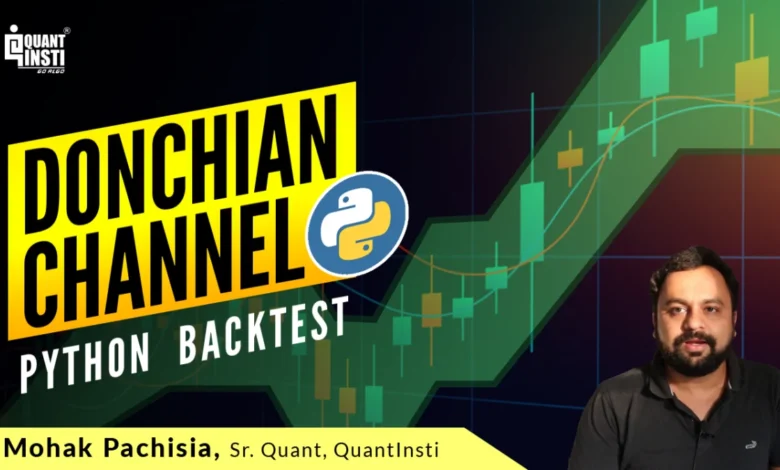
The evolution of financial markets has shifted the focus of individual and institutional traders toward systematic, rule-based methodologies that remove emotional bias from the decision-making process. Among the most enduring concepts in trend-following is the Donchian Channel, a volatility-based indicator that identifies potential breakouts by tracking the highest highs and lowest lows over a defined lookback period. Mohak, a Senior Quant at QuantInsti, recently released a comprehensive technical breakdown aimed at bridging the gap between theoretical knowledge and practical algorithmic execution. This instructional framework serves as a critical resource for developers seeking to transform classic indicator concepts into robust, testable, and production-ready Python code.
The Mechanics of Donchian Channels
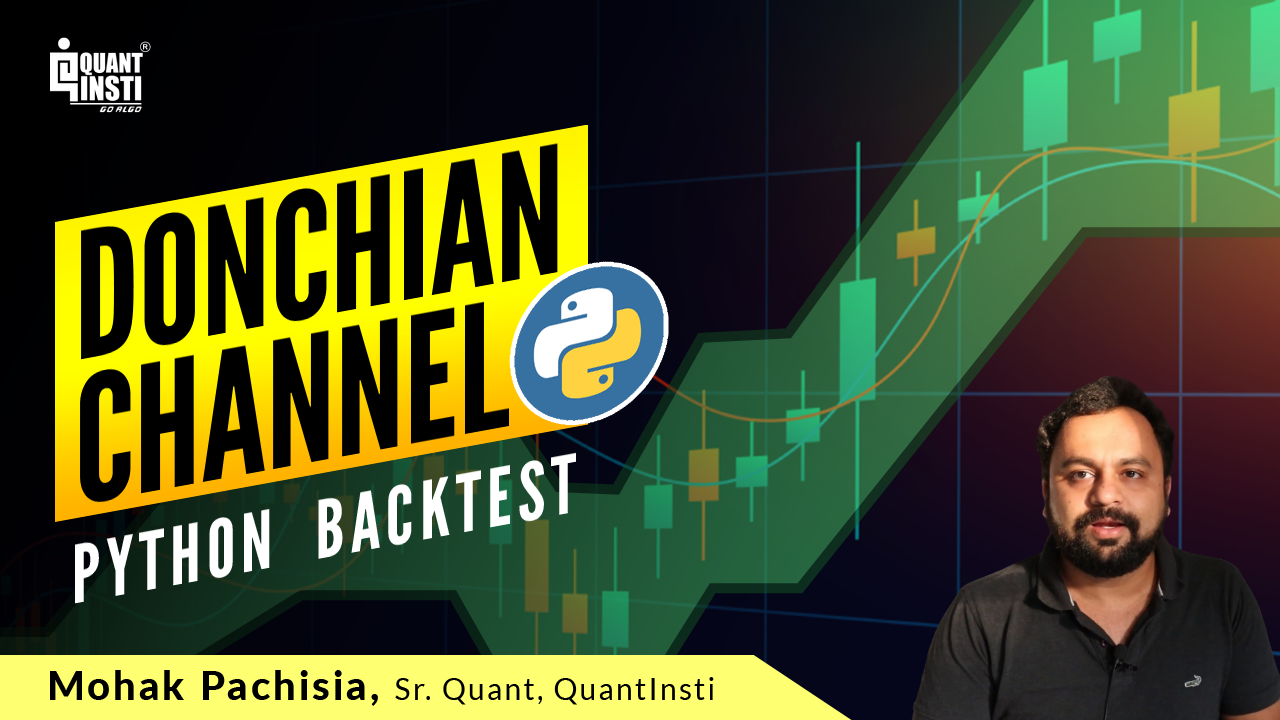
The Donchian Channel, originally popularized by futures trader Richard Donchian in the mid-20th century, remains a staple in technical analysis due to its simplicity and effectiveness in identifying momentum shifts. At its core, the indicator constructs a channel by plotting two lines: the upper bound, representing the maximum price over a specific number of periods, and the lower bound, representing the minimum price. A middle band is often derived as the arithmetic mean of these two extremes.
In modern algorithmic contexts, the utility of the Donchian Channel extends beyond mere observation. When price exceeds the upper channel, it signals a potential bullish breakout; conversely, a breach below the lower channel indicates a bearish breakdown. However, implementing this in a quantitative environment requires strict adherence to data integrity. The recent tutorial emphasizes the necessity of shifting bands by one bar—a crucial step to prevent look-ahead bias, where a model inadvertently uses future data to inform current signals. This technical nuance is a cornerstone of professional backtesting, ensuring that the model reflects the actual constraints of a live trading environment.
Bridging the Gap: From Concept to Code
The transition from understanding a trading concept to executing it algorithmically is often the most significant hurdle for emerging quantitative analysts. QuantInsti’s initiative addresses this by integrating the Donchian Channel into a broader pedagogical framework. By utilizing Python, traders can manipulate historical data to test various lookback parameters—such as the standard 20-day or 50-day windows—and evaluate the strategy’s performance across diverse asset classes.
The methodology proposed in the recent demonstration focuses on three distinct "strategy shapes," or variants, that allow traders to customize their exposure. These variants incorporate "bias control," a critical component that ensures the integrity of backtesting results. By utilizing adjusted close prices to account for corporate actions like dividends and stock splits, and by factoring in realistic transaction costs, the framework creates a more accurate projection of potential equity curves. The inclusion of transaction costs is vital; without accounting for slippage and commissions, backtests frequently overestimate profitability, leading to significant failures when the strategy is deployed in live markets.
Chronology of Modern Algorithmic Backtesting
The history of backtesting has evolved from manual ledger-based calculations to sophisticated, high-frequency simulations. In the early 1980s, institutional traders began utilizing mainframe computers to validate simple trend-following rules. By the late 1990s and early 2000s, the democratization of data via platforms like Bloomberg and Reuters allowed retail traders to perform rudimentary tests on personal computers.
Today, the industry is in a third phase: the "institutionalization of the retail trader." Platforms like Blueshift provide the infrastructure necessary to move from initial research to live execution. The current landscape is defined by:
- Data Normalization: Ensuring historical datasets account for splits, dividends, and market-wide events.
- Signal Integrity: Applying rigorous filters to ensure that strategies do not "peek" at future price movements.
- Performance Benchmarking: Comparing strategy performance not just against historical returns, but against a "buy-and-hold" baseline to determine if the active strategy provides genuine alpha or merely captures market beta.
Quantitative Education and Career Development
The push toward systematic trading has spurred a demand for specialized education. QuantInsti’s approach, reflected in its Quantra and EPAT (Executive Programme in Algorithmic Trading) initiatives, acknowledges that technical proficiency is only one piece of the puzzle. The broader ecosystem of quantitative trading requires an understanding of statistics, risk management, and the architectural nuances of execution platforms.
Data from the quantitative finance sector indicates that demand for professionals with "full-stack" trading skills—those who can code, backtest, and understand market microstructure—has risen significantly over the past decade. Industry experts suggest that the ability to articulate why a strategy works, rather than just showing that it works, is the defining characteristic of a successful quantitative researcher. The focus on "plumbing"—the underlying architecture of data pipelines—is where most professional strategies are won or lost.
Implications for Risk Management and Portfolio Construction
A recurring theme in the discourse surrounding breakout strategies is the importance of exit signals. While many beginners focus exclusively on the entry, professional traders recognize that the exit strategy determines the risk-adjusted return of the portfolio. By applying volatility sizing and regime filters, traders can modulate their position sizes based on market conditions, preventing outsized losses during periods of low liquidity or high volatility.
Furthermore, the implementation of walk-forward analysis—a technique that tests the strategy on sliding windows of data—helps to mitigate the risk of "overfitting." Overfitting occurs when a strategy is tailored so specifically to historical data that it loses its predictive power in the future. By maintaining a modular, transparent code structure, traders can continuously refine their strategies, incorporating new variables such as macroeconomic indicators or sentiment data without compromising the foundational logic of the Donchian breakout.
Conclusion: The Future of Systematic Execution
As markets become increasingly efficient, the edge provided by simple indicators like the Donchian Channel must be augmented by superior execution logic and disciplined risk management. The recent technical resources provided by QuantInsti highlight a broader industry trend: the move toward transparency and reproducible research. By providing the tools to code, test, and benchmark, the organization is contributing to a more informed trading community capable of navigating the complexities of modern financial systems.
For the aspiring quantitative analyst, the takeaway is clear: success is rarely the result of a "secret" indicator, but rather the result of a systematic, repeatable process. Whether one is utilizing Python to build technical indicators or deploying a fully automated strategy via platforms like Blueshift, the focus must remain on the integrity of the data and the rigor of the testing process. As trading continues to move toward an algorithmic-first model, these foundational skills will remain the scaffolding upon which complex, institutional-grade strategies are built.
Disclaimer: All financial strategies involve substantial risk, including the loss of principal. Quantitative models are based on historical data, which may not be indicative of future performance. It is strongly recommended that traders perform their own due diligence, evaluate their individual risk appetite, and consult with certified financial professionals before allocating capital to any algorithmic trading system.