The Psychological and Financial Realities of the Mid-Life Compounding Phase

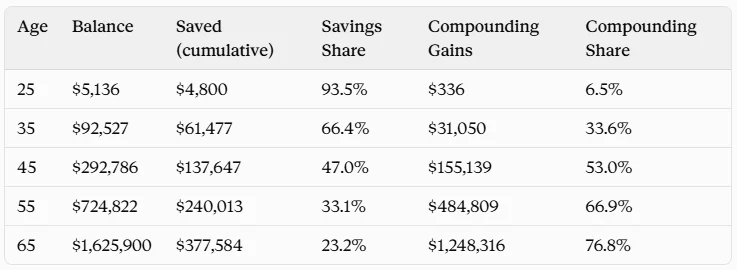
The modern investor faces a unique challenge that academic financial theory rarely addresses: the psychological weight of managing a mature portfolio during middle age. For individuals in their 40s and 50s, the landscape of personal finance undergoes a subtle but profound shift. While the early years of one’s career are defined by the mechanics of saving and the aggressive pursuit of growth, the "mid-life compounding phase" presents a different set of obstacles. At this stage, a standard market correction—previously viewed as a minor hurdle or a buying opportunity—can translate into a dollar-value loss that exceeds an individual’s annual salary, triggering significant emotional and strategic stress.
The Financial Sandwich Generation
The phenomenon described by many long-term investors is rooted in the transition from the accumulation phase to the preservation-accumulation hybrid phase. This demographic, often overlapping with the "sandwich generation," finds itself balancing the dual pressures of funding children’s education and providing support for aging parents, all while managing a portfolio that has finally reached a critical mass.
Historically, financial literature has focused heavily on two distinct groups: the young investor, who is encouraged to adopt a high-risk, high-reward strategy to leverage time, and the retiree, who is coached on tax-efficient withdrawal strategies and capital preservation. The cohort in the middle—those aged 40 to 55—often finds itself in a "no man’s land" of financial guidance. This group has moved past the stage where consistent, small contributions can easily offset market downturns, yet they are still years away from the safety net of retirement distributions.
The Mathematical Shift: Why Volatility Feels Different
To understand the stress experienced by mid-life investors, one must look at the math of compounding versus the math of absolute losses. In the early stages of a career, a 50% market decline on a $15,000 portfolio represents a loss of $7,500. For most earners, this amount can be recovered through a single year of disciplined contributions to a retirement account.
However, as a portfolio grows into the mid-six or seven figures, the dynamics change. A 10% market correction on a $1 million portfolio results in a $100,000 drop. Regardless of one’s stoic commitment to dollar-cost averaging (DCA), the sheer scale of such a fluctuation often exceeds the median annual household income in the United States, which currently hovers around $75,000 to $80,000. When the market swings in dollar terms become larger than an individual’s take-home pay, the psychological barrier to staying the course becomes significantly higher. This is not merely a matter of asset allocation; it is a matter of cognitive load.
A Chronology of Market Exposure
The current generation of 44-year-old investors provides a unique case study in market resilience. Having entered the workforce or begun investing in the early 2000s, this demographic has navigated a volatile timeline:
- 2000–2002: The Dot-com bust, which provided a harsh introduction to equity market volatility.
- 2008–2009: The Great Financial Crisis, which tested the resolve of those who were in the early stages of their careers.
- 2010–2020: The longest bull market in modern history, which allowed for significant compounding of wealth.
- 2020–Present: The post-pandemic volatility and inflationary environment, which has forced a recalibration of risk management strategies.
For those who maintained a "robotic" DCA strategy through these periods, the cumulative effect of compounding has been substantial. However, the reward for this consistency is a larger, more vulnerable asset base. The "snowball effect" of compounding is back-loaded, meaning the final years of an investment journey involve significantly larger dollar gains—and, by extension, larger dollar losses during downturns.
Strategic Adjustments: Strategy vs. Mindset
Financial advisors often distinguish between changing one’s strategy and changing one’s mindset. A shift in strategy typically involves rebalancing, such as moving from a 100% equity allocation to a more diversified 80/20 or 75/25 split. This "retirement glidepath," a concept popularized by target-date funds, seeks to reduce volatility by incorporating fixed-income assets or cash equivalents. While this may lower the expected long-term return, it is frequently cited as a tool for "behavioral protection," ensuring the investor does not panic-sell during a recession.
Conversely, some investors choose to adjust their mindset by reframing the denominator. Instead of viewing the portfolio through the lens of current market value, they view it through the lens of long-term compounding. This perspective requires separating one’s identity from the daily, monthly, or even yearly fluctuations of the stock market.
The Role of Risk Management in Mid-Life
The transition into the mid-life phase often necessitates a reassessment of risk management. For some, this involves increasing exposure to non-correlated assets or trend-following strategies, which can act as a buffer against prolonged bear markets. By introducing a risk management component, an investor may find the emotional space to remain committed to their long-term equity exposure.
Wealth management professionals observe that portfolio changes are more frequently triggered by major life events—such as marriage, the birth of children, inheritances, or career transitions—than by market events themselves. When an investor feels an "investment mid-life crisis," it is often because their life circumstances have reached a point of complexity that makes the traditional "buy and hold" approach feel insufficient or reckless.
Broader Implications for Personal Finance
The current economic environment, characterized by higher interest rates and persistent market volatility, has intensified the need for clear guidance for the middle-aged demographic. Data indicates that as the U.S. population ages, the number of individuals reaching this "peak accumulation" phase is increasing. The inability to manage the psychological toll of this phase can lead to suboptimal decision-making, such as moving to cash at the bottom of a cycle or abandoning long-term investment goals.
The fundamental tension for the modern investor remains: do you prioritize absolute capital protection, or do you prioritize the potential for future growth? There is no universal solution, as the "right" answer is contingent upon an individual’s personal tolerance for regret. Those who find that they cannot sleep through a market drawdown may be better served by a more conservative allocation, even if it sacrifices potential upside. Those who have a higher threshold for volatility may choose to remain "risk-on," provided they have the liquidity to avoid forced selling during market dips.
Ultimately, the mid-life compounding phase is as much a test of psychological fortitude as it is a test of financial acumen. By acknowledging that the rules of the game change as the portfolio grows, investors can better prepare for the reality of large-scale market fluctuations. Whether through diversifying into income-producing assets, employing trend-following overlays, or simply recalibrating their expectations for market behavior, middle-aged investors must find a path that aligns with their personal risk appetite to ensure they reach their long-term financial objectives.
Related posts: