Homebuilders are doing their job creating new housing stock even as they’ve had trouble selling these homes.

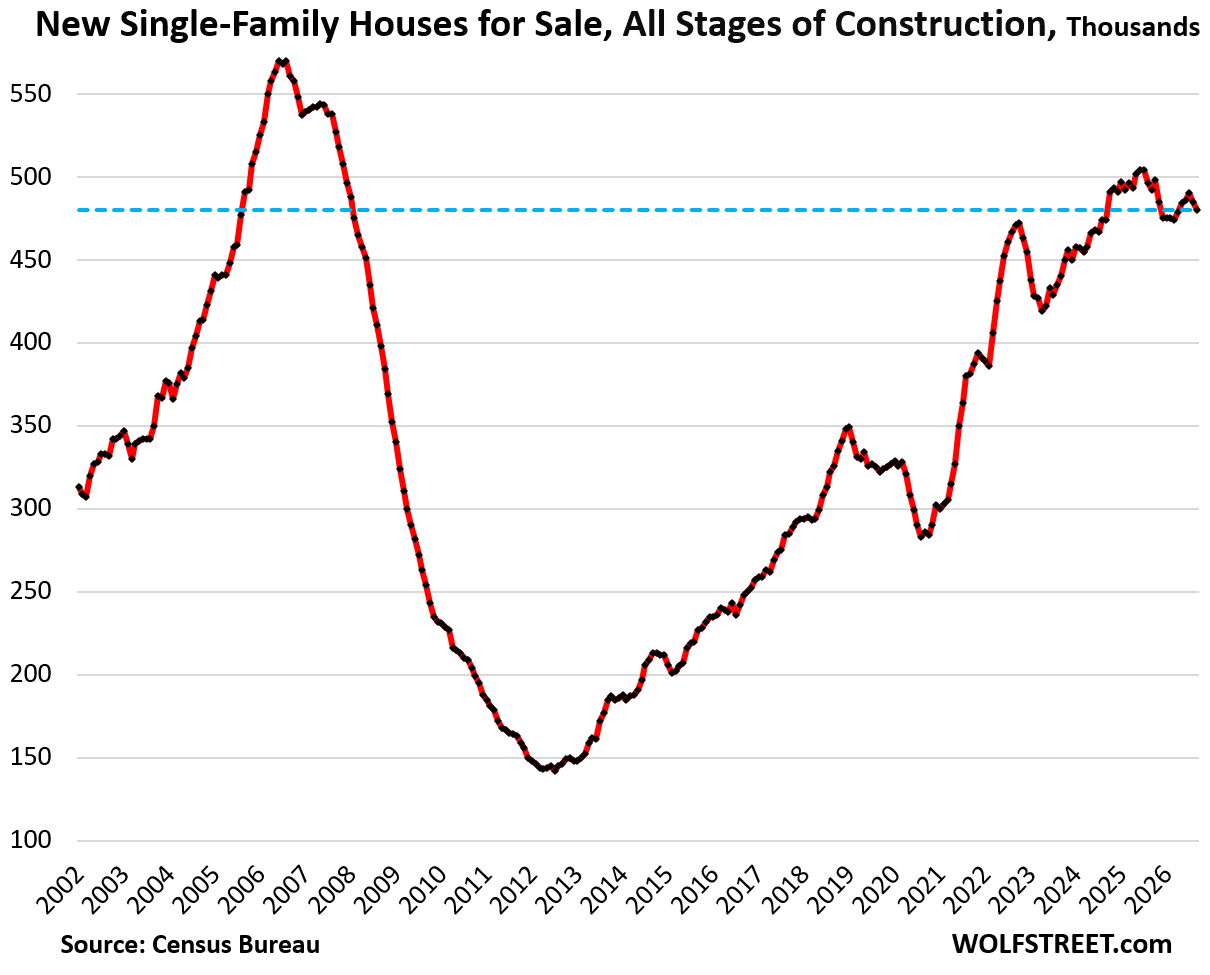
The United States housing market is currently navigating a paradoxical environment characterized by high inventory levels, cooling price appreciation, and a divergence in performance between new construction and existing home sales. According to the latest data from the U.S. Census Bureau, the inventory of new single-family homes at various stages of construction has remained elevated since mid-2024, hovering 45% to 55% above 2019 levels. This surge in supply, which has reached its highest point since the onset of the 2005–2007 housing bust, stands in sharp contrast to the persistent narrative of a nationwide "housing shortage" often cited by industry analysts to explain high market valuations.
The Disconnect Between Inventory and Sales Velocity
In September 2026, the total inventory of new single-family homes reached approximately 480,000 units. While this figure represents a minor month-over-month decline, it marks a substantial 49% increase compared to September 2019 and a 68% rise over September 2020. With the current pace of market absorption, homebuilders are managing a supply pipeline equivalent to 8.6 months of sales.
This accumulation of inventory is not necessarily a reflection of failed business strategies, but rather the structural reality of the large-scale homebuilding industry. Unlike private homeowners who may choose to pull their properties off the market when demand wanes, major homebuilders operate on a model that requires constant production to maintain corporate viability. They must satisfy shareholders, manage bondholder expectations, and protect credit ratings, all of which necessitate a continuous flow of capital and consistent sales volume. To move this volume in a high-interest-rate environment, builders have been forced to deploy aggressive incentives, including mortgage-rate buydowns and direct price reductions, effectively "buying" the market share that the broader housing sector has lost.
A Chronology of Market Shifts
The current state of the market is the culmination of a multi-year shift that began during the pandemic-era housing frenzy. In 2021 and 2022, the market was defined by extreme scarcity, driven by historically low mortgage rates below 3% and a phenomenon of "Fear Of Missing Out" (FOMO) among buyers. During this period, builders enjoyed record-high profit margins as they struggled to keep up with demand.
However, as the Federal Reserve initiated a cycle of interest rate hikes to combat inflation, the environment shifted. By late 2022, the housing market began to cool. Existing home sales, which constitute the majority of the market, saw a sharp contraction as "lock-in" effects—where homeowners with low-rate mortgages refused to sell—stifled supply. In contrast, new homebuilders continued to break ground, eventually resulting in the current surplus. By late 2024, the inventory levels had surged past pre-pandemic norms, and by the final quarter of 2026, it became clear that the sector was grappling with a supply-demand imbalance.
Regional Analysis of New Construction
The inventory glut is not distributed evenly across the United States. Census data reveals significant regional variations that highlight the challenges faced by developers:
- The South: As the most active region for new home construction, the South currently holds 287,000 units of inventory. Despite a 5.3% year-over-year decline in available homes, the supply remains nearly 70% higher than in 2019. With sales lagging behind construction rates, builders in the South are facing an 8.4-month supply, forcing many to maintain aggressive pricing strategies to clear completed units.
- The West: This region has seen a 14% year-over-year decline in inventory, yet the 103,000 units currently available still represent a 21% increase over 2019 levels. Coupled with a 14% drop in sales volume, the West is contending with an 8.6-month supply, indicating that price corrections are likely to continue.
- The Midwest: The Midwest has seen inventory levels climb to 57,000 units, the highest level recorded since 2008. This represents a 50% increase compared to 2019, suggesting a significant cooling in buyer interest in the region.
- The Northeast: With 33,000 units in inventory, the Northeast remains a more constrained market. However, even here, supply is up 18% compared to 2019. The market in the Northeast is distinct in that new construction is predominantly composed of multi-family units, with single-family homes making up a smaller portion of the total residential stock.
Pricing Dynamics and Margin Compression
The national median price for new single-family homes provides a window into how builders are adjusting to the new economic reality. It is critical to note that the median price reported by the Census Bureau does not account for the "shadow" price reductions offered via mortgage-rate buydowns and other non-contractual incentives. Despite this limitation, the trend is unmistakably downward.
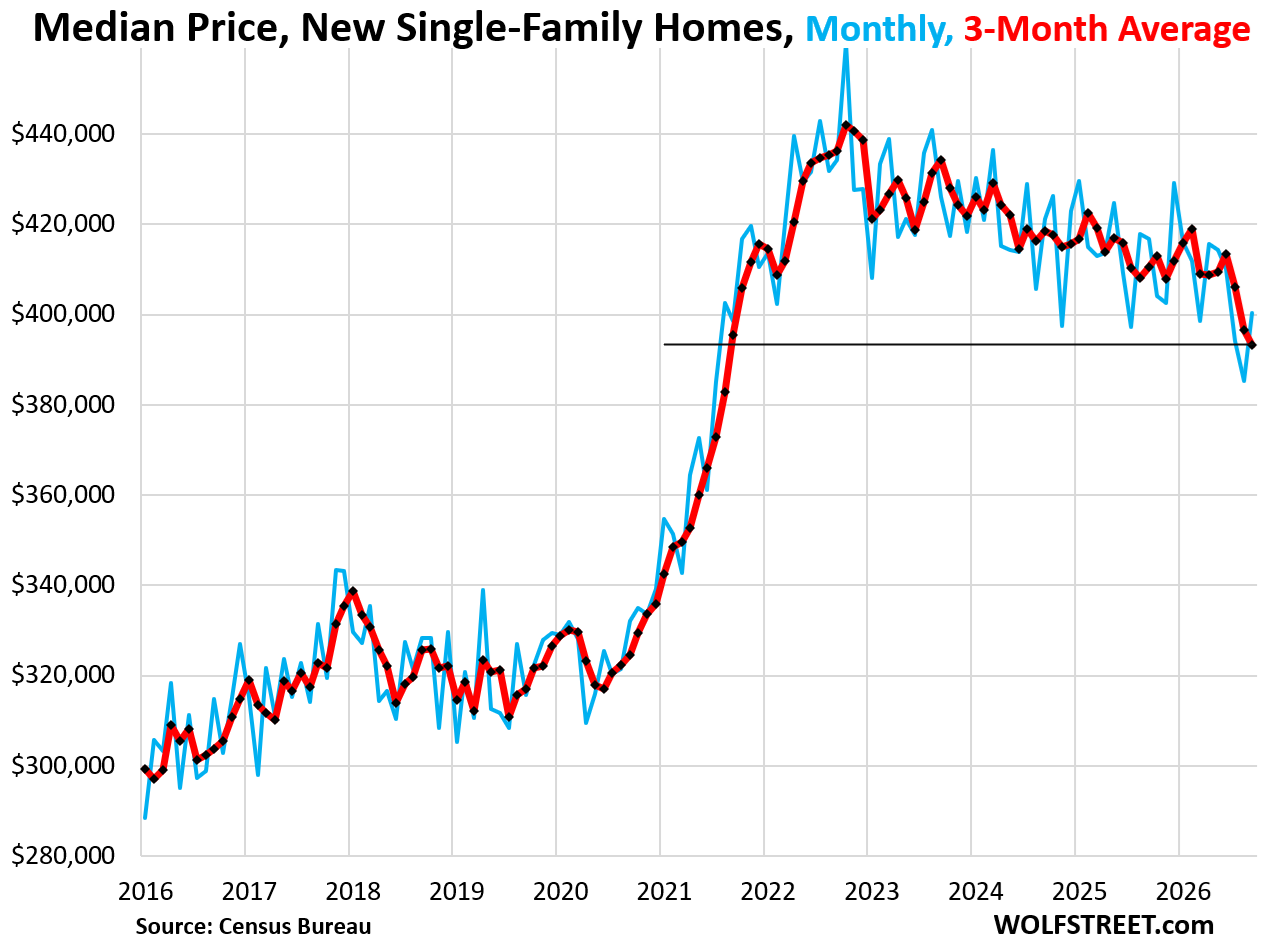
The three-month moving average of new home prices has declined by 11% from its peak in late 2022, settling at approximately $393,300 in September 2026—the lowest level since August 2021. This decline reflects a broader trend of margin compression. While gross margins for major builders have plunged, the industry continues to prioritize volume over price in an effort to maintain liquidity.
Broader Economic Implications
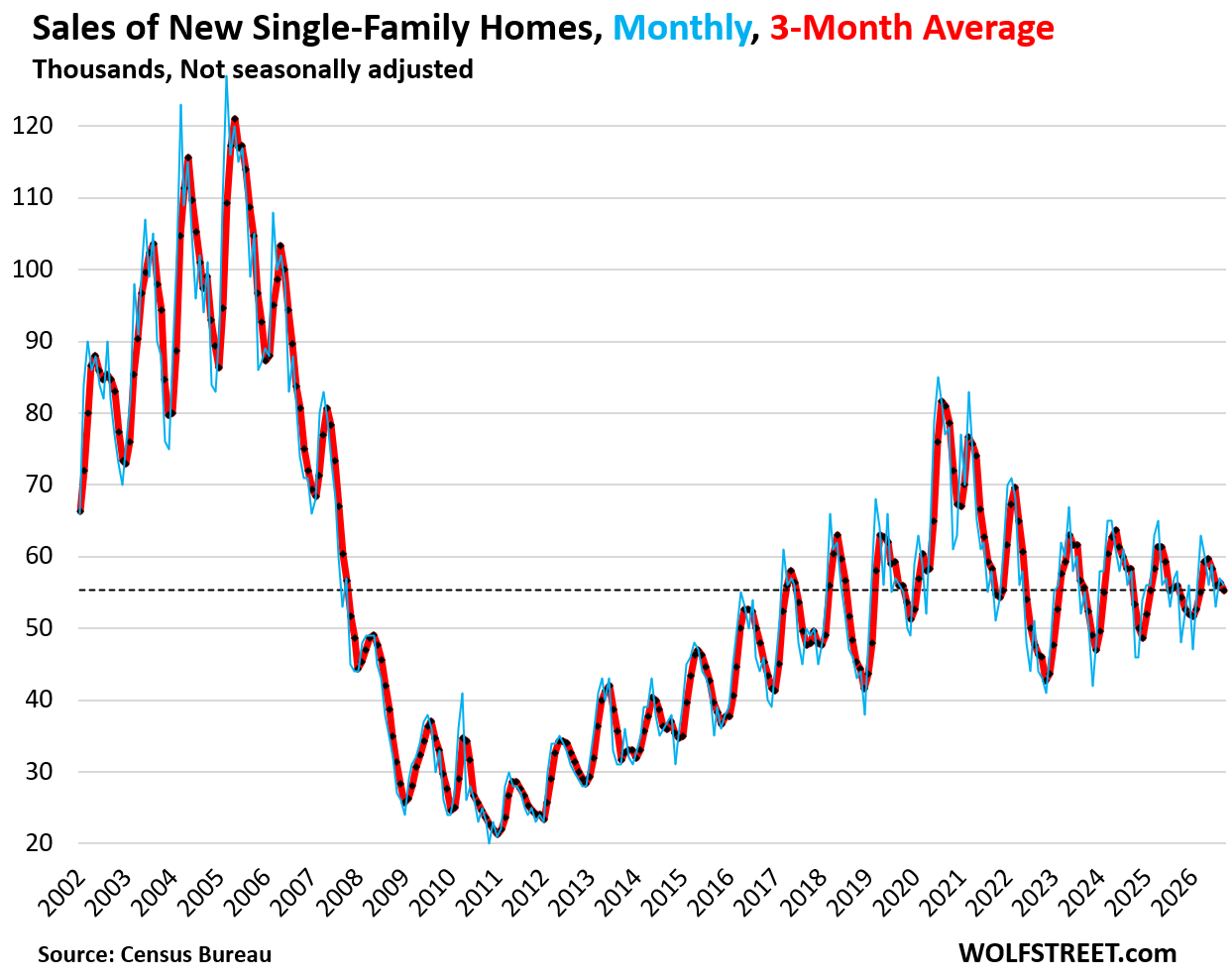
The divergence between the new home market and the existing home market is one of the most significant economic developments of 2026. While existing home sales have seen a historic collapse—down 40% in some periods compared to 2019—new home sales have remained relatively resilient, matching 2019 levels. This suggests that homebuilders have effectively outmaneuvered the traditional resale market by offering modern amenities, energy efficiency, and, most importantly, financing incentives that bridge the gap for buyers priced out by high mortgage rates.

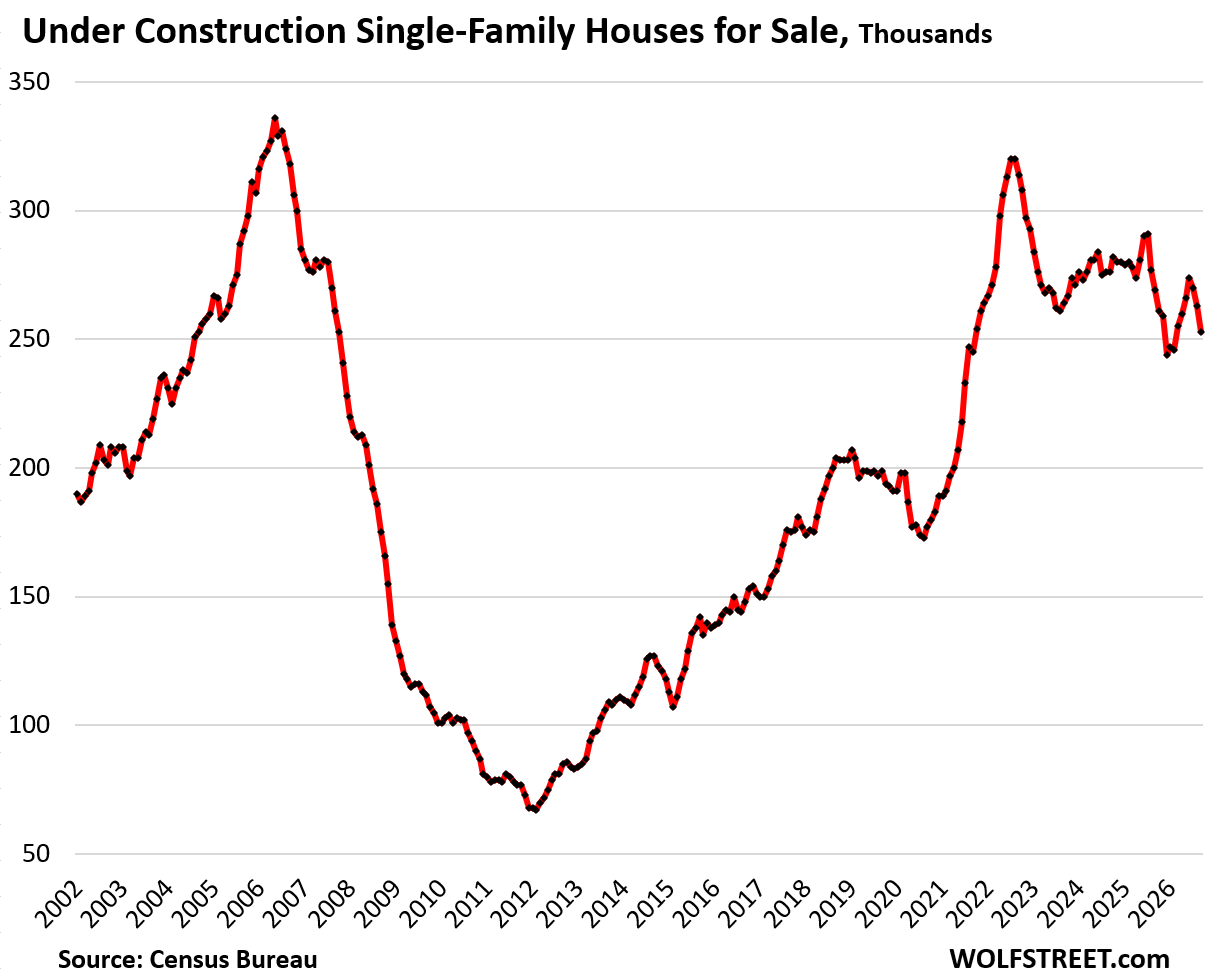
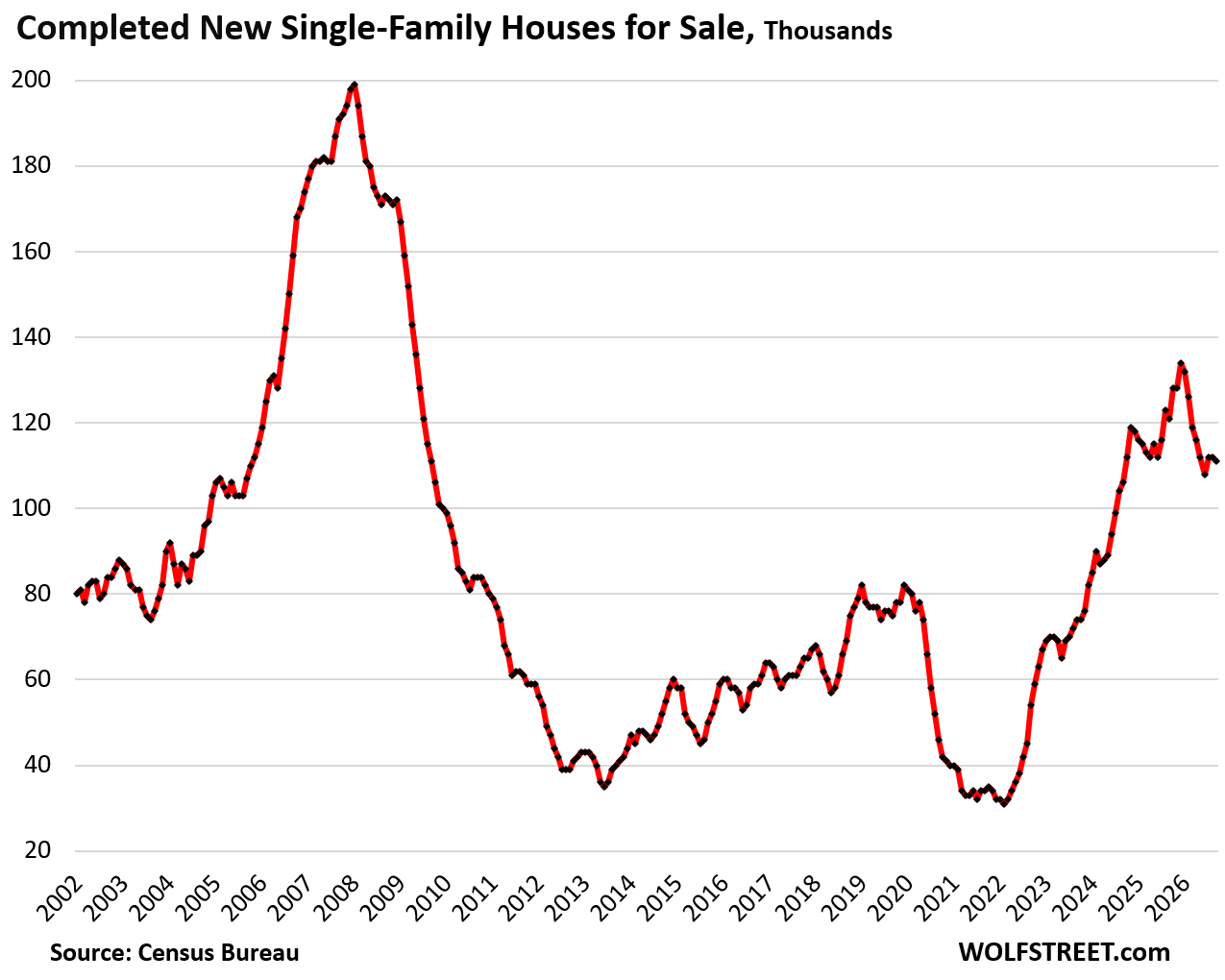
However, the implications of this strategy are double-edged. By building into a softening market, developers have tied up significant capital in completed but unsold inventory. While they have made progress in selling down this stock throughout 2026, the high carrying costs exert downward pressure on their financial performance.
Furthermore, the "housing shortage" narrative is increasingly being challenged by the data. The existence of nearly half a million new homes in various stages of construction suggests that the supply problem is not one of production capability, but rather one of price and affordability. As interest rates remain elevated, the market is undergoing a painful but necessary correction. Buyers are becoming increasingly selective, and the builders who can maintain the most flexibility in their pricing and incentive structures are the ones most likely to weather the current cycle.
Future Outlook
Looking ahead, the housing market faces a period of recalibration. The pullback of large-scale institutional investors from the single-family market, as noted in recent reports, removes a significant buyer segment that previously propped up demand. With small-scale investors still entering the market but failing to fill the void left by larger entities, the pressure on builders to lower prices or increase incentives will likely persist into 2027.
For potential homebuyers, the increased inventory offers a reprieve from the bidding wars that defined the 2021–2022 period. However, the cost of borrowing remains the primary barrier to entry. Until mortgage rates see a meaningful and sustained decline, or until home prices adjust further to reflect the reality of current debt service costs, the market is expected to remain characterized by elevated inventory, tepid sales velocity, and ongoing downward pressure on median prices. The builders who successfully navigated the post-pandemic boom now face the more difficult task of navigating a market defined by supply-side abundance and demand-side fatigue.