EPAT or Quantra: A Comprehensive Analysis of QuantInsti’s Algorithmic Trading Educational Pathways

The landscape of financial technology and quantitative trading has evolved rapidly over the past decade, shifting from institutional exclusivity to a democratized model of education. As algorithmic trading—the use of computer programs to execute trades based on pre-defined criteria—becomes the industry standard, professionals and aspiring traders are increasingly seeking structured pathways to enter the field. QuantInsti, a global pioneer in algorithmic trading education, has emerged as a central hub for this transition. Central to their educational mission are two distinct flagship offerings: the Executive Programme in Algorithmic Trading (EPAT) and the Quantra e-learning platform. Understanding the divergence in pedagogy, structure, and professional application between these two programs is essential for anyone aiming to navigate the complexities of modern market mechanics.
The Evolution of Quantitative Education
The demand for specialized trading knowledge has surged in tandem with the rise of high-frequency trading (HFT) and data-driven investment strategies. Historically, these skill sets were confined to the walls of hedge funds and proprietary trading desks. The genesis of QuantInsti’s educational model was rooted in the need to bridge the gap between academic theory and practical, real-world application.
EPAT, launched over a decade ago, was designed to replicate the rigors of an executive-level university curriculum, compressed into a six-month intensive format. In contrast, Quantra was developed later as a response to the growing need for modular, self-paced, and highly specific skill acquisition. By 2026, the platforms have collectively trained hundreds of thousands of learners, creating a global community of practitioners ranging from retail traders to senior software engineers and financial analysts.

EPAT: The Structured Executive Path
The Executive Programme in Algorithmic Trading is characterized by its cohort-based, instructor-led architecture. It is not merely a series of lessons but a comprehensive professional development program. The six-month curriculum is anchored by 120+ hours of live, interactive lectures delivered by a rotating faculty of more than 20 industry experts.
The pedagogy behind EPAT is "step-wise," ensuring that students move from foundational quantitative finance concepts to complex implementation. The program includes:
- Structured Mentorship: Unlike automated courses, EPAT assigns dedicated support managers to guide participants, ensuring progress and providing administrative and academic navigation.
- Practical Application: The program culminates in mentored project work, requiring students to apply their knowledge to real-world datasets. This mimics the environment of a professional trading firm where research and development are vetted by senior mentors.
- Career Integration: One of the most significant differentiators for EPAT is its lifelong placement assistance. By maintaining a network of industry partners, the program facilitates a direct pipeline between high-performing graduates and firms seeking quantitative talent.
- Alumni Engagement: The program fosters a lifelong community, offering graduates access to networking events, industry insights, and continuous updates on market-moving technologies.
Quantra: The Modular and Adaptive Approach
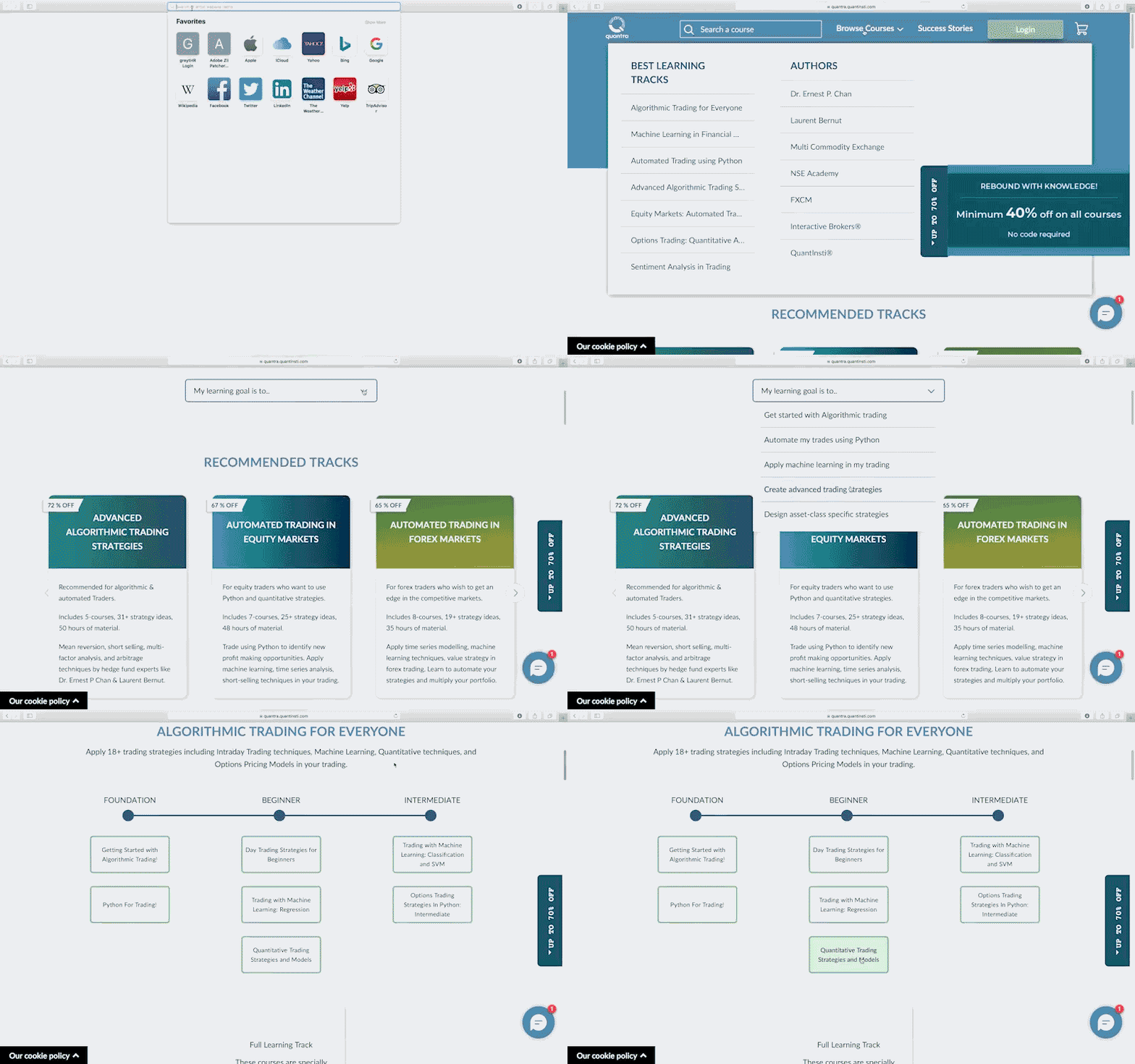
Quantra represents the modern "on-demand" approach to education. It is designed for learners who may have significant time constraints or those who require targeted training in specific domains, such as Python for finance, options trading strategies, or machine learning applications in markets.
The platform utilizes a "Learning Track" system. Instead of following a predetermined path, users select tracks—such as "Algorithmic Trading for Beginners" or "Quantitative Finance for Professionals"—and navigate through interactive, gamified, and hands-on modules. Key features include:

- Self-Paced Flexibility: Learners can complete modules at their own speed, making it an ideal choice for full-time professionals balancing market activity with career responsibilities.
- Live Integration: Recent updates to the platform have introduced live trading integration, allowing users to bridge the gap between backtesting a strategy and deploying it in a live market environment directly from the interface.
- Low Barrier to Entry: By offering free foundational courses—such as "Python for Trading: Basic"—the platform allows prospective students to assess the pedagogy and their own aptitude for quantitative topics before committing to advanced, paid modules.
Comparative Analysis: Distinguishing Features
The decision between EPAT and Quantra often rests on the learner’s professional objectives and current skill set. A comparative overview reveals how these programs serve different segments of the market:
| Feature | EPAT | Quantra |
|---|---|---|
| Primary Structure | Cohort-based, 6 months | Modular, self-paced |
| Instruction Style | Live, interactive lectures | Interactive e-learning |
| Faculty Access | Direct interaction with 20+ experts | Access to practitioners via query resolution |
| Career Support | Lifelong placement assistance | Available with bundle subscriptions |
| Capstone Projects | Mentored, comprehensive | Self-paced, technical exercises |
| Target Audience | Aspiring quants & career-switchers | Skill-seekers & retail traders |
Professional Implications and Market Impact
The implications of choosing one path over the other are significant for career trajectory. EPAT acts as a formal credential, often cited in professional portfolios and LinkedIn profiles to demonstrate a rigorous, time-tested understanding of the field. It is highly valued by individuals seeking to pivot into professional roles at hedge funds, banks, or fintech startups.
Conversely, Quantra functions as an agile toolset. For an existing professional, such as a developer looking to understand financial markets or a trader needing to master a specific library like Pandas or Scikit-learn, the modular nature of Quantra is more efficient.
Industry data suggests that the most successful practitioners often employ a hybrid strategy. Many students initiate their journey with Quantra’s free or foundational modules to build a baseline of literacy. Once they confirm their interest and identify the specific niches they wish to master, they transition to the more intensive, cohort-driven environment of EPAT to secure the mentorship and professional network necessary for career acceleration.

Official Perspective and Guidance
QuantInsti’s leadership emphasizes that neither program is inherently "better"; rather, they are optimized for different stages of the learning lifecycle. The institution maintains that the "best" choice is determined by the individual’s time commitment, learning style, and ultimate career goals.
"The goal," as noted in recent institutional disclosures, "is to democratize access to high-level quantitative training." By maintaining a clear distinction between the two, the organization ensures that learners are not over-investing in features they do not need, nor under-utilizing resources required for their specific professional growth.
Navigating the Future of Quantitative Trading
As of late 2026, the intersection of AI, machine learning, and quantitative finance continues to widen. Both EPAT and Quantra are frequently updated to reflect these shifts, ensuring that the curricula remain relevant in an environment where algorithmic dominance is the norm. Whether a student chooses the comprehensive, long-term commitment of EPAT or the agile, modular focus of Quantra, the underlying requirement for success remains the same: a dedication to rigorous practice, continuous learning, and the disciplined application of data-driven strategies.
For those considering enrollment, the recommended path involves reviewing the specific syllabi of both offerings. Prospective students are encouraged to utilize the free introductory materials on Quantra to establish a foundational understanding before engaging with the more intensive, live-lecture environment of the EPAT program. This dual-layered approach not only mitigates the risk of a mismatch in pedagogical expectations but also ensures a more seamless transition into the complex, high-stakes world of modern algorithmic trading.