Navigating Global Markets: Strategic Outlook and Asset Performance in the Second Half of 2026

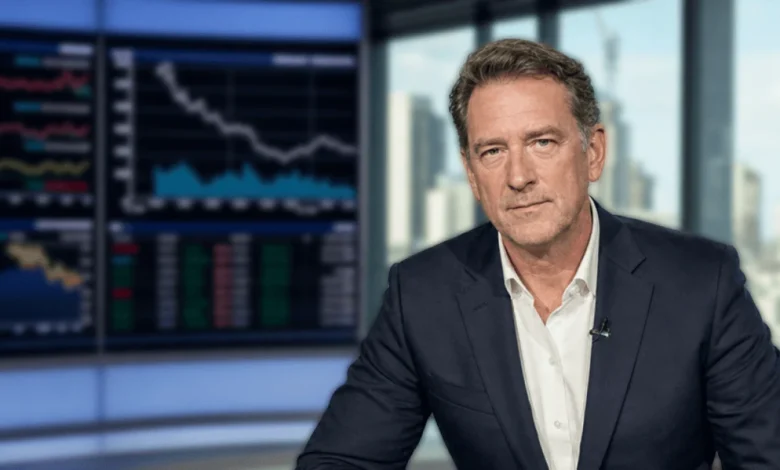
The first half of 2026 served as a vivid masterclass in financial volatility, reminding global investors that the equilibrium between market optimism and macroeconomic uncertainty is increasingly fragile. While the dominant narrative of the year has remained tethered to the relentless expansion of artificial intelligence (AI), the underlying mechanics of the global economy have been tested by persistent inflationary pressures, central bank caution, and a precarious geopolitical environment. As we transition into the second half of the year, the interplay between technological breakthroughs and traditional macroeconomic headwinds will continue to dictate capital allocation strategies for both retail and institutional players.
The defining characteristic of H1 2026 was the bifurcation of market sentiment. On one hand, the "AI-first" trade propelled the S&P 500 and the Nasdaq-100 to historic highs, driven by massive capital expenditures in data centers, cloud infrastructure, and semiconductor fabrication. On the other hand, the specter of "higher-for-longer" interest rates—maintained by the Federal Reserve and the European Central Bank in response to sticky core inflation—kept the bond market in a state of flux. Geopolitical instability in the Middle East added a layer of complexity, triggering periodic spikes in Brent and WTI crude oil prices, which acted as a tax on global growth and a persistent risk to supply chain logistics.
The Chronology of H1 2026: A Period of Resilience
The year began with a surge in expectations regarding the Federal Reserve’s pivot. In January and February, markets priced in aggressive rate cuts, leading to a rally in risk assets. However, by March, the "Goldilocks" scenario—where inflation cools without a recession—began to fray. Data releases throughout April and May showed that service-sector inflation remained stubbornly high, forcing central banks to adjust their guidance toward a more hawkish stance.
Simultaneously, the semiconductor sector emerged as the heartbeat of the global economy. By May 2026, the demand for high-bandwidth memory (HBM) and advanced GPU architecture had outstripped supply, forcing a massive capital reallocation toward hardware manufacturers. While major technology firms faced increased scrutiny regarding their AI return-on-investment (ROI) metrics, the sheer scale of investment in AI infrastructure served as a floor for broader equity valuations. Despite fears of a market correction in June, the resilience of corporate earnings reports—specifically from the "Big Tech" cohort—provided the necessary support to keep indices aloft, signaling that the structural shift toward AI-integrated operations is far more than a transitory trend.
The Geographic Shift: The Rise of the Asian Tech Corridor
While the U.S. remains the epicenter of software innovation and model development, a significant shift in capital flow has occurred toward Asian technology leaders. Investors have increasingly recognized that the "picks and shovels" of the AI revolution are largely manufactured in East Asia. Taiwan, South Korea, and Japan have emerged as indispensable nodes in the global technology ecosystem.
Taiwan’s semiconductor foundries, which currently produce the vast majority of the world’s most advanced logic chips, have seen record-breaking export volumes. South Korea’s dominance in memory storage—essential for the large language models (LLMs) fueling AI—has revitalized its manufacturing sector. Furthermore, Japan has benefited from a structural transition in corporate governance and a renewed focus on high-end manufacturing. This regional specialization has transformed these markets from traditional "emerging" or "export-heavy" plays into core strategic holdings for investors seeking exposure to the essential hardware layers of the global AI stack.
5 Assets Worth Watching in H2 2026
As we look toward the final months of the year, market analysts are focusing on five distinct assets that represent the primary forces shaping the current landscape. These selections are not merely trend-following instruments but are deeply tied to the underlying infrastructure and risk-hedging needs of the modern investor.
1. NVIDIA (NVDA)
As the primary architect of the hardware powering the generative AI revolution, NVIDIA continues to command the largest share of the AI infrastructure market. The company’s ability to maintain high margins despite increased competition in the custom silicon space remains the primary metric for tech-sector sentiment. In H2 2026, investors will be looking for sustained demand from hyperscalers (like AWS, Azure, and Google Cloud) to validate the long-term viability of massive AI hardware deployment.
2. Microsoft (MSFT)
Microsoft occupies a unique position as both an infrastructure provider (via Azure) and a dominant software platform provider (via Copilot and enterprise integration). The company’s success in monetizing AI tools across its Office suite is widely viewed as the gold standard for software-as-a-service (SaaS) companies. As enterprises move from the "experimentation" phase of AI adoption to the "integration" phase, Microsoft’s ability to secure long-term recurring revenue will be critical.
3. The SPDR S&P 500 ETF Trust (SPY)
The SPY remains the benchmark for equity market health. Its performance throughout the remainder of 2026 will serve as a barometer for whether the broader market can sustain its gains without relying solely on the "Magnificent Seven" tech giants. A broadening of market participation—where cyclical sectors like industrials and financials begin to contribute to index growth—would be a signal of a healthy, sustainable economic expansion.
4. The iShares Semiconductor ETF (SOXX)
Representing the concentrated supply chain of the technology industry, SOXX provides a window into the health of global manufacturing. Because semiconductor demand is often a leading indicator for industrial production and consumer electronics demand, this ETF is a vital tool for assessing whether the AI boom is creating a genuine cycle of industrial productivity or if it is approaching a point of inventory saturation.
5. Gold (GOLD)
Gold has maintained its historical role as a hedge against systemic risk. In an environment defined by geopolitical tensions and concerns over the long-term sustainability of sovereign debt levels in major economies, gold acts as a non-correlated asset. As central banks potentially approach the end of their tightening cycles, the opportunity cost of holding non-yielding assets like gold may decrease, potentially supporting its price action in the face of persistent global uncertainty.
Broader Impact and Economic Implications
The primary implication for investors in the second half of 2026 is that the era of "easy growth" fueled by near-zero interest rates is firmly in the rearview mirror. The current environment demands a higher degree of selectivity. We are witnessing a transition from a liquidity-driven market to an earnings-and-efficiency-driven market.
Corporations that can demonstrate actual productivity gains from AI, rather than just announcing "AI initiatives," are the firms that will likely command a premium valuation. Similarly, on the macroeconomic front, the persistent nature of inflation suggests that interest rates may remain at restrictive levels longer than the market initially hoped. This puts pressure on companies with high debt-to-equity ratios and favors those with strong balance sheets, high cash flows, and pricing power.
Furthermore, the geopolitical environment continues to be a wild card. The volatility in oil prices, driven by Middle Eastern instability, serves as a reminder that the global energy transition is not a linear process. Energy security has become a national priority, which is driving significant investment in both traditional energy infrastructure and alternative power sources—an often-overlooked sector that could provide defensive characteristics in a volatile H2.
A Disciplined Approach to the Future
Investors should note that every investment involves inherent risk. Markets move in response to a complex array of economic data, company-specific performance, central bank policy shifts, and unforeseen global events. Past performance, while informative, is never a guarantee of future outcomes.
For those navigating this landscape, the importance of a diversified, long-term perspective cannot be overstated. Whether one is utilizing platforms like eToro to gain access to global stocks, ETFs, and commodities, or working through institutional channels, the objective remains the same: to build a portfolio capable of weathering short-term turbulence while capturing the long-term growth trends defined by technological advancement and global economic integration.
As we progress through the remainder of 2026, the primary directive for the prudent investor is to focus on fundamentals. Conduct thorough due diligence, understand the risk profile of individual assets, and maintain a clear understanding of how geopolitical and macroeconomic variables can impact your holdings. In a year defined by its shifts between optimism and uncertainty, the most successful investors will be those who remain informed, disciplined, and focused on the structural forces that are, quite literally, building the future of the global economy.
Disclaimer: This article is for informational purposes only and does not constitute investment advice. Your capital is at risk. Always conduct your own research and consult with a qualified financial advisor before making any investment decisions.
Related posts: