Russian State-Sponsored Espionage Group Leveraged Undisclosed Zimbra Vulnerability for Months, Compromising Western Email Accounts

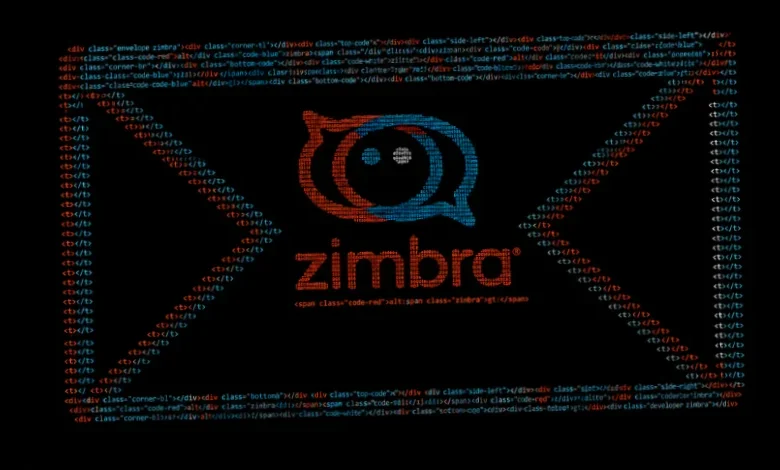
A sophisticated Russian state-sponsored espionage group, identified by multiple cybersecurity researchers and intelligence agencies, meticulously targeted and compromised Western government and commercial organizations for an extended period by exploiting a previously unknown vulnerability in Zimbra’s widely used webmail client. This covert campaign, which began as early as July 2025, allowed the adversaries to gain unfettered access to sensitive email communications and credentials, posing a significant threat to national security and corporate data integrity. The discovery and subsequent public disclosure of this threat underscore the persistent nature of advanced persistent threats (APTs) and the critical need for organizations to maintain vigilant cybersecurity practices, including prompt patching and thorough account review.
The exploit, tracked under the identifier CVE-2025-66376, leveraged a stored cross-site scripting (XSS) vulnerability within Zimbra’s Classic User Interface (UI). Unlike many sophisticated cyberattacks that require multiple steps or elaborate phishing schemes, this particular exploit demonstrated a chillingly efficient mechanism: merely viewing a specially crafted HTML email within a vulnerable Zimbra webmail client was sufficient to initiate the malicious payload. This "view-based exploit," as described in a joint advisory issued by the U.S. National Security Agency (NSA), the Cybersecurity and Infrastructure Security Agency (CISA), and international partners, effectively bypassed traditional user interaction requirements, earning it descriptions like "zero-click" from researchers at Palo Alto Networks’ Unit 42. The vulnerability resided in how Zimbra’s Classic UI handled CSS @import directives within HTML emails. Attackers were able to embed malicious JavaScript code disguised within the email’s structure, exploiting the @import mechanism to bypass Zimbra’s sanitization filters. When the email was rendered by the webmail client, the malicious script would execute with the same privileges as the authenticated user, allowing it to access and exfiltrate sensitive data directly from the user’s mailbox.
The payload designed by the threat actors was particularly insidious in its data-gathering capabilities. Once activated, it focused on acquiring critical information that could provide long-term access and enable further espionage. This included the last 90 days of an organization’s email history, the entirety of the email directory, any passwords saved within the user’s browser, and crucially, recovery codes for two-factor authentication (2FA) systems. This comprehensive data theft aimed to provide the attackers with a deep understanding of an organization’s operations, communication channels, and personnel, facilitating more targeted future attacks or the exfiltration of highly classified information.

A Chronology of Exploitation and Disclosure
The timeline of this campaign reveals a prolonged period of undetected malicious activity followed by a concerted effort to alert the public and mitigate the threat.
- At least July 2025: The threat actors, later identified and tracked by cybersecurity firms, began exploiting the unknown vulnerability in Zimbra Collaboration’s webmail client. This marked the start of a sophisticated espionage campaign targeting Western organizations.
- Throughout 2025: For approximately five months, the group operated with the vulnerability being an "unknown" zero-day exploit. During this time, they actively compromised numerous Zimbra servers and exfiltrated data from victim organizations.
- November 6, 2025: Zimbra released a patch to address the vulnerability, marking versions 10.0.18 for Zimbra Collaboration 10.0 and 10.1.13 for version 10.1 as the fixed releases. This critical update aimed to close the security loophole exploited by the attackers.
- March 18, 2026: CISA formally added CVE-2025-66376 to its Known Exploited Vulnerabilities (KEV) catalog. This inclusion mandated federal agencies to patch the vulnerability by a specific deadline, highlighting the severity and widespread impact of the threat.
- March 21, 2026 (approx.): The NSA, CISA, and partner agencies published a joint cybersecurity advisory detailing the campaign. This was accompanied by detailed research from Palo Alto Networks’ Unit 42 and Proofpoint, providing in-depth technical analysis of the exploit, the threat actor’s tactics, and the payload.
- Post-Advisory: Cybersecurity researchers and intelligence agencies continued to monitor the activity, with Proofpoint noting a cessation of observed activity from TA488 (their designation for the threat group) in February 2026, potentially linked to the public disclosures and the actors dismantling their infrastructure. However, other telemetry suggested ongoing targeting of unpatched instances.
Technical Deep Dive: The Mechanics of the Exploit
The technical sophistication of the attack lies in its method of obfuscation and exploitation. The malicious payload was embedded within the HTML body of an email. Attackers employed a technique described as "tag-splitting," where an <svg onload=...> tag was hidden within a display:none div. This tag was then deliberately broken apart using fake @import directives and HTML comments. Zimbra’s built-in HTML sanitizer, designed to strip out potentially malicious code, failed to recognize these fragmented components as executable markup. When the sanitizer processed the email, it removed the @import sequences and HTML comments. The remaining characters, however, would reassemble to form a functional <svg onload=eval(atob(...))> tag, which the web browser then executed. This allowed the JavaScript payload, named ZimReaper by Proofpoint, to run within the context of the authenticated user’s session.
The execution of ZimReaper was designed for maximum data extraction. It first targeted the user’s session by stealing the Cross-Site Request Forgery (CSRF) token, a critical component for web application security. It also captured the browser’s autofilled password, effectively gaining direct access to the user’s account. Furthermore, it leveraged Zimbra’s own Application Programming Interfaces (APIs) to retrieve 2FA "scratch codes" and details about the victim’s Zimbra version. All this sensitive data was then exfiltrated, often via DNS queries, to infrastructure controlled by the threat actors.
Beyond immediate credential theft, ZimReaper engaged in a broad reconnaissance of the victim’s email environment. It performed a brute-force query of the Global Address List (GAL), systematically requesting every possible two-character combination until the entire list was retrieved. This provided the attackers with a comprehensive map of the organization’s internal contacts. Finally, it archived the last 90 days of the victim’s emails into a TGZ file and transmitted it to the command-and-control (C2) servers.

A particularly concerning aspect of the attack, highlighted by Proofpoint, was the payload’s ability to create an app-specific password named "ZimbraWeb" using the CreateAppSpecificPasswordRequest function. This bypasses the need for two-factor authentication for subsequent access via IMAP, POP3, or SMTP protocols. This tactic, if not identified and revoked, could allow the attackers persistent access even if the primary account password was changed. Researchers also noted from a previous analysis by Seqrite of an incident at a Ukrainian state hydrology agency that the payload could also flip the zimbraPrefImapEnabled setting to TRUE, ensuring IMAP access. The ability for app-specific passwords to survive password resets further amplifies the long-term risk posed by this vulnerability.
Threat Actor Identification and Targeting
Multiple cybersecurity entities have been tracking the threat actors involved in this campaign, using various designations. Proofpoint refers to the group as TA488, while Palo Alto Networks’ Unit 42 tracks the activity as CL-STA-1114. The joint advisory also lists LAUNDRY BEAR and Void Blizzard as community names associated with these actors, though it cautions that these designations may not be perfectly aligned. Dutch intelligence agencies, for instance, consider LAUNDRY BEAR and APT28 as separate entities, while US government partners have confirmed the association of TA488 with Void Blizzard. Seqrite, in its analysis of an earlier incident, attributed a similar attack to APT28 with medium confidence.
The scope of the targeting was extensive, spanning critical sectors and geographical regions. Unit 42 identified at least nine command-and-control (C2) IP addresses and nine associated domains, with each server remaining active for an average of 35.4 days, suggesting a deliberate and organized operational infrastructure. The affected sectors included government, defense, transportation, and financial organizations. Notably, the targeting extended to NATO member states, Ukraine, countries within the Commonwealth of Independent States, and various nations across Africa. Proofpoint also placed U.S. organizations on their list of targeted entities, including government, scientific, and defense industrial base entities, with a concerning mention of nuclear installations. This broad targeting indicates a strategic effort by the Russian state to gather intelligence from a wide array of Western entities.
Implications and Recommendations for Defense
The discovery and public disclosure of CVE-2025-66376 serve as a stark reminder of the persistent threat posed by nation-state-sponsored cyberespionage. The exploit’s "zero-click" nature and its ability to bypass traditional security measures highlight the evolving sophistication of adversaries. The implications for organizations using Zimbra are significant:

- Vulnerability of Legacy Systems: Zimbra 10.0 reached its end-of-life on December 31, 2025. While version 10.0.18 was released as an emergency patch, organizations still running older, unsupported versions remain at extreme risk. The continuous development of new vulnerabilities in legacy software underscores the imperative to migrate to supported platforms.
- Persistent Access Risk: The ability of the payload to create app-specific passwords and potentially survive password resets means that simply patching the vulnerability is not enough. Organizations must actively review their accounts for unauthorized app passwords and any signs of persistent access.
- Data Integrity and Confidentiality: The exfiltration of 90 days of emails and the entire directory could have severe consequences for data confidentiality, potentially exposing sensitive internal communications, strategic plans, and personal information of employees.
In response to this threat, cybersecurity agencies and researchers have issued clear recommendations:
- Immediate Patching: Organizations utilizing Zimbra Collaboration must ensure their systems are updated to the latest supported versions. For Zimbra 10.0 deployments, this means upgrading to at least 10.0.18 as an emergency floor, but ideally migrating to a supported 10.1 build. For 10.1 deployments, updating to at least 10.1.13 is crucial. The latest release, 10.1.20, released on July 20, 2026, addresses four additional stored XSS flaws in the Classic Web Client.
- Comprehensive Account Review: Any mailbox that may have opened or previewed a malicious email in a vulnerable Classic UI session should be considered potentially compromised. This necessitates resetting user passwords, invalidating all active sessions, and regenerating 2FA scratch codes.
- Mailbox Forensics: For messages that were delivered but never opened, security teams should investigate the HTML content for the fragmented
@importpattern. Proofpoint has released a YARA rule to help identify such patterns. - Incident Response: Organizations should have robust incident response plans in place to detect, contain, and remediate such breaches effectively. This includes the ability to analyze network traffic for exfiltration attempts and identify suspicious DNS queries.
- Continuous Monitoring: Given the ongoing threat landscape, continuous monitoring of network activity, email logs, and user authentication events is vital to detect and respond to potential intrusions in real-time.
The attack on Zimbra underscores a broader trend in cyber warfare, where state-sponsored actors meticulously seek out and exploit zero-day or previously unknown vulnerabilities to achieve strategic intelligence objectives. The coordinated disclosure by intelligence agencies and private researchers, while alerting the public to the danger, also highlights the cat-and-mouse game played by attackers and defenders in the digital realm. The imperative for organizations to maintain a proactive and adaptive cybersecurity posture, prioritizing timely patching and diligent security hygiene, has never been more critical. The lingering question for many remains: how many other unpatched systems are currently vulnerable to similar, or even more advanced, stealthy attacks? The answer likely lies in the continued diligence and vigilance of the cybersecurity community.