Sterling Surges Against a Weakening Dollar as UK Economic Resilience Outpaces US Concerns


The British Pound Sterling (GBP) secured its second consecutive week of gains against the US Dollar (USD) as market participants braced for a measured stance from the Bank of England, buoyed by surprisingly robust UK economic indicators. Simultaneously, the US Dollar experienced a significant downturn, reaching four-year lows amidst escalating geopolitical anxieties and questions surrounding the Federal Reserve’s independence, before finding a modest reprieve. The GBP/USD pair ascended to new heights not seen since October 2021, flirting with the 1.3860 mark, before undergoing a correction that pulled it below the mid-1.3700s. This downward adjustment, observed on Thursday and Friday, was largely attributed to a last-minute agreement between President Trump and the US Senate to avert a government shutdown, a development that injected a degree of stability into the US political landscape. Further compounding the dollar’s woes was President Trump’s nomination of Kevin Warsh as the next Chair of the Federal Reserve, a move that generated uncertainty about the future direction of monetary policy and the Fed’s operational autonomy.
Economic Data and Central Bank Signals: A Divergent Picture
From an economic data perspective, the United Kingdom presented a relatively light schedule of major releases. However, the US Federal Open Market Committee (FOMC) meeting emerged as the week’s focal point. As widely anticipated by financial analysts, the central bank opted to maintain its benchmark interest rates at their current levels. Fed Chair Jerome Powell’s subsequent press conference, while reiterating the Fed’s commitment to a data-dependent approach, offered little in the way of concrete clarity for market participants regarding the timing or pace of future monetary policy adjustments.
In stark contrast to the Fed’s deliberate approach, recent US economic data painted a picture of persistent inflationary pressures. Friday’s Producer Price Index (PPI) report significantly surpassed forecasts. Monthly Core PPI registered a robust 0.7%, and the headline PPI came in at 0.5%. This "sticky inflation" data further solidified market expectations for a potential delay in the Federal Reserve’s anticipated interest rate cuts, suggesting that inflationary forces may prove more enduring than previously believed.
Geopolitical Undercurrents Add to Market Volatility
Adding a layer of complexity to the currency market dynamics, escalating geopolitical tensions, particularly concerning developments in Iran and the ongoing conflict in Ukraine, continued to weigh on global risk sentiment. These international developments contributed to a cautious market environment, creating a potentially bumpy ascent for the GBP/USD pair. The intertwined nature of global economics and geopolitics means that shifts in international relations can have a tangible impact on currency valuations, as investors seek safer havens or reallocate capital based on perceived risks.
Key Economic Events on the Horizon for GBP/USD
Looking ahead, several high-impact economic events are poised to significantly influence the volatility of the GBP/USD pair in the coming week. Market participants will be keenly observing the Bank of England’s upcoming monetary policy announcement. While the consensus among economists and traders is that the Monetary Policy Committee (MPC) will hold the policy rate steady, the precise vote split within the committee will be a critical indicator of sentiment regarding the future trajectory of interest rates and the potential timing of the next rate adjustment. Any deviation from expectations, such as a more hawkish or dovish split, could trigger substantial market movements.
On the US side of the ledger, labor market data remains a paramount factor for the Federal Reserve in shaping its monetary policy decisions. The Non-Farm Payrolls (NFP) report, a key barometer of employment trends, is projected to show a notable increase, with forecasts suggesting a jump from the previous reading of 50,000 to around 75,000. Concurrently, the unemployment rate is expected to remain stable at 4.4%. Any significant divergence from these established forecasts, whether positive or negative, has the potential to precipitate sharp and immediate reactions in currency markets, particularly in the US Dollar.
Technical Outlook: Navigating Profit-Taking and Support Levels

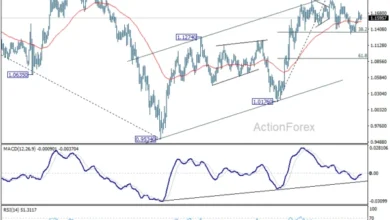
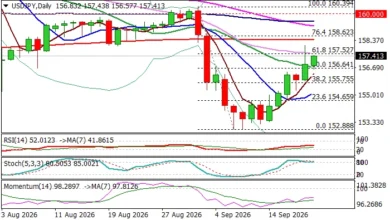
From a technical analysis perspective, the GBP/USD daily chart reveals a recent corrective downside movement after the pair briefly breached the supply zone situated above the 1.3850 level. This pullback saw the pair shed over 100 pips, with the Relative Strength Index (RSI) retreating below the 50.0 threshold, signaling a potential for further downward pressure in the short term.
However, the 1.3700 psychological level is anticipated to provide a degree of support, potentially halting the decline before the next significant support area near the round number of 1.3600. Beyond that, a demand zone, previously influenced by supply dynamics, is located around the 1.3500 mark. This zone could offer a more substantial floor to any further retracing movements.
On the upside, the immediate resistance is observed at the 1.3800 level. This is followed by the monthly high of 1.3860, and then a more distant resistance at 1.3925. The probability of the pair testing the significant 1.4000 level in the immediate future appears somewhat diminished, primarily due to profit-taking activities that are currently exerting pressure on the Sterling. Nevertheless, the underlying broad upside trend for GBP/USD remains intact. The pair is trading comfortably above key moving averages, which suggests that any buying traction gathered around the major support zones could potentially fuel a rally to fresh highs. The interplay between technical indicators, fundamental data, and geopolitical events will be crucial in determining the pair’s trajectory in the coming trading sessions.
US Dollar’s Vulnerability: A Multifaceted Challenge
The US Dollar’s recent weakness can be attributed to a confluence of factors. The political maneuverings surrounding the potential government shutdown, while ultimately resolved, injected an element of uncertainty into the US fiscal outlook. More significantly, President Trump’s nomination of Kevin Warsh to lead the Federal Reserve has raised concerns about the central bank’s independence. Warsh, a former Fed governor, has been perceived as more aligned with the Trump administration’s economic policies, leading some analysts to speculate about a potential shift towards a more politically influenced monetary policy. This, coupled with the Fed’s own cautious forward guidance, has contributed to a perception of increased risk surrounding the Dollar.
Furthermore, the persistent geopolitical concerns in regions like the Middle East and Eastern Europe have led investors to reassess their risk appetite. In times of heightened global tension, currencies of countries perceived as geopolitical safe havens, or those with more stable political and economic environments, tend to benefit. The US, despite its economic might, has faced scrutiny over its foreign policy and its role in various international disputes, which can indirectly affect the Dollar’s appeal.
Implications for Global Markets and Investors
The sustained strength of the British Pound against the US Dollar has several implications for global markets. For UK-based businesses, a stronger Sterling can make imports cheaper, potentially easing inflationary pressures on consumer goods and raw materials. However, it can also make UK exports more expensive for foreign buyers, potentially impacting the competitiveness of British companies in international markets.
For US consumers, a weaker Dollar means that imported goods become more expensive, potentially contributing to higher domestic inflation. Conversely, it makes US exports more attractive to foreign buyers, which could provide a boost to certain sectors of the US economy.
The volatility in currency markets also presents both opportunities and challenges for investors. Currency traders will be closely monitoring economic data releases and central bank communications for signals that could drive future price movements. For those holding international assets, currency fluctuations can significantly impact the overall return on investment. A weaker US Dollar, for instance, can enhance the returns of US-based investors holding foreign assets when converted back into Dollars.
The ongoing interplay between economic fundamentals, central bank policies, and geopolitical events underscores the complex and dynamic nature of the foreign exchange market. As the global economic landscape continues to evolve, investors and policymakers alike will be closely watching the GBP/USD pair for further indications of shifting market sentiment and economic power. The next few weeks, with their slate of crucial economic data and central bank pronouncements, are likely to be pivotal in shaping the future trajectory of this key currency pair.