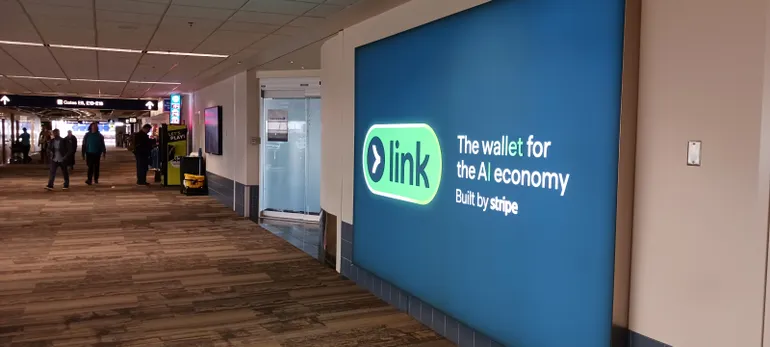
The rapid rise of AI agents—autonomous digital assistants capable of performing tasks on behalf of users—has triggered a structural shift in the global payments ecosystem. Stripe, traditionally a powerhouse in backend merchant processing, is now actively working to bridge the gap between consumers and these bots, ensuring its "Link" wallet becomes the default financial engine for AI-driven transactions. This strategic maneuver is marked by high-profile partnerships with Meta Platforms, xAI, and the rapidly scaling startup Instinct, signaling a new era where software, not humans, initiates the majority of digital commerce.
The Evolution of Agentic Commerce
Agentic commerce represents a departure from traditional e-commerce, where a human user navigates a website, manually enters payment details, and clicks "purchase." In the agentic model, an AI assistant evaluates consumer preferences, identifies the optimal product, manages price negotiations or discount applications, and executes the transaction autonomously.
For Stripe, the stakes are existential. As commerce shifts from human-to-browser interactions to agent-to-API interactions, the entities that control the "wallet" that sits behind the agent will capture the lion’s share of transaction data and processing volume. By embedding Link into these agents, Stripe is effectively transforming its backend merchant service into a consumer-facing utility.
Chronology of Strategic Integrations
The recent surge in activity began in earnest during Stripe’s annual developer conference in April 2026, where the company officially debuted its "payments for AI agents" framework. This toolkit provided developers with the necessary APIs to grant AI models the authority to perform financial transactions securely.
- April 2026: Stripe unveils its dedicated framework for AI-integrated payments, laying the groundwork for widespread adoption.
- August 2026: Stripe announces major integrations with xAI’s Grok Bot and the AI assistant Instinct, developed by Spear Street Technology.
- September 8, 2026: Meta Platforms publicly announces the integration of the Stripe Link wallet into its new personal assistant, Muse, enabling the bot to finalize transactions on behalf of Instagram and Facebook users.
- Mid-September 2026: Reports emerge regarding the meteoric rise of Instinct, which is currently negotiating a funding round that could push its valuation to $10 billion, underscoring the massive capital flowing into agent-first platforms.
Security and the "One-Time-Use" Paradigm
A central challenge in agentic commerce is consumer trust. Entrusting an AI with payment credentials carries inherent risks. To mitigate this, Stripe’s integration with platforms like Meta’s Muse employs a tokenization strategy. The AI agent never gains access to the user’s raw credit card information. Instead, Link generates a one-time-use virtual card for each transaction.
This architecture is supplemented by robust consumer protection policies. Meta has confirmed that purchases facilitated by Muse via Link are covered by protections against lost or damaged items, price drops, and no-fee returns. By decoupling the agent from the actual funding source, Stripe aims to alleviate the privacy concerns that typically hinder the adoption of autonomous purchasing tools.
Market Dynamics: Stripe vs. The Established Players
Stripe’s push into consumer wallets is a direct response to the "two-sided network" advantage held by competitors like PayPal and, to a lesser extent, Apple and Google. PayPal has long maintained a dual-sided ecosystem, connecting millions of consumers directly to a global merchant network.
Industry analysts, including Richard Crone, CEO of Crone Consulting LLC, suggest that Stripe’s current trajectory is a necessary reaction to the shifting competitive landscape. "Essentially, the way to think about this is that the agent will be the wallet or the wallet will be the agent," Crone observed. He noted that Stripe’s historical focus on the merchant side left it vulnerable as the "purchasing interface" began to migrate toward AI models.
Furthermore, the competitive pressure is mounting. PayPal has already established deep technical ties with the foundational Large Language Models (LLMs) powering tools like OpenAI’s ChatGPT and Google’s Gemini. With a portfolio that includes Venmo, buy-now-pay-later (BNPL) options, and stablecoin support, PayPal offers an array of nine distinct funding sources. AI agents are uniquely suited to manage this complexity, instantly analyzing which of the nine options offers the best rewards, lowest fees, or most favorable terms for a specific transaction—a feat a human would find tedious.
Financial Implications and Future Revenue Streams
The monetization models for these AI agents are expected to be diverse. Meta, for instance, is projected to derive revenue by charging merchants a commission for successfully facilitating a sale. Additionally, the company may explore "savings-sharing" models, where the AI assistant takes a percentage of the money it saves the consumer by automatically applying coupons, identifying lower-cost alternatives, or canceling redundant subscription services.
Stripe’s role as the payment processor on both ends of the transaction—serving the merchant through its API and the consumer through Link—positions it to capture fees from multiple points in the value chain. As Simon Taylor, a prominent fintech commentator, noted, Stripe is rapidly positioning itself to sit on both sides of every agent-led transaction. This dual-sided presence is the "holy grail" of the payments industry, providing the data density required to train better fraud detection and authorization models.
Analytical Outlook: The Path Forward
The success of Stripe’s strategy will depend on its ability to scale its user base beyond the initial 300 million global users it claims for Link. While Link is currently integrated with approximately one million merchants, the battle for "agent-default" status is far from over.
The industry is watching closely to see if Stripe can maintain its momentum against the entrenched interests of tech giants that own the operating systems (Apple/Google). Unlike a standalone app, an AI agent operates across platforms, often functioning via text, voice, or email. This makes the "browser-based" wallet model—where Link competes with standard autofill tools—less relevant than the "agent-integrated" wallet model.
In the coming months, the focus will likely shift toward interoperability. If an AI agent from one company cannot interact with a payment rail from another, the fragmentation could slow adoption. However, if Stripe continues to act as a neutral "plumbing" layer for these agents, it may secure its position as the de facto financial infrastructure for the next generation of digital commerce.
The rapid valuation growth of companies like Instinct, combined with the aggressive adoption of these tools by social media giants like Meta, confirms that we have passed the point of no return. The "agentic" era is here, and for a company like Stripe, the transition from a merchant-facing processor to a consumer-facing wallet is not just an opportunity—it is an absolute requirement for long-term survival in an automated economy. As agents continue to gain autonomy, the companies that control the "checkout" will ultimately control the consumer’s wallet.
Related posts: