A Practical Introduction to Hands-On AI Trading with Python, QuantConnect, and AWS

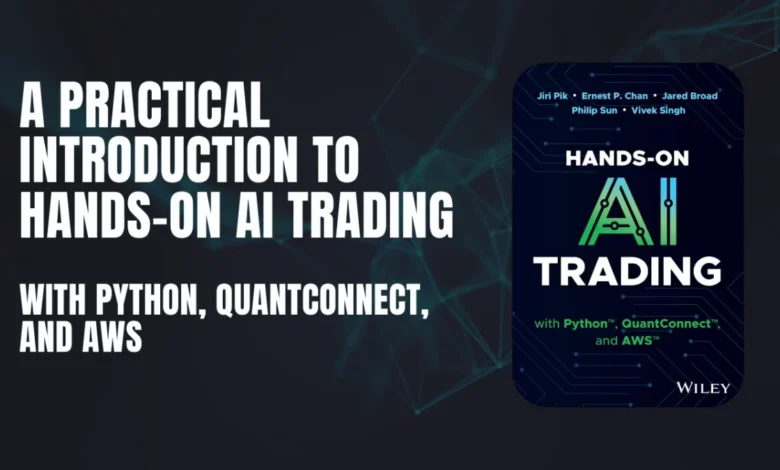
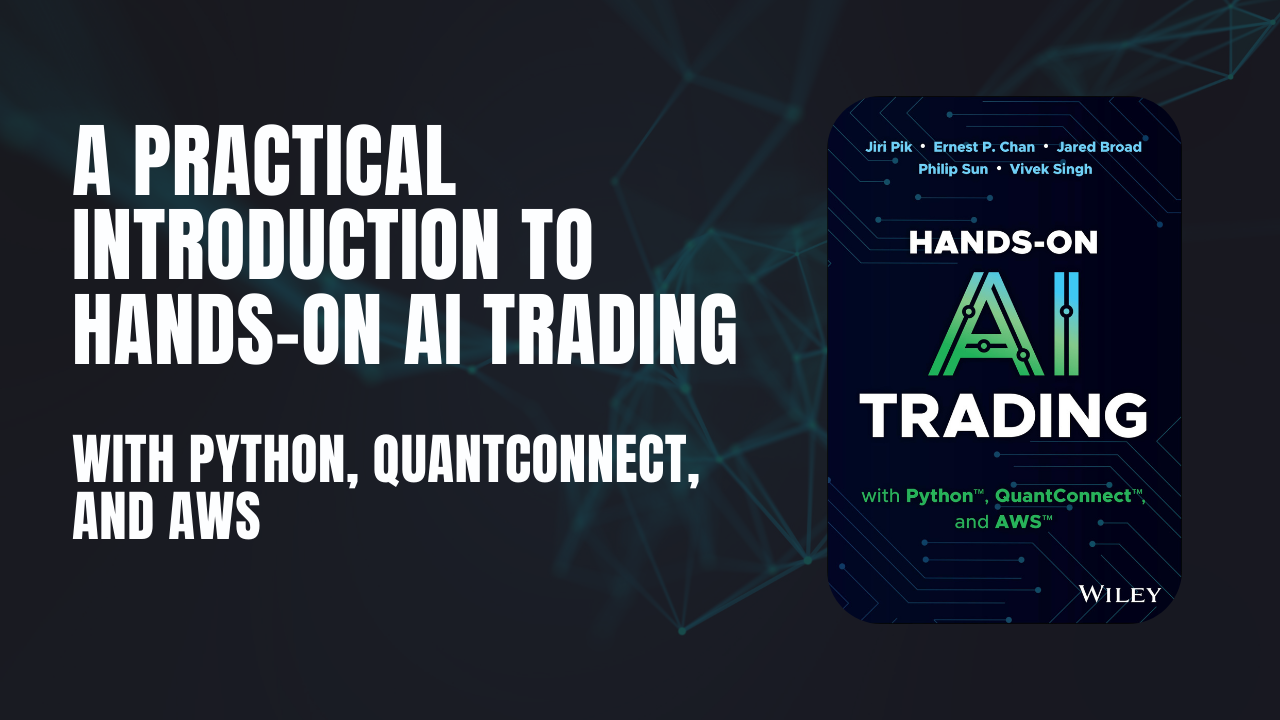
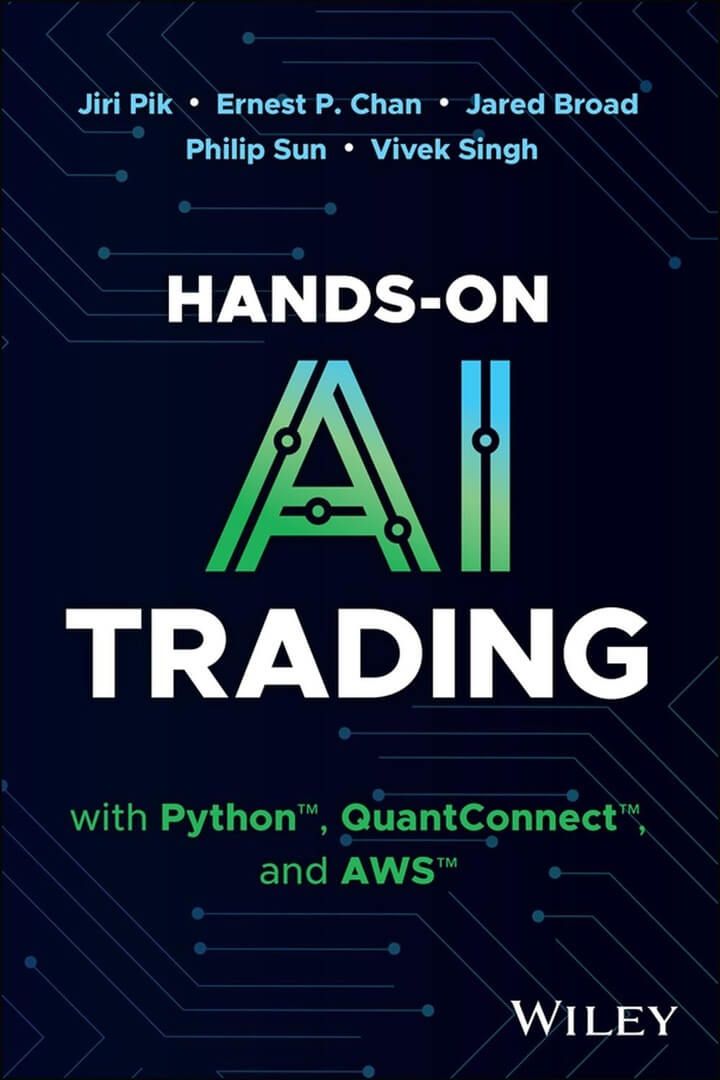
Artificial intelligence is no longer a peripheral tool in quantitative finance. From machine learning models that uncover subtle market regimes to large language models that interpret unstructured news in real time, AI is increasingly embedded in how modern trading strategies are researched, tested, and deployed. Yet for many practitioners, the real challenge is not whether to use AI, but how to apply it rigorously, realistically, and at scale. This is precisely the gap addressed by Hands-On AI Trading with Python, QuantConnect, and AWS, a new book published by Wiley. Rather than focusing on abstract theory, the book emphasizes end-to-end, deployable AI trading strategies, built in a professional research environment.
The Evolving Landscape of AI in Quantitative Finance
The integration of Artificial Intelligence (AI) into quantitative finance has accelerated dramatically in recent years, transforming the landscape of trading and investment management. What was once the domain of academic research and highly specialized firms is now becoming a core competency for a broader range of financial professionals. The proliferation of advanced algorithms, coupled with unprecedented access to computational power and vast datasets, has enabled the development of sophisticated trading systems capable of analyzing markets with a speed and complexity previously unimaginable.
Machine learning models, for instance, are now adept at identifying intricate patterns and correlations within financial data that often elude traditional statistical methods. These models can detect subtle shifts in market behavior, identify emerging trends, and adapt to changing economic conditions in near real-time. Beyond predictive analytics, large language models (LLMs) are revolutionizing how unstructured data, such as news articles, social media sentiment, and regulatory filings, is processed and incorporated into trading decisions. The ability to extract actionable insights from this deluge of textual information offers a significant competitive advantage, allowing for more informed and timely strategic adjustments.
However, the rapid advancement of AI in finance presents a significant challenge for many practitioners. While the theoretical underpinnings of AI are increasingly accessible, the practical application of these technologies to real-world trading scenarios remains a complex hurdle. Bridging the gap between theoretical knowledge and the robust, scalable implementation of AI-driven trading strategies requires a deep understanding of not only algorithms but also the intricate realities of financial markets, including data quality, execution frictions, and rigorous risk management.
Bridging the Gap: The Genesis of "Hands-On AI Trading"
It is this critical gap between AI theory and practical, deployable trading strategies that inspired the creation of Hands-On AI Trading with Python, QuantConnect, and AWS. Published by Wiley, this new book aims to provide a coherent, practitioner-oriented path for professionals seeking to leverage AI in their quantitative finance endeavors. The authors recognize that the abundance of academic papers, blog posts, and fragmented code repositories, while valuable, often lacks the integrated perspective needed to build and deploy actual trading systems.
The book’s core philosophy is to move beyond abstract concepts and focus on the development of "end-to-end, deployable AI trading strategies." This approach emphasizes a holistic view, encompassing the entire lifecycle of a trading strategy, from initial hypothesis generation and model development to rigorous backtesting, risk assessment, and ultimately, deployment in a live trading environment. By grounding the learning in a professional research setting, the book seeks to equip readers with the skills and knowledge necessary to navigate the practical constraints and complexities of real-world trading.
A Practitioner’s Approach: Strategy-First, Model-Second
A distinguishing feature of Hands-On AI Trading is its "strategy-first, not model-first" approach. Unlike many resources that might begin with a discussion of a particular AI algorithm, this book prioritizes the trading objective. Each chapter is structured around a specific trading goal or hypothesis. AI models are introduced only when they demonstrably add economic or operational value to achieving that objective. This mirrors the actual workflow of professional quantitative traders, who begin by identifying market inefficiencies or trading opportunities and then select the most appropriate tools, including AI, to exploit them.
This philosophy prompts readers to consider fundamental questions that are crucial for successful trading, such as:
- What is the underlying market inefficiency or anomaly we are trying to capture?
- How can AI help us identify or quantify this opportunity more effectively than traditional methods?
- What are the realistic data requirements and limitations for this strategy?
- How do we manage the inherent risks associated with this particular AI-driven approach?
- What are the practical considerations for executing this strategy in a live market, including costs and slippage?
By focusing on these strategic considerations, the book aims to cultivate a more robust and business-oriented mindset among its readers, ensuring that AI is applied as a tool to solve specific trading problems rather than as an end in itself.
Comprehensive Content: Over Twenty Fully Implemented AI Trading Strategies
The practical depth of Hands-On AI Trading is underscored by its inclusion of over twenty complete, end-to-end AI trading strategies. Each strategy is not merely a theoretical concept or a snippet of code but a fully implemented system designed for practical application. This comprehensive approach ensures that readers gain hands-on experience with the entire development process.
Key components of each strategy include:
- Clear Trading Objectives: Each strategy begins with a well-defined goal, articulating the market behavior it aims to exploit.
- Data Preparation and Feature Engineering: Emphasis is placed on sourcing, cleaning, and transforming relevant data for AI model input, a critical step often overlooked in purely theoretical discussions.
- AI Model Selection and Implementation: The book guides readers through choosing appropriate AI models, explaining their rationale and providing detailed implementation steps.
- Rigorous Backtesting: Strategies are thoroughly backtested using realistic market data, incorporating factors like transaction costs, slippage, and slippage.
- Risk Management Frameworks: Essential risk management protocols are integrated into each strategy, addressing potential downsides and ensuring capital preservation.
- Performance Evaluation Metrics: Readers learn to interpret a comprehensive set of performance metrics beyond simple returns, including Sharpe ratio, Sortino ratio, maximum drawdown, and alpha generation.
Representative examples of the strategies covered span a wide array of modern AI applications in trading, including:
- Predictive models for short-term price movements.
- Sentiment analysis-driven trading strategies leveraging news and social media.
- Reinforcement learning agents for optimal trade execution.
- Time-series forecasting models incorporating deep learning techniques.
- Anomaly detection algorithms for identifying unusual market behavior.
Crucially, each strategy is presented as a deployable QuantConnect algorithm. This means readers are not working with isolated notebooks but with complete codebases that are ready for further development and integration into a live trading infrastructure. This focus on deployability is a cornerstone of the book’s value proposition.
The QuantConnect Ecosystem: From Research to Deployment
A significant aspect of Hands-On AI Trading is its reliance on the QuantConnect cloud platform. This strategic choice allows readers to concentrate on the research and development of AI trading strategies without being bogged down by the complexities of setting up and managing their own trading infrastructure. QuantConnect provides a robust, integrated environment for algorithm development, backtesting, and deployment, simulating the professional workflow of many quantitative trading firms.
Key benefits of using the QuantConnect platform as highlighted in the book include:
- Streamlined Infrastructure: QuantConnect handles the complexities of data management, server maintenance, and execution routing, enabling a faster research cycle.
- Access to High-Quality Data: The platform offers access to a wide range of historical and real-time market data, essential for accurate backtesting and strategy development.
- Integrated Backtesting Engine: QuantConnect’s sophisticated backtesting engine allows for realistic simulation of trading strategies, accounting for market microstructure effects.
- Cloud-Based Deployment: Strategies developed on QuantConnect can be deployed to live trading environments with relative ease, facilitating a direct path from research to execution.
- Community and Collaboration: The platform fosters a community of quantitative traders, providing opportunities for knowledge sharing and collaboration.
By building strategies within this professional research environment, readers gain practical experience that is directly transferable to real-world institutional settings. The emphasis on realistic constraints such as contract rolls, slippage, margin requirements, and execution costs ensures that the learning is not just theoretical but operationally relevant.
Authoritative Expertise: A Blend of Trading, Platforms, and AI Infrastructure
The credibility and practical relevance of Hands-On AI Trading are further enhanced by the authors’ diverse backgrounds and extensive experience. The book benefits from a rare convergence of expertise spanning trading, platform development, and AI infrastructure, ensuring that the material is both technically rigorous and operationally grounded.
The authorial team brings together individuals with deep insights into:
- Quantitative Trading: Professionals with firsthand experience in developing, implementing, and managing algorithmic trading strategies in live markets. This ensures the strategies discussed are grounded in practical trading realities and market dynamics.
- QuantConnect Platform Development: Individuals who understand the intricacies of the QuantConnect platform, its capabilities, and its role in the modern quantitative finance workflow. This expertise ensures the seamless integration of AI strategies within the platform.
- AI and Machine Learning Infrastructure: Experts in building and deploying AI models at scale, with a focus on the operational aspects of AI, including data pipelines, model training, and inference. This provides a robust foundation for the AI components of the trading strategies.
This unique blend of perspectives ensures that the content of the book is not only technically sound from an AI and programming standpoint but also operationally realistic and aligned with the workflows and best practices found in institutional quantitative finance.
Strategic Themes Explored in the Book
Hands-On AI Trading delves into several critical areas of modern quantitative finance, offering readers a comprehensive understanding of how AI can be applied across various market dynamics and data types. The strategy themes covered are designed to reflect the current frontiers of quantitative research and development.
Volatility & Risk-Aware Strategies
In today’s dynamic markets, managing volatility and risk is paramount. The book explores how AI can be used to develop strategies that are not only designed to generate alpha but also inherently robust to market fluctuations. This includes techniques for:
- Real-time volatility forecasting and adaptive position sizing.
- Developing models that identify and exploit periods of heightened market uncertainty.
- Implementing risk parity or risk-aware portfolio construction using AI-driven insights.
- Utilizing AI to detect tail-risk events and trigger protective measures.
Regime Detection & Market States
Markets are not static; they evolve through different regimes characterized by varying levels of volatility, correlation, and trending behavior. AI models are particularly well-suited for identifying and adapting to these changing market states. The book covers:
- Unsupervised learning techniques for clustering market regimes.
- Developing models that predict transitions between market states.
- Implementing regime-dependent trading strategies that adjust their behavior based on current market conditions.
- Using AI to understand the macroeconomic drivers influencing different market regimes.
Alpha Across Data Types
The pursuit of alpha, or excess returns, is a central theme in quantitative finance. Hands-On AI Trading demonstrates how AI can unlock alpha from diverse data sources, moving beyond traditional price and volume data. This includes:
- Leveraging alternative data sources such as satellite imagery, credit card transactions, and supply chain information.
- Developing models that combine insights from multiple data types for enhanced predictive power.
- Exploring cross-asset class relationships and arbitrage opportunities using AI.
- Utilizing AI to uncover mispricings in illiquid or complex financial instruments.
NLP, LLMs, and Alternative Data
The advent of Natural Language Processing (NLP) and Large Language Models (LLMs) has opened up new avenues for alpha generation by enabling the analysis of unstructured text data. The book highlights:
- Sentiment analysis of news articles, social media, and earnings call transcripts to gauge market perception.
- Using LLMs to extract structured information from complex documents like regulatory filings and research reports.
- Developing AI models that can interpret the nuances of language to predict market reactions to specific events.
- Integrating insights from alternative data sources, including text-based ones, into comprehensive trading strategies.
For readers eager to dive deeper into NLP applications, the free Quantra course "Introduction to Machine Learning in Trading" offers a foundational understanding of machine learning concepts relevant to trading, including initial steps in NLP applications.
Who Should Read "Hands-On AI Trading"?
Hands-On AI Trading with Python, QuantConnect, and AWS is meticulously crafted for a specific audience seeking to translate their understanding of AI into tangible trading outcomes. The book is ideal for:
- Quantitative Researchers and Developers: Professionals seeking to enhance their skillset with practical AI applications for strategy development and implementation.
- Data Scientists Transitioning to Finance: Individuals with a strong AI and data science background who aim to apply their expertise in the financial markets.
- Portfolio Managers and Traders: Practitioners looking to integrate AI-driven insights and automated strategies into their investment decision-making processes.
- Students and Academics: Those pursuing advanced studies in quantitative finance or computational finance who require a hands-on understanding of modern AI trading techniques.
- Fintech Enthusiasts: Individuals interested in the technological advancements shaping the future of financial trading.
The core target audience comprises individuals who aspire to move beyond theoretical knowledge and actively apply AI to real trading decisions, whether in a personal capacity, for a proprietary trading firm, or within an institutional setting.
Early Feedback and Reader Insights
Initial feedback from early readers and reviewers suggests that Hands-On AI Trading is making a significant impact by bridging a perceived gap in the market. The book is being praised for its ability to combine theoretical depth with practical applicability. Comments highlight:
- "A rare combination of depth and practicality; these are strategies you can actually build on." This sentiment underscores the book’s focus on actionable, implementable strategies rather than abstract concepts.
- "Bridges the gap between machine learning theory and real trading systems." This indicates the book’s success in translating complex AI concepts into the concrete requirements of financial trading systems.
- "Particularly strong on intuition and decision-making, not just code." This feedback emphasizes that the book provides more than just programming instructions; it fosters a strategic understanding of how and why AI is used in trading.
These early testimonials suggest that the book is resonating with its intended audience by providing valuable, actionable insights into the practical application of AI in trading.
Next Steps and Contributing to the Quant Community
For those inspired by the practical approach outlined in Hands-On AI Trading, several avenues for further engagement and learning are available. For newcomers to quantitative trading, the free Quantra learning track "Quantitative Trading for Beginners" offers a solid foundational understanding before delving into more advanced topics.
QuantInsti, the organization behind the book’s distribution and associated learning resources, emphasizes the importance of shared learning and open collaboration in advancing the field of algorithmic trading. Their mission is to democratize access to advanced tools and research in quantitative finance, empowering both individuals and institutions to navigate complex markets with greater confidence.
Individuals interested in contributing to this evolving ecosystem are encouraged to explore QuantInsti’s blog and contribution guidelines. Whether through building strategies, developing new tools, conducting research, or applying AI in innovative ways, contributions from the community are seen as vital to growing the collective knowledge base and fostering the evolution of quantitative trading.
Disclaimer: This article is intended for informational and educational purposes only. It does not constitute financial advice or a recommendation to trade any specific assets or employ any specific trading strategy. All trading and investment activities involve significant risk, and individuals should conduct their own thorough research, assess their personal risk tolerance, and consider seeking advice from a qualified financial professional before making any investment decisions.