The landscape of decentralized finance and privacy-centric asset management has shifted significantly by late 2026, particularly for users seeking to bridge the gap between stablecoin liquidity and the anonymity provided by the Monero (XMR) network. As regulatory pressures, such as the European Union’s Markets in Crypto-Assets (MiCA) regulation and the global expansion of the Financial Action Task Force’s (FATF) "Travel Rule," have forced centralized exchanges to delist privacy coins, the reliance on instant swap services has intensified. Understanding the mechanics of swapping USDT on the TRON network (TRC20) for XMR requires a nuanced grasp of network fees, compliance thresholds, and the distinction between "no-account" accessibility and total anonymity.
Market Context and the Shift to Privacy
The migration of users toward instant, non-custodial swap services is not merely a preference for convenience; it is a direct consequence of the diminishing footprint of privacy-focused assets on regulated platforms. Since 2024, institutional-grade exchanges have largely abandoned Monero due to the inherent difficulty of applying Anti-Money Laundering (AML) protocols to assets designed to obscure transaction history. Consequently, the burden of compliance has shifted to the intermediaries that facilitate these swaps.
On August 24, 2026, an analysis of four prominent instant swap services—Quickex, ChangeNOW, StealthEX, and Godex—revealed that while these platforms maintain a "no-account" interface for users, they operate under rigorous, risk-based AML policies. The "no-account" designation is often misinterpreted by retail traders as a complete absence of oversight. In reality, these services utilize automated transaction monitoring software, identical to those employed by major centralized exchanges, to screen incoming deposits for links to illicit addresses, mixers, or sanctioned entities.

Defining the Transaction Mechanism
USDT (TRC20) serves as a primary liquidity vehicle due to the TRON network’s high throughput and lower relative costs compared to the Ethereum mainnet. However, the cost of moving these assets is not fixed. It is a function of the sender’s staked energy, the recipient’s wallet configuration, and the prevailing congestion on the TRON blockchain.
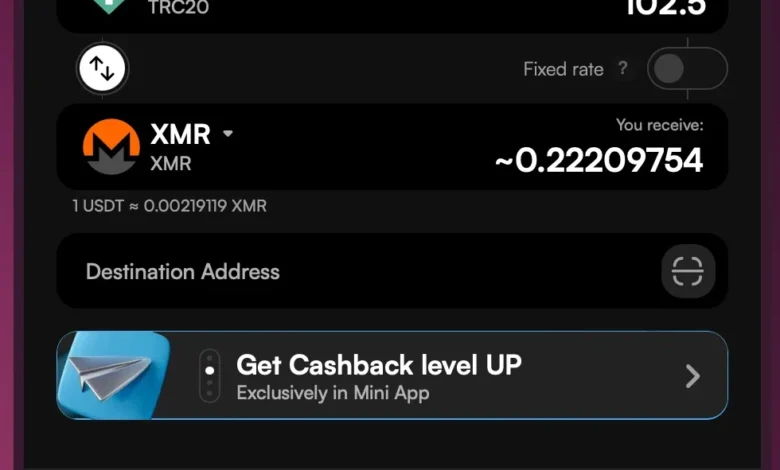
When a user initiates a swap, the provider generates a temporary deposit address. The "fee" associated with this exchange is rarely a single, transparent figure. Instead, it is usually embedded within the price spread—the difference between the market rate and the rate quoted to the user. This makes comparing real-time quotes essential. Because rates are volatile, a quote obtained at 13:00 UTC may be vastly different from one at 14:30 UTC. Furthermore, the choice between fixed and floating rates introduces a strategic element to the transaction. A fixed rate shields the user from market slippage during the time it takes for the TRON network to confirm the deposit, whereas a floating rate may offer a better price but carries the risk of market volatility affecting the final output.
Comparative Analysis of Swap Services
The research conducted on August 24, 2026, highlighted distinct operational patterns among leading providers:
- Quickex: Known for its longevity in the space since 2018, it maintains a dedicated interface for the USDT-to-XMR pair. Its adherence to risk-based AML policies means that if a deposit is flagged by monitoring tools, the transaction is automatically frozen, and the user is required to undergo identity verification before the funds can be released or returned.
- ChangeNOW: This provider differentiates itself through its liquidity aggregation model. By pulling from multiple sources, it often provides a broader range of asset pairs. However, it explicitly reserves the right to pause transactions that trigger internal "suspicious activity" alerts.
- StealthEX: Similar to its peers, StealthEX facilitates trades without requiring account registration for standard volumes. The service is particularly sensitive to transaction size; larger orders are significantly more likely to trigger manual compliance reviews.
- Godex: This platform provides both fixed and floating rate options. Its policy documentation is notably clear regarding the potential for "extra checks," reinforcing the reality that no-registration does not equate to no-screening.
The Anatomy of a Swap: Step-by-Step
For users navigating these services, the process remains consistent. The user selects the pair, inputs the destination address, and sends the USDT. The crucial step occurs after the transaction is broadcast: the waiting period. While the TRON leg of the transaction is typically rapid, the conversion to Monero involves the complexities of the XMR protocol.

Once the swap provider broadcasts the XMR to the user’s wallet, the funds often appear as "pending" or "unlocked" depending on the wallet software. This is a common point of confusion. According to official Monero network documentation, funds typically require 10 confirmations to become spendable. At a block time of approximately two minutes, this results in a mandatory 20-minute waiting period. This is not an indication of a failed transaction, but rather the standard behavior of the privacy-hardened blockchain.
Risks, Compliance, and the "Hidden" Ledger
The most significant misconception regarding these swaps is the permanence of the data. While the Monero ledger effectively obfuscates the transaction, the swap provider’s database does not. Each order creates a digital paper trail: IP addresses, deposit records, and payout destination addresses are logged. These records are subject to legal processes, including subpoenas. In the event of a regulatory inquiry, the provider can be compelled to surrender these logs, effectively linking the initial TRON transaction to the final Monero payout.
Furthermore, users must be cognizant of the "AML Gap." While marketing materials emphasize the ease of use, the Terms of Service for all major swap providers contain clauses allowing them to hold funds indefinitely if they suspect non-compliance. These thresholds are proprietary and rarely disclosed, making it impossible for a user to know exactly what behavior triggers a freeze.
Best Practices for Risk Mitigation
Given the inherent risks, professional traders and privacy advocates recommend several "best practices" to minimize potential loss:

- Test Transactions: Always execute a small, non-critical amount first. This validates the entire pipeline—the provider’s interface, the wallet integration, and the confirmation speed—before committing larger sums.
- Non-Custodial Integrity: Never use an exchange-hosted wallet as the destination address. Always use a personal, non-custodial wallet for which you hold the private keys.
- Taxation Awareness: Crypto-to-crypto swaps are taxable events in most major jurisdictions. Users should maintain a meticulous log of all transactions, including the dates, amounts, and transaction hashes, to facilitate accurate tax reporting.
- Fresh Addresses: For every swap, generate a new, unique Monero sub-address. Reusing addresses compromises the privacy benefits that the Monero protocol is designed to provide.
- Documentation Review: Read the specific AML and KYC policies of the provider before sending funds. Policies are updated frequently, and what was permissible six months ago may have changed under new regulatory pressures.
Implications of Regulatory Evolution
The ongoing struggle between the demand for financial privacy and the necessity of regulatory oversight is reaching a stalemate. As instant swap services face increasing pressure, they are evolving into a "middle-ground" infrastructure. They provide the necessary conduit for privacy assets while simultaneously implementing automated screening that mimics the compliance standards of centralized banking.
The broader implication for the industry is a bifurcated market. On one side, heavily regulated, "white-listed" environments will dominate institutional and retail flow. On the other, these instant swap services will continue to act as a critical—albeit fragile—safety valve for users seeking to maintain the fungibility and privacy of their holdings. For the average user, the takeaway is clear: convenience is provided at the cost of potential oversight. As long as these services operate within the scope of global financial laws, the expectation of total, absolute anonymity in these swaps remains an optimistic, rather than realistic, outcome. Users must remain vigilant, prioritize self-custody, and treat every interaction with these platforms as a temporary arrangement subject to the changing whims of global compliance requirements.