Global Financial Markets Navigate Political Instability in Belgium, Energy Price Relief, and Strong US Manufacturing Data


Financial markets across Europe and the United States experienced a dynamic session characterized by acute domestic political turbulence in Belgium, a significant decompression of energy commodities, hawkish central bank commentary, and robust macroeconomic data out of the United States. While European sovereign debt markets mostly found stability or even rallied, Belgian assets faced distinct downward pressure following the dramatic collapse of multi-annual budget negotiations. Simultaneously, global currency and energy markets reacted positively to diplomatic signals from Washington and a sharp contraction in crude oil and natural gas benchmarks, even as manufacturing indicators underscored resilience in the world’s largest economy.
Belgian Political Crisis Triggers Sovereign Debt Strain
The primary domestic focal point for European markets centered on Brussels, where the breakdown of high-stakes, multi-annual budget talks over the weekend plunged the federal government into an immediate leadership crisis. Prime Minister Alexander De Wever traveled to the Royal Palace to formally tender his resignation to the King. Although the monarch did not immediately accept the resignation, instead urging coalition partners to find a workable compromise, the political landscape shifted drastically.
Political analysts and commentators rapidly adjusted their outlooks away from hopes of resolving the budgetary deadlock and toward the increasingly probable scenario of early snap elections. Beginning Tuesday, the King is scheduled to consult directly with leaders of the governing Arizona coalition parties, culminating in a follow-up meeting with Prime Minister De Wever on Friday.
This political impasse had an immediate and measurable impact on Belgian sovereign debt. The Belgian 10-year OLO-swap spread widened significantly, touching 100 basis points—up sharply from the 94-basis-point close recorded at the end of the previous week. This severe underperformance stood in stark contrast to the broader EMU debt landscape.
Other European peripheral and semi-core bonds managed to outperform. The French 10-year swap spread tightened by 2 basis points, brushing off unexpected news from rating agency Fitch late last week, which had revised the stable outlook on France’s A+ credit rating to negative. Similarly, the 10-year Italian BTP swap spread narrowed by 5 basis points, highlighting a distinct lack of cross-border contagion from the Belgian domestic crisis to other vulnerable eurozone members.
Energy Price Correction and Foreign Policy Shifts Drive Currency Markets
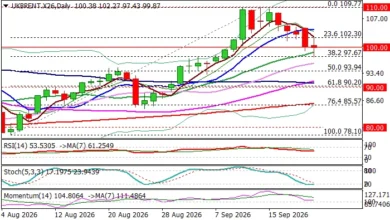
Despite the localized pressure on Belgian debt, the single currency found broad support, largely driven by a sharp decline in international energy prices and shifting geopolitical dynamics. Brent crude oil tumbled from a close of $117.64 per barrel on Friday down to approximately $106.40, a move amplified by contract roll mechanics. Concurrently, European benchmark natural gas prices fell sharply from €104 per megawatt-hour down to €96 per MWh.
These downward price corrections were fueled by two major geopolitical developments. First, reports emerged indicating that US President Donald Trump favored a diplomatic resolution to the ongoing Iranian tensions rather than pursuing fresh military action, successfully diffusing immediate fears of supply disruptions in the Middle East. Second, a report published by The Wall Street Journal detailed an active push by Washington to negotiate the resumption of Russian natural gas sales to Europe. This initiative forms part of a broader diplomatic effort aimed at securing an energy ceasefire ahead of the upcoming winter heating season, alleviating severe supply anxiety across the continent.
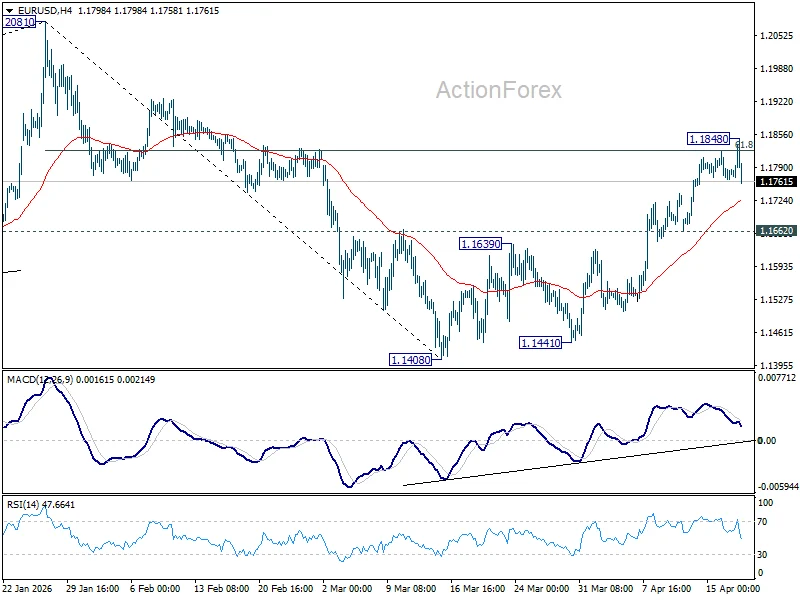
Reflecting this relief, the EUR/USD exchange rate climbed steadily, moving from an opening level of 1.1160 to trade near 1.1220. Meanwhile, core bond yield curves in both the United States and Europe displayed modest bull flattening. The front end of the yield curve remained largely anchored, while long-term yields drifted lower—falling by 2.5 basis points in Germany and by 4 basis points in the United States.
Central Bank Rhetoric and US Manufacturing Resilience
Central banking authorities remained vocal, with European Central Bank policymaker Peter Kazimir offering a notable intervention. Kazimir emphasized that the ECB’s decision to pause interest rate hikes last week should not be interpreted as the final destination in the tightening cycle. He warned that persistently weaker economic growth might not be sufficient to cool underlying inflation on its own, suggesting that financial markets may continue to underestimate the ultimate policy rate path required. Current EMU money markets have recently priced in a terminal peak rate between 3.00% and 3.25%, spread across two to three remaining expected rate hikes. Across the English Channel, UK Gilts outperformed, with domestic yields dropping between 7 and 9 basis points across the entire curve.

Across the Atlantic, the economic data calendar kicked off with the release of the October US manufacturing Institute for Supply Management (ISM) index, initiating what promises to be a data-heavy week. The headline ISM manufacturing reading beat consensus forecasts, which had anticipated a period of stabilization, rising from 54.5 to 55.5—marking the second-strongest reading recorded since May 2022.
Underneath the headline figure, underlying sub-indexes confirmed ongoing economic momentum. New orders continued to grow at a robust pace, ticking up to 55.5 from 55.3. Industrial firms maintained active hiring pipelines, with the employment sub-index holding firm at 52.4 compared to 52.7 previously, keeping pace with accelerating production levels that rose to 59.0 from 56.7. Supply chain pressures persisted, as supplier deliveries remained stretched at 59.1 from 59.0, while the prices-paid index advanced strongly at 75.2, though easing slightly from September’s fierce reading of 77.9. Together, these metrics reinforce the baseline economic case supporting expectations for a Federal Reserve rate hike in December.
ECB Research Analyzes Supermarket Pricing Dynamics
In economic research news, the European Central Bank published new findings regarding retail food pricing behavior across the eurozone. The study evaluated whether European supermarkets have engaged in aggressive price-hiking momentum following the recent Middle East energy shock, comparing current trends to the inflationary surge witnessed in 2022 following Russia’s invasion of Ukraine.
To monitor these developments in real time, the ECB utilizes the Daily Price Dataset (DPD), a specialized tracking tool established in 2022. Because food prices typically represent one of the fastest conduits through which energy shocks transmit to consumer inflation, monitoring supermarket pricing behavior is considered vital for monetary policymakers.
According to the ECB research team, the DPD indicated that the frequency of food price increases did rise in March of this year, shortly after the geopolitical conflict in the Middle East erupted. However, the magnitude of this frequency spike was significantly smaller than the shock observed in 2022. Furthermore, the net gap between the frequency of upward price adjustments and downward price cuts remained narrow—substantially smaller than the divergence recorded four years prior.
Crucially, the average size of individual price increases was roughly comparable to the historical episode from 2022. However, unlike the cascading repricing waves seen during the Russia-Ukraine conflict, where price adjustments spread rapidly across distinct food categories in a sequential manner, the recent energy shock showed no evidence of persistent, widening repricing behavior. The researchers concluded that following the recent energy disruption, there remains little evidence of a structural, persistent change in how frequently food retailers adjust shelf prices, contrasting sharply with the inflationary dynamics of 2022.
Industrial Unrest Escalates Across German Manufacturing
Meanwhile, labor relations in Europe’s industrial heartland deteriorated significantly, as widespread strikes crippled production across Germany’s vital metal and electrical engineering sectors. Workers at numerous manufacturing facilities walked off the job to ramp up pressure during ongoing wage negotiations.
The industrial action is being spearheaded by IG Metall, Germany’s largest trade union, which represents approximately 3.7 million workers nationwide. The union is formally demanding a 5% wage increase effective from November, alongside binding non-wage provisions designed to safeguard domestic employment levels and protect existing production sites from restructuring or relocation.
The strikes were triggered after employers presented a revised second wage offer. That proposal included a one-off payment of 1% scheduled for July of next year, followed by a modest 1.3% baseline wage increase delayed until July 2028. IG Metall leadership swiftly rejected the proposal, characterizing the offer as a substantial pay cut in real, inflation-adjusted terms. As labor negotiations stall and industrial actions expand across key manufacturing hubs, economic analysts warn that prolonged strikes could begin to weigh heavily on Germany’s broader industrial output in the fourth quarter.