Gold Experiences Sharp Volatility as Geopolitical Tensions and Shifting Economic Outlook Drive Market Dynamics

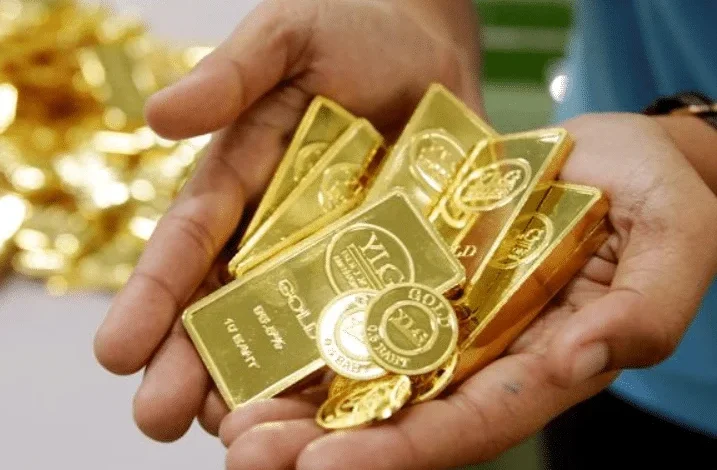
Gold has entered a period of heightened volatility, with recent price action demonstrating both significant upward momentum and sharp corrections. The precious metal’s journey above the $5,500 per ounce mark has been a focal point for investors, particularly after a remarkable 20% surge in January – its strongest monthly performance since 1980. This impressive ascent was largely fueled by escalating geopolitical friction and the imposition of new US trade tariffs, creating an environment conducive to safe-haven asset demand. However, this parabolic rise encountered immediate resistance, triggering a swift correction that saw spot prices plummet by over 4% in a single trading session, primarily driven by profit-taking among traders.
The current market sentiment is intensely focused on the sustainability of the recent price floor. The sharp pullback was further amplified by a resurgence in the US dollar, which typically exerts downward pressure on gold, a non-yielding asset. Despite this significant shakeout, underlying fundamental drivers that historically support a continued bull market in gold remain robust. Institutional analyses consistently highlight persistent central bank accumulation of gold reserves and a growing demand for "stateless" assets – those not directly tied to a single sovereign nation’s economic or political fortunes – as key factors poised to limit downside risk in the medium to long term. These structural demands provide a solid underpinning for the precious metal, even amidst short-term price fluctuations.
Forecasting a Bullish Trajectory: UBS Revises Gold Outlook
Looking ahead, a significant recalibration of market expectations is underway, with forecasts trending aggressively higher. Notably, UBS, a prominent global financial institution, has revised its outlook for gold, now projecting that prices could ascend to $6,200 per ounce by mid-2026. This bullish thesis is predicated on several key assumptions about the future economic landscape. Foremost among these is the expectation that real interest rates – the nominal interest rate minus inflation – will eventually moderate. Lower real interest rates reduce the opportunity cost of holding non-yielding assets like gold, making them more attractive. Furthermore, UBS anticipates that geopolitical risk premiums will become a permanent and ingrained feature of asset pricing. In an increasingly unpredictable global environment, investors are likely to continue factoring in potential disruptions and conflicts when evaluating asset valuations, thereby providing a sustained tailwind for gold.
Navigating the Path to $6,000: Event Risk and Federal Reserve Policy
However, the anticipated ascent towards the $6,000 mark is not without its hurdles. The path forward is fraught with significant event risk, with the US Federal Reserve’s monetary policy emerging as a key headwind. Should US economic data continue to exhibit strength, potentially prompting the Federal Reserve to maintain its current "higher for longer" interest rate stance, the opportunity cost of holding unyielding bullion could act as a significant constraint on gold’s upward momentum. The Federal Reserve’s data-dependent approach, as reiterated by Chair Jerome Powell in recent press conferences, means that key economic releases will be closely scrutinized for any signs that might influence future policy decisions.
Conversely, any discernible worsening of existing conflicts, particularly in the Middle East, or the confirmation of new trade tariffs being implemented by major economic powers, would likely serve as catalysts for the next significant leg up in gold prices. These geopolitical developments have historically been potent drivers of safe-haven demand, pushing investors towards gold as a perceived store of value amidst uncertainty. Before any such decisive upward move, the market is currently undergoing a period of consolidation, allowing for the digestion of recent price swings and the reassessment of underlying market forces.
Technical Analysis: Bulls Face Challenges Below Key Moving Averages
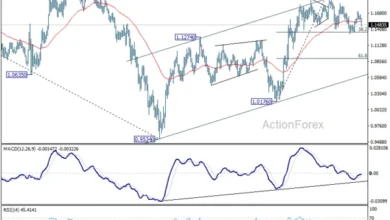
From a technical perspective, the recent price action reveals a degree of vulnerability for gold bulls. The 4-hour chart indicates a robust demand zone situated around the $5,100 per ounce level, which has been tested on multiple occasions in recent trading sessions. However, the price has decisively fallen below the 20-period moving average (MA), a commonly observed indicator of short-term trend strength. This breach suggests that selling pressure is currently dominant. Should this demand zone at $5,100 fail to hold firm against further selling pressure, the price could be subjected to testing the psychologically significant $5,000 level. Further downside could extend towards the 100- and 200-period MAs, which are currently positioned at approximately $4,820 and $4,600 respectively, offering potential support levels further down.
Despite the bearish signal from the breach of the 20-period MA, the Relative Strength Index (RSI), a momentum oscillator, has shown signs of stabilization. Having previously dipped below the 50.0 mark, it is now trading in a relatively flat pattern. This suggests a period of consolidation may be in play before a decisive directional move emerges. In the event that bullish momentum reasserts itself, traders will be looking for a retest of the 20-period MA at $5,280 as an initial upside target. Beyond that, further resistance levels to watch would be $5,400 and subsequently $5,600.
Background and Chronology of Recent Gold Market Movements
The current volatility in the gold market can be traced back to several key developments in late 2023 and early 2024. Throughout late 2023, gold experienced a steady upward trend, driven by expectations of impending interest rate cuts by the US Federal Reserve. This anticipation was fueled by moderating inflation figures and a perceived cooling of the US economy. However, these expectations began to shift in early January 2024, as stronger-than-anticipated US economic data, including robust labor market reports and resilient consumer spending, suggested that the Fed might delay or reduce the scope of its planned rate cuts.
This shift in monetary policy expectations coincided with a significant escalation of geopolitical tensions. The ongoing conflict in the Middle East, coupled with heightened rhetoric and the implementation of new trade tariffs between major global powers, amplified demand for gold as a safe-haven asset. This confluence of factors propelled gold prices to new highs, culminating in the dramatic 20% surge witnessed in January. The speed and magnitude of this rally, however, proved unsustainable in the short term, leading to a sharp profit-taking wave that resulted in the significant price correction observed in the subsequent trading sessions. The market is now grappling with the question of whether the underlying drivers for higher gold prices remain intact or if the recent correction signals a more prolonged downturn.
Supporting Data and Market Insights
- January Performance: Gold’s 20% gain in January marked its strongest monthly performance since 1980, a historical benchmark for significant bullish moves. This indicates the extreme sentiment shifts that have characterized recent trading.
- Central Bank Buying: Data from the World Gold Council has consistently shown substantial net purchases of gold by central banks in recent years. In 2023, central banks added a record amount of gold to their reserves, signaling a strategic diversification away from traditional reserve currencies and a preference for tangible assets. This persistent institutional demand provides a strong structural bid for the metal.
- US Dollar Index (DXY): The DXY, which measures the dollar’s strength against a basket of major currencies, has shown a tendency to strengthen in recent weeks. A stronger dollar typically makes dollar-denominated assets, including gold, more expensive for holders of other currencies, thus suppressing demand. The interplay between dollar strength and gold prices remains a critical short-term determinant of gold’s trajectory.
- Inflation Expectations: While inflation has moderated from its peak, underlying pressures remain. Market-based measures of inflation expectations, such as those derived from Treasury Inflation-Protected Securities (TIPS), are closely watched. Any resurgence in inflation expectations would likely bolster gold’s appeal as an inflation hedge.
- Real Interest Rates: The real yield on US Treasury bonds is a key indicator for gold. When real yields are low or negative, the opportunity cost of holding gold is minimized, making it more attractive. Conversely, rising real yields increase the attractiveness of fixed-income investments, potentially drawing capital away from gold.
Reactions from Market Participants and Analysts
The recent price action has elicited a range of reactions from market participants and analysts. Many have acknowledged the validity of the fundamental drivers supporting gold, such as ongoing geopolitical risks and the diversification strategies of central banks. However, there is also a recognition of the short-term headwinds posed by a resilient US dollar and the Federal Reserve’s cautious stance on interest rate policy.
"The January rally was impressive, but it was always going to be difficult to sustain that pace without significant fundamental shifts," commented a senior market strategist at a major investment bank, who requested anonymity. "The pullback was a healthy correction, clearing out some of the speculative froth. The key now is whether the underlying demand, particularly from central banks and those seeking inflation protection, can absorb the selling pressure."
Another analyst from a financial research firm highlighted the importance of upcoming economic data. "The US Producer Price Index (PPI) will be crucial in the coming days. Any signs of persistent inflation in the pipeline could embolden the Fed to maintain its hawkish bias, which would be a headwind for gold. Conversely, a weaker PPI could provide some relief and support a more dovish outlook, potentially boosting gold."
Broader Impact and Implications
The volatility in the gold market has broader implications for global financial markets and investor portfolios. As a traditional safe-haven asset, gold’s price movements often serve as a barometer of global economic and geopolitical sentiment. The current fluctuations underscore the prevailing uncertainty and the interconnectedness of various economic and political factors influencing asset prices.
For investors, the recent price action serves as a reminder of the inherent volatility in commodity markets and the importance of diversification. While gold can offer a hedge against inflation and geopolitical risks, its price is subject to significant short-term swings. The debate between the bullish case for gold, driven by long-term structural factors, and the bearish case, influenced by short-term monetary policy and currency dynamics, is likely to continue shaping market sentiment.
Furthermore, the potential for gold to reach new highs, as projected by institutions like UBS, could have ripple effects across other asset classes. A sustained bull market in gold might encourage further diversification into alternative assets, potentially impacting traditional equity and bond markets. The ongoing dance between inflation, interest rates, geopolitical stability, and currency strength will continue to dictate the narrative for gold, making it a critical asset to monitor in the evolving global economic landscape. The market’s ability to navigate these complex dynamics will ultimately determine whether gold embarks on its next significant upward trajectory or faces further consolidation and potential retracement.