How AI-Assisted Security Research Exploited Vulnerabilities to Infiltrate OpenAI

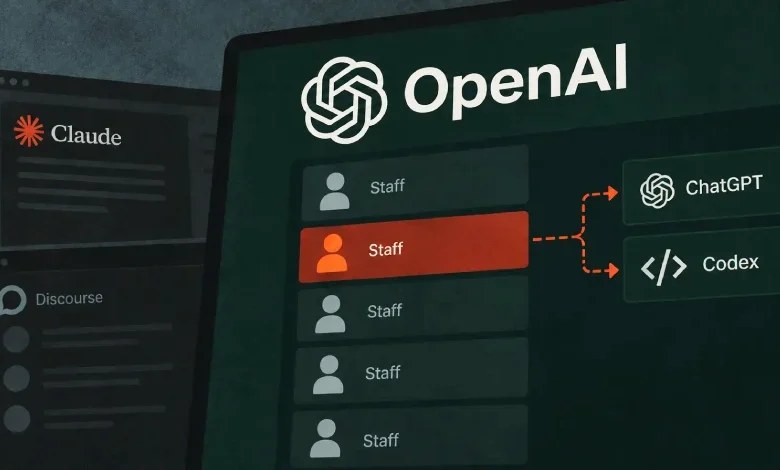
Security researchers from Hacktron recently demonstrated a sophisticated, multi-stage cyberattack against OpenAI, leveraging artificial intelligence to chain two distinct vulnerabilities together. The operation allowed the team to hijack employee ChatGPT and Codex accounts and gain unauthorized entry into an internal OpenAI code repository in under 72 hours. While conducted strictly as an authorized, white-hat security test, the incident underscores the growing potency of advanced AI models in accelerating complex, offensive cyber operations, as well as the cascading risks of poorly segregated single sign-on (SSO) infrastructures.
Chronology of the Hacktron Penetration Test
The rapid infiltration of OpenAI’s internal network began in July 2026 as part of Hacktron’s broader, multi-month research project dubbed "HEIF Heist." The campaign was designed to test the resilience of major technology enterprises against memory-corruption flaws in image-processing libraries.

The timeline of the OpenAI exercise unfolded rapidly once the researchers narrowed their focus:
- Mid-July 2026: Hacktron researchers identified an unpatched vulnerability in the Debian 12 Linux distribution image powering OpenAI’s public-facing help forum, which runs on Discourse open-source software.
- July 24, 2026: Following initial struggles with memory defenses using older models, the team deployed Anthropic’s newly released Claude Opus 5. Operating within an automated loop against a localized test server, the AI model generated a functional exploit to bypass Address Space Layout Randomization (ASLR) within hours.
- Late July 2026: Utilizing the exploit, the team breached the Discourse forum server, achieving remote code execution. Because the forum shared identity infrastructure with OpenAI’s corporate authentication systems via a "Sign in with OpenAI" SSO feature, the compromise of the forum server immediately granted attackers control over the ChatGPT and Codex accounts of forum members who were also OpenAI employees.
- Within 72 Hours: The attackers utilized linked GitHub credentials tied to an employee’s Codex account to trigger a single, harmless pull request in an internal OpenAI code repository, proving end-to-end access before halting the experiment.
- August to September 2026: Hacktron formally reported the vulnerability chain to OpenAI. OpenAI confirmed a security fix within 14 hours of receiving the notification. On September 1, 2026, OpenAI awarded the research firm a $6,500 bug bounty, specifically recognizing the internal identity finding.
Technical Mechanics: From Image Bug to Code Execution
The attack vector relied on a combination of legacy software dependencies and identity architecture flaws. The foundational entry point involved image handling within the Discourse forum. When users uploaded HEIC or HEIF images, the platform relied on ImageMagick and the underlying libheif library to process them.
Although upstream maintainers released a patch for libheif (version 1.22.0) in May 2026 to address memory-safety issues, the Debian 12 server image utilized by the forum still operated on the vulnerable version 1.19.7 as of July. This highlights a critical supply-chain maintenance issue: even when a vulnerability is publicly documented—such as CVE-2026-32882, rated 8.8 out of 10 for severity—packaged operating system distributions do not always immediately integrate upstream fixes.

By crafting a specialized image file, the researchers corrupted the forum server’s memory. However, turning a memory-leak or crash bug into functional remote code execution requires overcoming modern operating system protections like ASLR. This is where artificial intelligence played a pivotal role. While previous iterations of AI models, such as Claude Opus 4.8, struggled to synthesize the exploit logic required to bypass ASLR over multiple sessions, Claude Opus 5 successfully formulated the exploit script within hours of its release.
The pivot from the public forum to corporate infrastructure exposed a fundamental systemic risk: credential and session sharing. Because OpenAI utilized a centralized identity provider, compromising a lower-security public forum interface permitted horizontal movement into internal developer tools. Although Hacktron limited its activity to a single test pull request—deliberately avoiding source code theft, data exfiltration, or modifications—the technical pathway could theoretically have granted access to connected corporate ecosystems, including Slack, internal email, and additional GitHub repositories.
The Expanding Role of Artificial Intelligence in Offensive Security
The Hacktron case provides a clear window into how generative AI is shifting the economics of vulnerability research and exploitation. Security analysts and AI developers have increasingly noted that advanced reasoning models drastically reduce the time, specialized expertise, and manual effort required to develop functional exploits from theoretical vulnerability advisories.

Anthropic and other leading AI laboratories have implemented strict safety guardrails designed to prevent frontier models from writing actionable exploit code against real-world targets. Hacktron researchers bypassed these constraints by directing the model toward isolated testbeds disguised as capture-the-flag (CTF) practice environments, subsequently employing automated loops. Nevertheless, the research team emphasized that the process was not entirely autonomous; human oversight, strategic direction, and targeted prompts remained necessary to guide the AI toward a successful outcome.
The "HEIF Heist" campaign conducted by Hacktron extended far beyond OpenAI. Over a two-month period and with less than $3,000 in cumulative AI compute costs, the firm reported discovering similar image-decoding risks affecting software deployments at major enterprises, including Meta, Slack, GitHub Enterprise, and web development frameworks like Next.js. While some findings—such as a critical AVIF/HEIF vulnerability patched in Next.js by Vercel—have been independently verified, the broader claims regarding widespread remote code execution across multiple corporate networks remain subject to ongoing independent verification by the cybersecurity community.
Official Responses and Enterprise Implications
OpenAI responded swiftly to the disclosure, securing its login infrastructure and issuing a bug bounty payout to Hacktron. However, the company has declined to publicly detail the specific mechanics of the login system vulnerability, relying instead on the deployment of its patch to mitigate residual risk.

Cybersecurity experts suggest that the incident holds critical lessons for enterprise security architecture, extending far beyond the immediate software patches required for libheif:
- Strict Identity Segmentation: Organizations must isolate public-facing, community, or marketing platforms from internal corporate identity providers. Shared single sign-on mechanisms create high-risk "pivot points" where a compromise on an auxiliary external asset can translate directly into a breach of core developer environments.
- Proactive Supply Chain Hygiene: Relying solely on standard web application updates is insufficient. Enterprises must audit underlying operating system packages, container images, and media-processing libraries to ensure that upstream vulnerability fixes—particularly for memory-unsafe languages and parsers—are applied universally.
- Defending Against AI-Accelerated Threats: As threat actors increasingly adopt frontier AI models to automate vulnerability discovery and exploit generation, defenders must shorten their patch-management lifecycles and adopt automated adversarial testing (AI red teaming) to identify complex exploit chains before malicious actors can deploy them.
While no evidence suggests that the vulnerability chain discovered by Hacktron was weaponized by malicious actors prior to its discovery, the incident stands as a milestone in the evolution of AI-driven cyber operations. It highlights a future where complex, multi-stage intrusions that once required weeks of dedicated human effort by elite hacking teams can be compressed into a matter of days through the collaborative application of human strategy and machine intelligence.