The United States repurchase agreement (repo) market, the unseen plumbing of the global financial system, has ballooned to a staggering $13.5 trillion in daily outstanding agreements. According to recent data from the Office of Financial Research (OFR), this massive shadow banking engine facilitates the daily movement of liquidity between financial institutions, ensuring that banks, hedge funds, and money market funds maintain the necessary balance of cash and high-quality liquid collateral. While this system provides the essential grease for the gears of the economy, recent analyses from the Federal Reserve indicate that its size and interconnectedness have created new, systemic vulnerabilities that could, in moments of market stress, prove difficult to contain.
The Mechanics of the Repo Market
At its core, the repo market functions as a secured lending facility. Financial institutions borrow cash overnight—or for longer terms—by posting high-quality assets, typically U.S. Treasury securities, as collateral. These transactions are subject to a "haircut," a margin requirement that accounts for potential fluctuations in the value of the collateral. Approximately 70% of these agreements are backed by Treasuries, with the remainder secured by agency mortgage-backed securities (MBS) issued by entities like Fannie Mae and Freddie Mac, as well as high-grade corporate bonds.
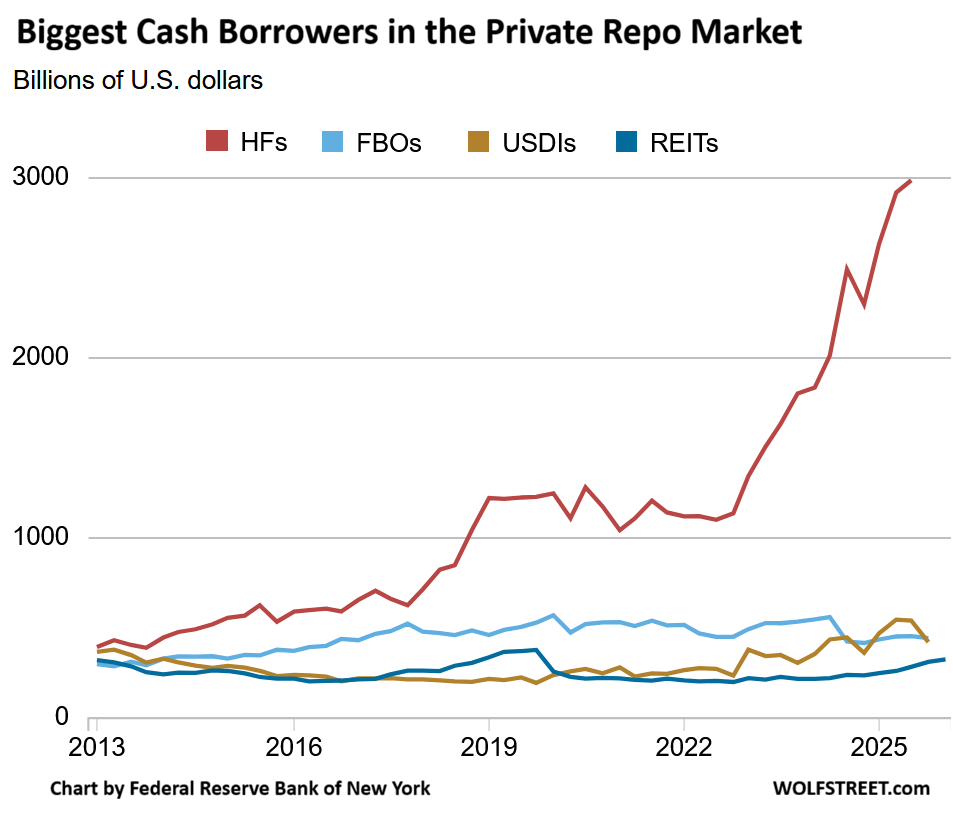
The ecosystem is populated by a diverse cast of participants. Money market funds (MMFs) act as primary suppliers of cash, seeking short-term yield while prioritizing liquidity. Conversely, hedge funds often act as significant borrowers, utilizing the repo market to lever up positions or secure Treasury securities for complex arbitrage strategies. Dealers serve as the vital intermediaries, matching borrowers and lenders and ensuring the smooth flow of capital.
The Rise of the Basis Trade
The most significant shift in the repo landscape over the last several years has been the expansion of hedge fund borrowing. According to a September 2026 report from the New York Fed, hedge funds engaged in the "Treasury cash-futures basis trade" have become the dominant borrowers, with their repo liabilities reaching $3.0 trillion as of July 2025. This figure represents a dramatic increase from $2.5 trillion in 2024 and a mere $664 billion in 2017.
The basis trade involves buying Treasury securities in the cash market while simultaneously selling Treasury futures contracts. Because the price spread between these two positions is often razor-thin, hedge funds use the repo market to apply massive leverage, magnifying their returns. While this activity contributes to liquidity in the Treasury market during calm periods, it introduces a significant "tail risk." If the spread moves unexpectedly or if liquidity in the underlying market tightens, these funds are forced to unwind positions rapidly. This "deleveraging" effect can lead to a liquidity squeeze that threatens to spill over into the broader financial system, as was observed during the market turmoil of March 2020.

Chronology of Repo Market Volatility
The volatility of the repo market is not a new phenomenon, but its scale has shifted alongside the growth of the financial sector.
- September 2019: The repo market experienced a sudden, unexpected spike in overnight rates. A shortage of bank reserves, compounded by corporate tax payments and Treasury settlement dates, caused the Secured Overnight Financing Rate (SOFR) to skyrocket. This forced the Federal Reserve to intervene with emergency liquidity operations to prevent the dysfunction from spreading to the wider economy.
- March 2020: As the COVID-19 pandemic triggered a global market panic, the Treasury market—the bedrock of the global financial system—began to lock up. The unwinding of hedge fund basis trades exacerbated the volatility, prompting the Federal Reserve to embark on an unprecedented series of asset purchases to restore market functioning.
- July 2021: In response to the persistent vulnerabilities exposed in 2019 and 2020, the Federal Reserve established the Standing Repo Facility (SRF). This tool allows primary dealers and other eligible institutions to borrow cash from the Fed against Treasury collateral, effectively putting a ceiling on interest rate volatility.
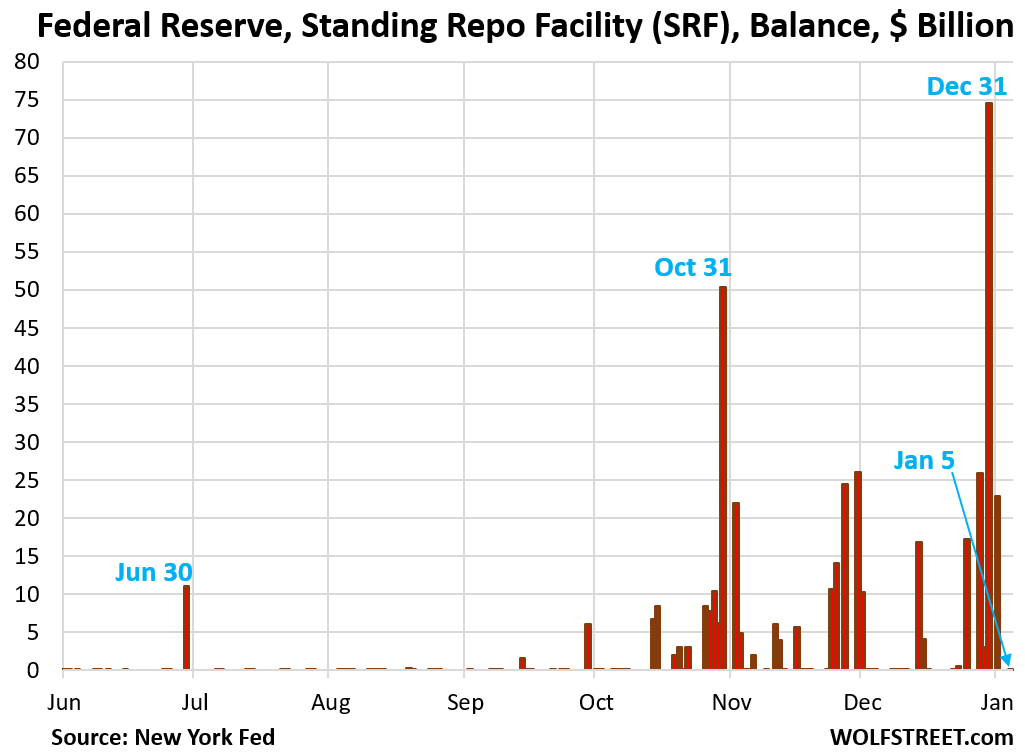
- September–December 2025: The SRF was activated during a period of end-of-year liquidity constraints. The facility successfully absorbed pressure, preventing the "squiggles" in repo rates from spiraling into a broader systemic crisis.
The Role of Money Market Funds
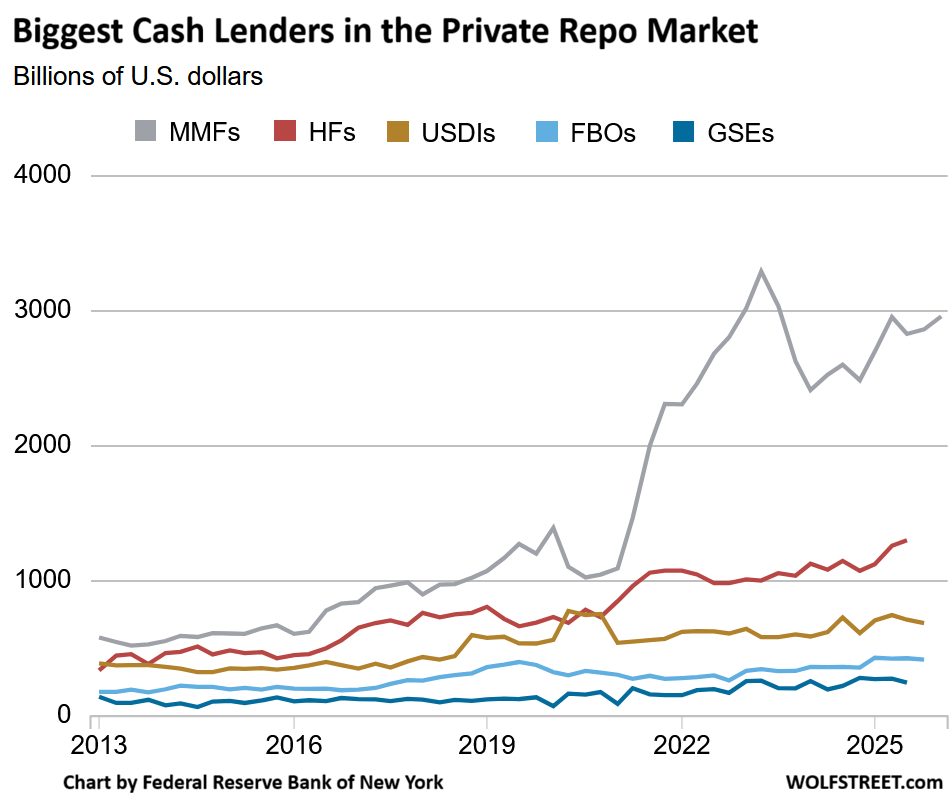
On the other side of the ledger, money market funds have become the repo market’s primary creditors. By January 2026, MMFs had lent approximately $3.0 trillion to the repo market. This lending activity allows funds to manage redemption requests while earning interest on otherwise idle cash.
The expansion of the MMF sector has been notable, with total balances reaching $8.4 trillion by the second quarter of 2026. Household investors, seeking safety in high-interest-rate environments, have parked record amounts of capital in these funds. Because a significant portion of this cash is channeled back into the repo market, the stability of the repo system is now directly linked to the behavior of retail and institutional investors in the money market fund industry.
Systemic Implications and Regulatory Concerns
The interconnectedness of the repo market means that a localized liquidity crunch in one segment can transmit systemic shockwaves with remarkable speed. When SOFR or other benchmark rates move sharply upward, it signals a lack of trust or a lack of available cash, which can cause banks and other financial institutions to hoard liquidity.
The Federal Reserve’s reliance on the Standing Repo Facility highlights a fundamental reality: the modern financial system is highly dependent on the central bank to act as the "lender of last resort" when the private market’s repo machinery hits a wall. While the SRF has proven effective at tamping down volatility, critics argue that such facilities may inadvertently encourage excessive risk-taking, as market participants know that a backstop exists for their leveraged positions.
Furthermore, the lack of transparency regarding hedge fund activities remains a point of contention for regulators. The "dense opacity" of these funds, as frequently cited by Fed officials, makes it difficult to assess the full extent of the leverage present in the system at any given moment. With $1.7 trillion in net borrowing by hedge funds, the potential for a concentrated liquidation event remains a primary concern for financial stability oversight committees.
Conclusion: A Fragile Balance
The repo market serves as the lifeblood of the U.S. financial system, yet its current configuration is characterized by a paradox: it is more liquid and efficient than ever, yet more sensitive to sudden, structural shocks. As the total volume of outstanding agreements exceeds $13.5 trillion, the ability of the Federal Reserve to continue managing this market through existing facilities will be tested.
Market participants and regulators alike remain focused on the interplay between hedge fund leverage and the supply of liquidity from money market funds. For now, the system continues to operate with the support of the Standing Repo Facility, ensuring that short-term funding gaps do not escalate into full-blown crises. However, the history of the market suggests that the "plumbing" of the financial system remains susceptible to sudden clogs—a reminder that in global finance, stability is often a temporary state, maintained only by constant oversight and the readiness of the central bank to step into the breach.