The Lessons of 1873: How Policy Errors Turned a Market Correction into a Generation of Deflation

The history of global finance is often viewed through the lens of modern inflationary pressures, yet the period between 1800 and 1940 offers a starkly different economic reality. For over a century, the global economy functioned in a regime where sustained inflation was the exception rather than the rule. Between 1800 and 1940, the average annual inflation rate hovered at a negligible 0.2%. During this era, the cost of living remained remarkably stable, increasing by only 28% over 140 years. This period was characterized by frequent bouts of deflation—a phenomenon that occurred nearly 70 times—culminating in the severe economic contraction known as the Panic of 1873.
The Anatomy of the 1873 Crisis
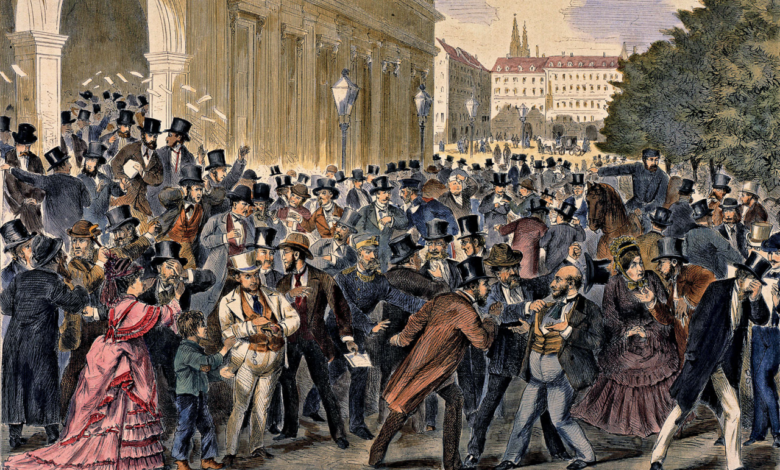
The Panic of 1873, often referred to as the "Long Depression," remains a case study in how a manageable financial correction can be transmuted into a systemic, generation-long crisis through legislative and monetary mismanagement. The crisis was preceded by a classic speculative boom: a massive expansion of railway infrastructure, excessive credit growth, and a pervasive real estate bubble. Investors, fueled by lax lending standards and a surge in industrial innovation, poured capital into speculative ventures, assuming the expansion would continue indefinitely.
By the early 1870s, the exuberance reached a breaking point. When the bubble burst, the initial shock to the financial system was, in relative terms, modest. Data from the era suggests that the global economy possessed a natural resilience; in the immediate aftermath, industrial production in major powers like Britain, France, and Germany experienced stagnation rather than a total collapse. Even in the United States, the primary epicenter of the panic, the decline in industrial production was approximately 6%. Under normal circumstances, the global economy likely would have rebalanced within a few years.
The Self-Inflicted Wound: A Currency Reordering
The transition from a standard cyclical recession to a deep, prolonged depression was not the result of the market crash itself, but rather a sequence of policy blunders. As the world navigated the financial tumult, the governments of major economic powers moved to fundamentally reorder the global currency system. This move was intended to stabilize international trade but instead triggered a catastrophic contraction in global liquidity.
By constraining the money supply during a period of market instability, policymakers effectively strangled the nascent recovery. This "self-inflicted wound" led to a sustained deflationary spiral. Between the mid-1870s and the mid-1890s, prices worldwide fell by 20% to 25%. In the United States, the impact was even more pronounced, with wholesale goods prices plummeting by 35% during the first six years of the crisis and ultimately falling by more than 50% by the 1890s.
Economic Consequences and Social Unrest
The prolonged deflationary environment created a clear divide between different sectors of the economy. For creditors and those with fixed-income assets, the falling price levels increased the real value of their holdings. However, for the debtor class—specifically the agricultural sector—the environment was ruinous. As business profits evaporated and commodity prices declined, investment in new ventures ceased, leading to a decade of stagnation and high unemployment.
This period, stretching from 1880 to 1896, remains the longest bear market in recorded history. The loss of faith in the economic system fostered a climate of pessimism that influenced American political discourse for decades, contributing to the rise of populist movements and debates over the gold standard versus "free silver."
Parallels to Modern Market Cycles
Contemporary observers have noted striking similarities between the late 19th-century railway bubble and the current rapid expansion in artificial intelligence infrastructure. Both eras share the hallmarks of speculative mania: a surge in capital allocation toward a singular transformative technology, a significant expansion of corporate credit, and a booming stock market.
The primary concern among modern economic historians is not necessarily the correction of the current speculative bubble, but the potential for a catastrophic policy error in the wake of such a correction. The post-2000 environment serves as a cautionary tale. Following the bursting of the dot-com bubble—which saw a relatively mild recession with a GDP decline of less than 1%—the Federal Reserve implemented an aggressive policy of lowering interest rates to historic lows. While intended to prevent a deeper downturn, this policy contributed to the creation of a massive housing bubble that ultimately precipitated the 2008 Great Financial Crisis.
The Risks of Policy Over-Correction
The current economic landscape is characterized by a high degree of integration between financial markets and government policy. With each market fluctuation, the size and scope of potential government interventions have grown. This creates a feedback loop where the fear of a minor recession prompts outsized stimulus, which in turn fuels new, larger imbalances.
If the current AI-driven spending boom were to decelerate, the risk of a knee-jerk policy response is high. Whether through monetary, fiscal, or trade policy, an intervention that fails to account for long-term structural integrity could replicate the errors of 1873. A policy that suppresses necessary market clearing, or one that introduces artificial liquidity into an already overheated system, may provide temporary relief while sowing the seeds of a much deeper, more intractable crisis.
Analyzing the Future Landscape
The lesson of 1873 is that the "cure" is often more dangerous than the "disease." A recession, while painful, is an essential mechanism for the reallocation of capital away from unproductive or over-leveraged assets. When governments attempt to bypass this process through artificial currency adjustments or excessive credit expansion, they risk transforming a cyclical adjustment into a structural depression.
As global economies continue to navigate the complexities of the digital transition, the imperative for policymakers is to prioritize stability over interventionism. The danger lies in the inability to distinguish between a healthy market correction and a systemic collapse. By focusing on the potential for policy errors, one can see that the greatest risk to the current cycle is not the collapse of speculative assets, but the potential for a misguided, systemic response to that collapse.
In conclusion, the history of the Long Depression serves as a critical reminder that economic stability is fragile. The 1873 crisis was not an inevitable product of the market, but a demonstration of the power of institutional mismanagement to dictate the terms of economic history. As we look toward the potential conclusion of the current investment cycle, the focus must remain on the quality of policy responses and the necessity of allowing market forces to correct imbalances without resorting to measures that could trigger a long-term, self-inflicted economic decline.
Related posts: