Quantitative Analysis of Insider Purchase Filings Reveals Short-Term Market Correlation and Methodological Nuance

The systematic analysis of SEC Form 4 insider purchase filings provides a unique window into corporate governance and executive confidence, yet the data is frequently misinterpreted by retail and institutional observers alike. A comprehensive longitudinal study covering 18 quarters from January 1, 2022, to June 30, 2026, has deconstructed over 1.3 million raw transaction rows to isolate genuine, informative signals. The research, which filtered the data through a rigorous funnel to account for joint filings, derivative security nuances, and Rule 10b5-1 compliance, concludes that while insider purchases correlate with immediate positive abnormal returns, the evidence for long-term alpha generation remains statistically elusive.
The Anatomy of an Insider Filing
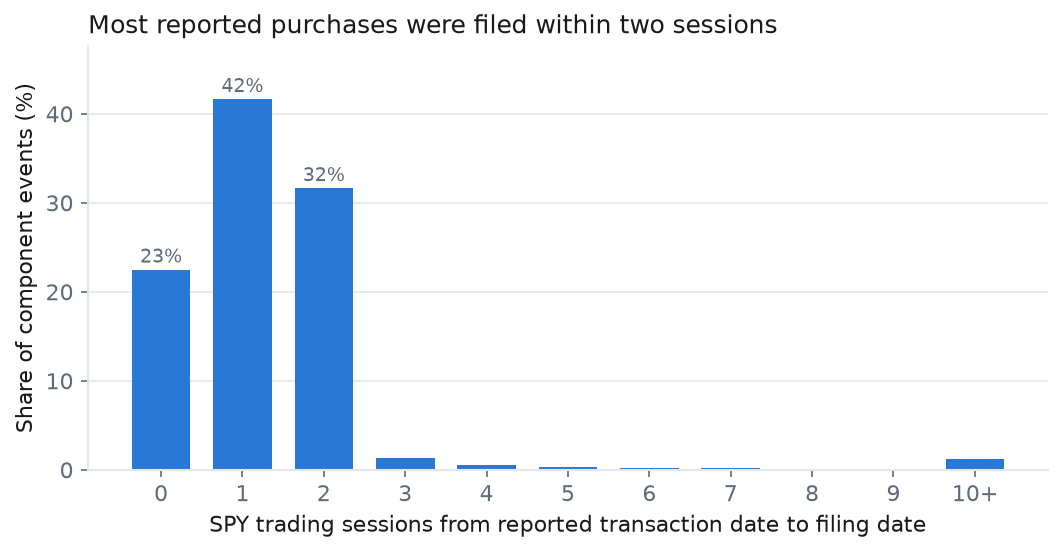
Under Section 16 of the Securities Exchange Act of 1934, officers, directors, and beneficial owners of more than 10% of a registered equity class are mandated to report changes in their holdings. The SEC requires these filings to be submitted by the end of the second business day following the execution of a reportable transaction. While these filings are a staple of quantitative research, the inherent complexity of Form 4 data necessitates a cautious approach. A single filing may encompass multiple transaction tranches, various ownership structures, and joint filings by multiple parties.
The study employed a strict filtering mechanism to create a "filing-only" dataset. Out of an initial 1,345,036 non-derivative transaction rows, only 11,957 component events met the stringent criteria for analysis. This process included excluding Form 4/A amendments—which can introduce lookahead bias if not handled with care—and focusing exclusively on Code-P "Open-market or private purchase" transactions involving common or ordinary stock. By discarding joint filings, which often obscure individual accountability, the research team established a cleaner, more robust dataset of 7,406 unique public signals.
Chronology of Regulatory Transparency
The integration of Rule 10b5-1 plan disclosures represents a significant shift in the transparency of these filings. Effective April 1, 2023, the SEC mandated that filers explicitly indicate whether a transaction was conducted under a pre-arranged trading plan. This regulatory change provides a critical filter for researchers seeking to distinguish between discretionary, information-driven trades and routine, rule-based executions.
The study’s timeline—spanning from the start of 2022 through mid-2026—allows for a comparative look at pre- and post-compliance disclosure environments. Data from the SEC’s Insider Transactions Data Sets were used to normalize these filings, ensuring that transactions flagged as 10b5-1 were removed from the primary analysis of "opportunistic" purchases. This distinction is vital; without it, researchers risk conflating automated, liquidity-based sales or purchases with genuine, discretionary signals of executive sentiment.
Quantitative Findings and Market Performance
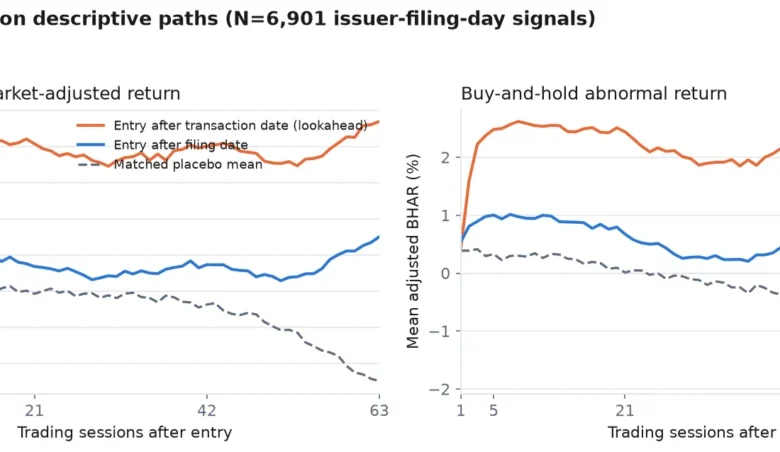
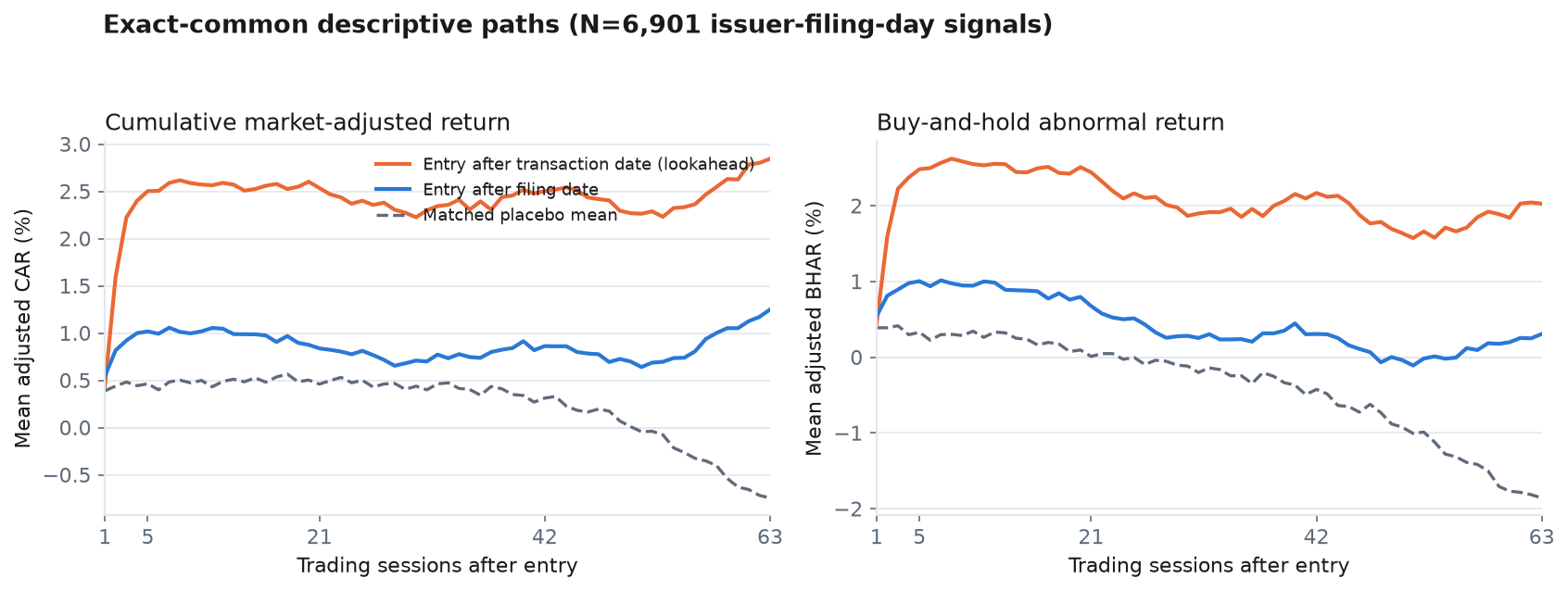
The primary metric used to evaluate market response was the SPY-adjusted mean cumulative abnormal return (CAR). The findings suggest a clear, albeit short-lived, market reaction. For the next session following a purchase filing, the mean adjusted CAR was +0.534%. Extending this to a five-session window, the mean CAR reached +1.009%. Both figures demonstrate statistical significance with robust t-statistics.
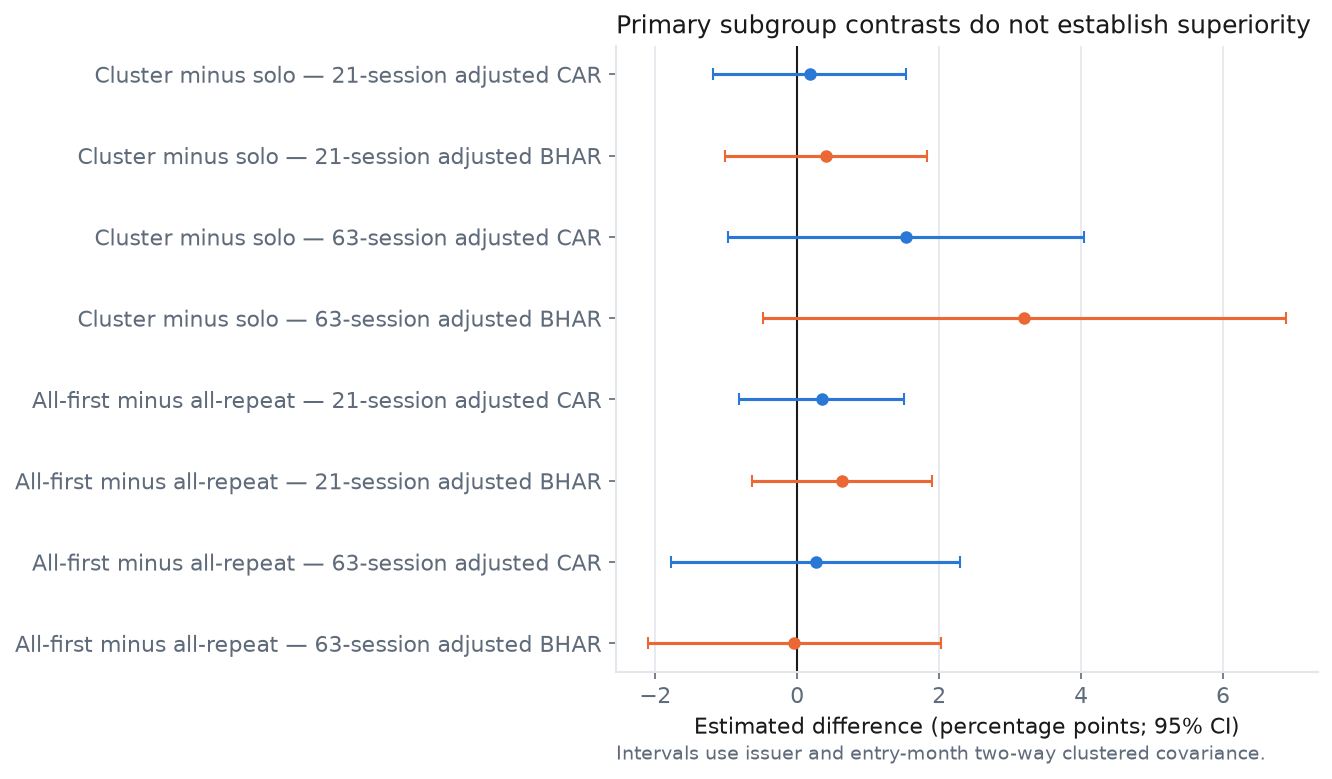
However, the predictive power of these filings diminishes significantly over longer horizons. When the analysis window is expanded to 21 and 63 sessions, the confidence intervals for both CAR and buy-and-hold abnormal returns (BHAR) widen to include zero. This suggests that while the market initially reacts to the disclosure of insider purchases, these signals do not reliably predict sustained outperformance over a full fiscal quarter.
The study also addressed the common pitfall of "transaction-date lookahead." When researchers use the transaction date rather than the filing date to measure performance, they often capture pre-disclosure market movements that were not available to the public. By comparing the two entry points, the study quantified this bias, revealing that transaction-date entry models consistently overstate performance compared to real-world, filing-date-based strategies.
Methodological Rigor and Limitations
A defining feature of this research is its commitment to "exact inference." Recognizing that many issuers appear multiple times in the dataset and that market conditions are correlated across months, the study employed a Cameron-Gelbach-Miller two-way clustered covariance estimator. This methodology ensures that the resulting confidence intervals are not artificially deflated by assuming independence between observations that are, in fact, linked by issuer or time period.
Despite this rigor, the author emphasizes several limitations. The study is conditional on Yahoo Finance coverage, meaning that small-cap or delisted securities—which may hold the most significant informational value—are excluded. Furthermore, the analysis does not incorporate transaction costs, liquidity constraints, or a portfolio-management model. As the author notes, "nothing here estimates causal impact, trading costs, portfolio returns, or a deployable strategy."
The study also includes a "matched placebo" analysis, wherein candidate dates outside the blackout period of real insider purchases were tested against the same metrics. The results showed that these placebo dates performed similarly to the "honest" signals in long-horizon tests, further undermining the hypothesis that insider purchase filings drive long-term price drift.
Broader Implications for Market Participants
The findings serve as a sobering reminder to investors who view insider purchases as a "holy grail" of stock picking. While an executive buying shares in their own company is a signal of confidence, it is rarely, by itself, a precursor to sustained abnormal returns. Market participants should view these filings as a component of a larger analytical framework rather than an isolated indicator.
The research also highlights the danger of relying on "market models" that use pre-event fitted alphas. Because many corporate equities exhibit negative daily alphas, market models can mechanically inflate long-horizon CARs. Investors should be wary of any study that presents such inflated figures without disclosing the underlying sensitivity of the model.
Future Directions for Research
As the SEC continues to refine its electronic reporting infrastructure, the quality of structured data is expected to improve, allowing for more granular studies. Future research may look at the intersection of insider purchases and concurrent corporate news, such as earnings reports or M&A activity, to better isolate the causal impact of the trade itself.

For now, the lesson remains one of methodological caution. By preserving the sanctity of the filing date, separating aggregate issuer-day signals from raw transaction rows, and applying conservative statistical clustering, the study provides a transparent, reproducible benchmark for future inquiry into insider trading patterns. In an era where alternative data is increasingly commoditized, the value lies not in the raw figures, but in the rigorous, disciplined process of defining what can—and cannot—be claimed from the public record.
The complete dataset, accompanying Python code, and detailed methodology have been made available via open-source repositories to encourage further peer review and replication. As the financial industry moves toward more data-driven decision-making, such transparent disclosures of methodology are becoming as important as the research findings themselves, ensuring that the market remains an arena of informed analysis rather than speculative interpretation.