Beyond the Silicon Frontier: Why Africa Holds the True Economic Prize of the AI Revolution

The global artificial intelligence revolution is frequently characterized as a bilateral race between the United States and China to engineer the most sophisticated frontier models. However, this narrative overlooks a fundamental economic reality: the most substantial commercial value of the coming decades will likely stem not from raw model supremacy, but from the practical deployment of intelligence tailored to the world’s fastest-growing economies. Nowhere is this dynamic more potent than in Africa, a continent defined by a young, digitally native population, rapidly expanding infrastructure, and vast, untapped market potential.
ABUJA and LAGOS — For generations, the global innovation paradigm has relegated Africa to the receiving end of technological progress. Breakthroughs were historically conceptualized, financed, and commercialized in Silicon Valley, Shenzhen, or Western Europe, before being imported into African markets. These imports routinely arrived with prohibitive price tags and on terms dictated entirely by foreign entities, leaving local populations with minimal bargaining power.
The structural vulnerabilities of this dependency model were laid bare during the COVID-19 pandemic. While wealthy nations hoarded medical supplies and secured early access to novel biotechnology, African nations faced immense logistical and financial barriers simply to acquire basic vaccines. That historical precedent serves as a stark warning for the artificial intelligence era. If African nations merely consume foreign AI systems rather than architecting and deploying localized solutions, they risk locking themselves into a modern iteration of technological dependency.
Shifting from Consumers to Creators of Intelligence
The current discourse surrounding artificial intelligence is dominated by parameters, compute clusters, and the race toward artificial general intelligence (AGI). Yet, the practical utility of these models often plummets when applied to the hyper-local realities of emerging markets. A frontier model trained primarily on Western legal frameworks, North American healthcare data, and European consumer habits is fundamentally ill-equipped to optimize smallholder farming in the Sahel, streamline informal trade corridors in West Africa, or diagnose localized tropical diseases in remote clinics.
Recognizing this disconnect, policymakers, technologists, and entrepreneurs across Abuja, Lagos, Nairobi, and Johannesburg are spearheading a paradigm shift. The objective is no longer to compete with the United States or China in building trillion-parameter foundational models from scratch, but rather to adapt, fine-tune, and deploy applied intelligence that solves friction in critical sectors. These include agriculture, financial inclusion, supply chain logistics, renewable energy distribution, and public administration.
Historical Context and the Evolution of African Tech
To understand Africa’s current trajectory in the artificial intelligence landscape, it is necessary to examine the evolution of its broader technology sector over the past two decades. The continent’s digital awakening began in earnest around the turn of the 2010s, catalyzed by the rapid rollout of undersea fiber-optic cables that dramatically reduced internet bandwidth costs and dramatically improved connectivity.
Between 2010 and 2020, Africa witnessed a quiet revolution characterized by mobile-first innovations. The most celebrated pioneer of this era was Kenya’s M-Pesa, launched by Safaricom in 2007, which demonstrated to the world that African markets could leapfrog traditional legacy infrastructure—in this case, brick-and-mortar retail banking. M-Pesa established a blueprint for homegrown, mobile-centric financial technology that later proliferated across the continent.
By the mid-2010s, tech hubs began sprouting across major urban centers. Cities such as Lagos, Nairobi, Cairo, and Cape Town emerged as vibrant ecosystems for venture-backed startups. According to data compiled by various African venture capital tracking platforms, startup funding on the continent surged from a few hundred million dollars annually to an all-time high of over $5 billion in 2021 and 2022.
Although venture capital funding experienced a global cooling period in 2023 and 2024—mirroring macroeconomic contractions in the United States and Europe—investment began pivoting decisively toward specialized enterprise software, clean tech, and foundational digital infrastructure. By 2025 and 2026, artificial intelligence integration emerged as the primary focal point for institutional investors and local innovators alike.
Demographic Dividends and Economic Imperatives
The economic rationale for prioritizing applied AI in Africa is anchored in uncompromising demographic data. According to United Nations projections, Africa is the youngest continent on Earth, with roughly 60 percent of its population under the age of 25. By 2050, one in every four humans on the planet will live in Sub-Saharan Africa.
Simultaneously, the continent’s combined gross domestic product exceeds $3 trillion, anchored by powerhouse economies such as Nigeria, South Africa, Egypt, Kenya, and Ethiopia. As urbanization accelerates and a digitally literate workforce enters the labor market, the demand for productivity-enhancing tools is skyrocketing.
However, this demographic dividend comes paired with structural challenges. High youth unemployment, informal economies that account for up to 80 percent of employment in certain regions, and infrastructural deficits in power and transportation create acute friction points. Artificial intelligence, when deployed pragmatically, offers a mechanism to bypass these developmental bottlenecks.
Chronology of AI Policy and Infrastructure Development in Africa
The acceleration of artificial intelligence initiatives across the continent has followed a distinct policy and infrastructural trajectory over recent years:
- 2021–2022 (The Foundation Phase): Early adopters begin experimenting with machine learning for credit scoring and agricultural yield prediction. Pan-African organizations begin discussions regarding ethical AI governance.
- 2023 (The Regulatory Awakening): Following the global explosion of generative AI, African nations recognize the dual necessity of fostering innovation while protecting citizens from algorithmic bias and data exploitation. Rwanda becomes an early leader by releasing a comprehensive national AI policy framework.
- 2024 (Infrastructure and Partnerships): Major global technology firms—including Microsoft, Google, and Amazon Web Services—announce multi-million-dollar investments in African data centers, cloud infrastructure, and developer training programs in Kenya, South Africa, and Nigeria.
- 2025 (The Localization Pivot): Research institutions across the continent launch localized language models trained in indigenous African languages, addressing a critical gap in natural language processing.
- 2026 (The Applied Intelligence Era): Governments and private enterprises shift focus toward high-impact sectoral deployments, utilizing AI to streamline supply chains, enhance tax collection transparency, and revolutionize healthcare delivery.
The Mechanics of Applied Intelligence on the Ground
Unlike the capital-intensive training of foundational frontier models—which requires vast warehouse-scale supercomputers consuming megawatts of power—applied AI focuses on inference, adaptation, and integration. This approach aligns well with Africa’s current technological ecosystem.
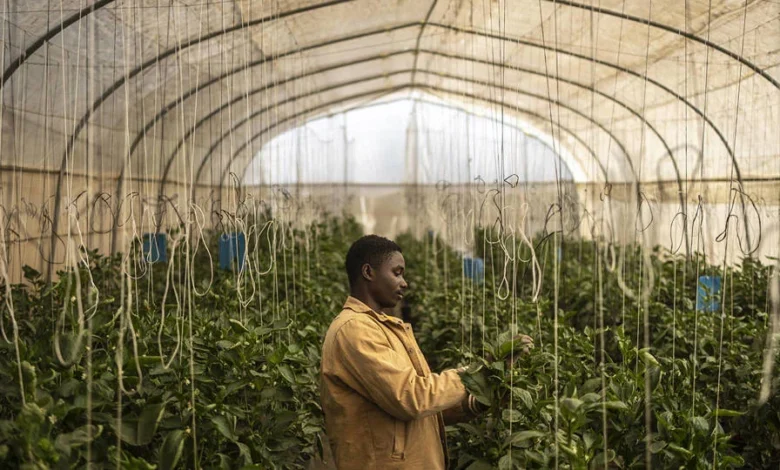
In agriculture, which employs more than half of the continent’s workforce, startups are utilizing computer vision and satellite imagery analyzed through machine learning models to provide smallholder farmers with hyper-local weather predictions, soil health assessments, and pest management alerts. These tools enable farmers to optimize crop yields and secure fair market prices, directly combating food insecurity.
In the healthcare sector, where physician-to-patient ratios fall far below World Health Organization recommendations, diagnostic AI tools are being deployed in rural clinics. Nurse practitioners equipped with smartphone-based diagnostic applications can screen patients for conditions such as tuberculosis, diabetic retinopathy, and malaria with high accuracy, bridging the urban-rural healthcare divide.
Furthermore, fintech remains a primary engine of innovation. Building upon the legacy of mobile money, AI-driven credit assessment models are evaluating the creditworthiness of unbanked individuals and micro-enterprises by analyzing alternative data streams, such as mobile airtime purchases, utility bill payment histories, and peer-to-peer transaction patterns. This inclusion unlocks vital capital for millions of small business owners who were previously locked out of the formal banking system.
Official Responses and Institutional Perspectives
African policymakers are increasingly vocal about the need to transition from passive consumers of foreign technology to active rule-makers in the global digital economy.
At recent regional economic summits, ministers of technology and innovation have emphasized that data sovereignty must be a top priority. Leaders argue that African data—gathered from millions of mobile users, agricultural plots, and financial transactions—should be processed and monetized locally rather than extracted to enrich foreign server farms.
International bodies and multilateral institutions have also adjusted their strategies. The African Union has intensified efforts to harmonize AI ethics guidelines across its member states, seeking to balance the promotion of innovation with robust protections against data privacy violations and algorithmic discrimination. Concurrently, development finance institutions are increasing their exposure to digital infrastructure projects, recognizing that reliable electricity and high-speed fiber networks are non-negotiable prerequisites for scalable AI deployment.
Broader Global Implications and Economic Forecasts
The realization that Africa represents the ultimate proving ground for applied intelligence carries profound implications for the global technology market. As mature markets in North America, Europe, and East Asia face economic stagnation and demographic decline, growth capital is increasingly eyeing emerging markets as the primary frontier for expansion.
If African economies successfully harness applied AI to formalize their informal sectors, boost agricultural productivity, and enhance government efficiency, the resulting economic expansion will reshape global trade patterns. Analysts suggest that the successful integration of AI across African industries could unlock hundreds of billions of dollars in economic value over the next decade.
However, significant hurdles remain. Persistent power outages, high costs of internet data in certain regions, and a shortage of advanced machine learning engineers continue to challenge the ecosystem. Addressing these gaps requires sustained capital investment, regulatory clarity, and deep collaboration between the public sector, private enterprises, and academic institutions.
Conclusion
The global artificial intelligence narrative has for too long been framed as a zero-sum game between superpowers. By shifting the lens from the brute-force engineering of frontier models to the practical, high-impact deployment of applied intelligence, Africa is poised to claim a central role in the next era of technological evolution. For a continent rich in human capital, youthful dynamism, and economic ambition, the true prize of the AI revolution will not be won by building the biggest model, but by solving the most meaningful problems.