Gold Prices Plunge into Sharp Correction Amidst Shifting Macroeconomic Landscape and Regulatory Scrutiny


Gold prices have entered a significant correction phase following a robust rally observed earlier in January. This downturn is attributed to a confluence of factors, including evolving macroeconomic expectations, forced deleveraging across markets, and decisive regulatory interventions in key financial centers. While an initial shift in U.S. monetary policy sentiment triggered the price decline, the magnitude of the correction underscores the underlying fragility of market positioning that had become excessively bullish.
The appointment of Kevin Warsh as the next Federal Reserve Chair has demonstrably calmed anxieties surrounding aggressive monetary easing. This development has fostered a prevailing sentiment among investors that financial conditions are poised to tighten, a stark contrast to the easing expectations that fueled the earlier gold rally. Coupled with an uptick in U.S. producer inflation, these factors have bolstered the U.S. dollar and real yields, consequently exerting downward pressure on the non-yielding precious metal in the short term. This shift in the economic outlook has directly impacted the attractiveness of gold as an inflation hedge and a safe-haven asset, prompting a reassessment of its value proposition by market participants.
The severity of the price decline was further amplified by systematic selling pressures. Momentum indicators, which had remained deeply overbought prior to the reversal, left the market exceptionally vulnerable to rapid liquidation once key technical support levels were breached. This phenomenon, often referred to as a "cascade" or "domino effect," can occur when algorithms and large institutional players, sensing a shift in trend, initiate automated sell orders, exacerbating price declines and triggering further stop-loss orders. The speed at which these positions were unwound suggests a rapid departure from the previous bullish sentiment that had characterized the gold market.
Chinese Authorities Intervene Amidst Volatility and Leverage Concerns
Developments in China have vividly illustrated the extent of the prevailing volatility. Major Chinese financial institutions, including the Industrial and Commercial Bank of China (ICBC), Bank of China, and China Construction Bank, issued public warnings to precious metals investors, characterizing the market as "technically fragile" and urging extreme caution. This unprecedented level of public advisory from state-backed entities signals a significant concern within the Chinese financial establishment regarding the sustainability of recent price movements.
In response to these concerns, the Shanghai Gold Exchange (SGE) implemented swift and decisive regulatory measures. The exchange adjusted its margin requirements and price limits, effectively curtailing the ability of market participants to engage in aggressive speculation. These actions strongly suggest that Chinese authorities believe recent price fluctuations were primarily driven by leveraged trading and speculative sentiment rather than by fundamental end-user demand. The SGE’s intervention is a clear indication of Beijing’s commitment to maintaining market stability and preventing excessive speculation that could destabilize the broader financial system. The tightening of leverage and speculation rules is a common tactic employed by regulators to curb asset bubbles and ensure that market prices reflect underlying economic fundamentals.
Retail Investors React to Global Slump
The impact of the global gold price slump has not been confined to institutional markets; stress has also manifested among retail investors, particularly in smaller, more vulnerable economies. In Kyrgyzstan, reports indicate that residents have rushed to sell certified gold bars to the state-owned Kyrgyzaltyn company following the international price decline. This behavior pattern highlights the rapid shift that can occur in smaller markets, where a significant price drop can quickly transition individuals from a hoarding mentality to a focus on capital preservation. Such rushes to sell can further depress local prices and create a feedback loop of selling pressure, demonstrating the interconnectedness of global financial markets and the varying degrees of resilience in different economic contexts.
Enduring Pillars of Gold Demand Remain Intact
Despite the sharp correction, the fundamental drivers underpinning gold’s long-term value proposition remain robust. Central banks globally continue to be significant buyers of gold, actively diversifying their foreign exchange reserves. This sustained institutional demand provides a structural floor for gold prices, as central banks seek to reduce their reliance on a single currency and hedge against potential geopolitical and economic uncertainties. Data from the World Gold Council consistently shows a trend of net purchases by central banks over the past decade, a testament to gold’s enduring appeal as a reserve asset.
On the geopolitical front, persistent tensions between the United States and Iran continue to sustain safe-haven demand for gold. While diplomatic rhetoric may fluctuate, the underlying geopolitical risks remain a significant factor influencing investor sentiment. In times of heightened global uncertainty, investors naturally gravitate towards assets perceived as stable and less susceptible to political upheaval, with gold historically fulfilling this role. This underlying demand for security, irrespective of short-term price movements, continues to provide a foundational support for the precious metal.
A Necessary Reset, Not a Trend Reversal
The current correction in gold prices is unlikely to signal a definitive trend reversal. Instead, it appears to be a necessary recalibration following an exceptionally strong and arguably emotion-driven rally. The rapid ascent in January, fueled by a combination of favorable monetary policy expectations and speculative fervor, created an unsustainable price environment. This period of adjustment is crucial for re-establishing a more balanced market equilibrium.
For gold prices to resume a rapid upward trajectory, a more pronounced increase in macroeconomic stress or a clear and sustained pivot in global monetary conditions would likely be required. This could manifest as unexpected inflation spikes, significant economic downturns in major economies, or a reversal of central bank tightening policies. Until such catalysts emerge, gold may experience a period of consolidation and base-building, allowing the market to digest the recent volatility and reassess its fundamental value proposition in light of evolving global economic dynamics.
Gold Price Technical Analysis: Navigating the Downtrend Below Key Averages
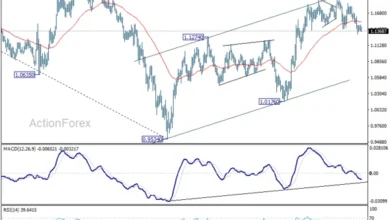
The technical landscape for gold currently paints a challenging picture, characterized by a notable breach of long-standing support levels. The 4-hour chart reveals that gold has fallen below the critical 200-period Moving Average (MA), a significant technical indicator that has not been breached since November 2025. This descent below the $4,600 level signals a potential shift towards a sustained downtrend, with the possibility of further price depreciation. The 200-day MA is often viewed as a gauge of the long-term trend, and its violation can indicate a fundamental change in market sentiment.
However, the Relative Strength Index (RSI) has now entered oversold territory. This suggests that the selling pressure may be nearing exhaustion, potentially paving the way for a period of consolidation or a short-term pullback. Oversold conditions do not guarantee a reversal, but they do indicate that the market may be temporarily overextended to the downside, creating opportunities for bargain hunters or short-covering rallies.
Potential Price Targets and Support Levels
Looking ahead, gold could test the 100-period MA, situated near the $4,835 mark. Beyond this level, the psychological resistance of $5,000 looms, followed by the 20-period MA at $5,250, which could act as a near-term resistance level. On the downside, if current lows of $4,400 are broken, gold could descend further to fill a potential gap at $4,330. A more significant decline could see prices testing the $4,000 psychological level, a historically significant price point. The interplay between these technical levels will be crucial in determining the short-to-medium term trajectory of gold prices. The market will be closely watching for any signs of stabilization or further capitulation.
The current price action in gold represents a significant moment for market participants. While the underlying demand drivers remain intact, the recent correction serves as a stark reminder of the speculative forces that can influence asset prices. The coming weeks will be critical in determining whether this is a brief correction or the beginning of a more prolonged bearish phase. Investors and traders will be closely monitoring macroeconomic data releases, central bank communications, and geopolitical developments for further clarity on the future direction of this vital precious metal.